
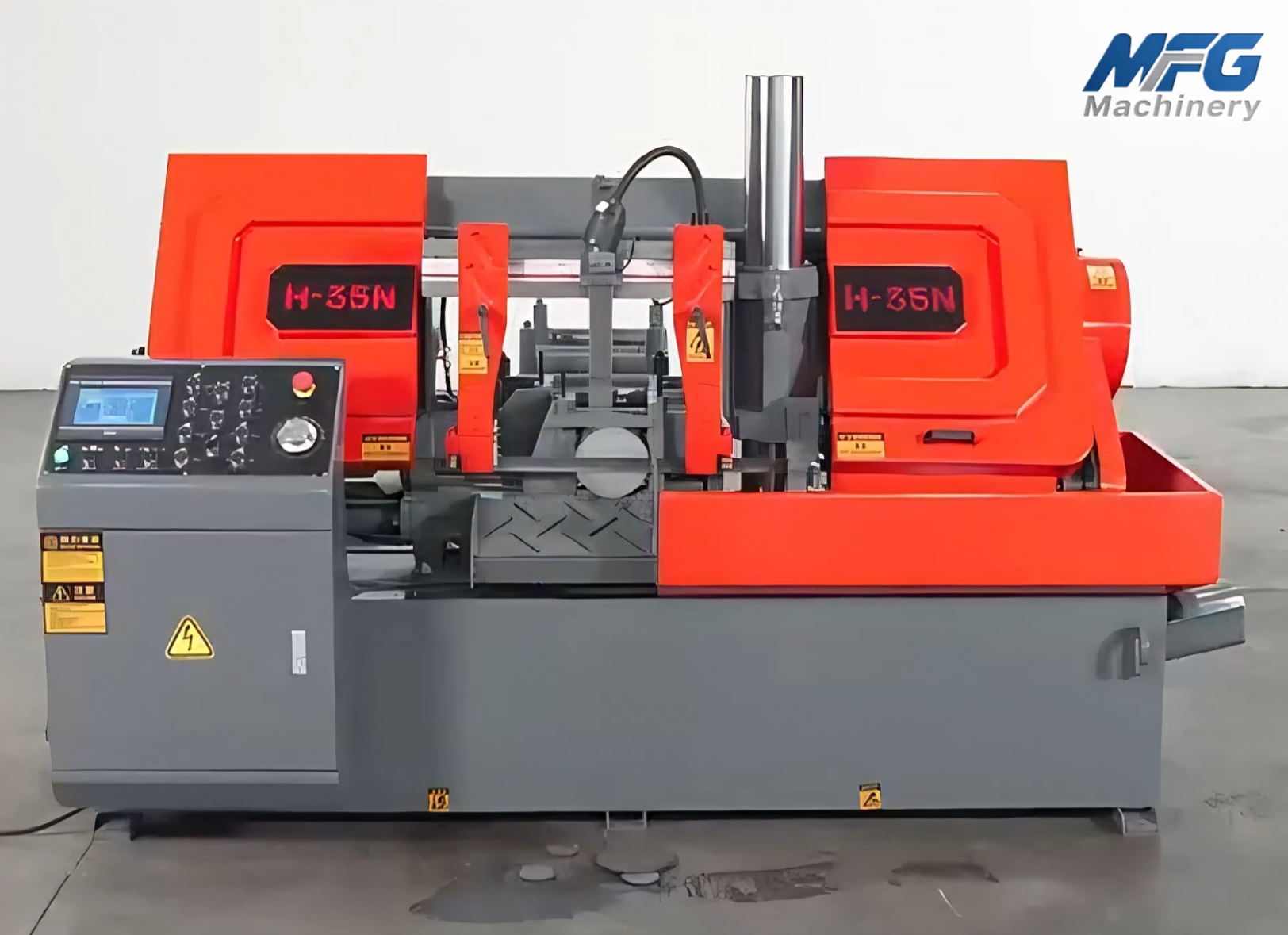
Slow cutting, crooked cuts, short blade life, and poor length accuracy are often connected. The common causes are the wrong blade, poor blade tension, incorrect cutting speed, weak clamping, blocked chip removal, or worn blade guides.
Before replacing the machine, check the blade, coolant flow, wire brush, guide blocks, vise pressure, and feed settings. A stable metal band saw should give repeatable cut length, a flat cut face, normal chips, and predictable blade life.
A Common Workshop Problem
A metal band saw may run well during the first few weeks. Later, the operator starts to notice small changes:
- One cut takes longer than before.
- The cut face is no longer square.
- Blade teeth break without a clear reason.
- The machine stops during automatic feeding.
- The final parts are not the same length.
- The operator must watch the machine all the time.
These problems are easy to treat as separate faults. In many cases, however, one small issue causes several problems at the same time.
For example, a worn wire brush leaves chips inside the blade teeth. The blade then cuts less freely, produces more heat, moves away from the cutting line, and loses teeth earlier. The workshop sees slow cutting, crooked cuts, and short blade life, but the first cause may be a simple chip brush.
A good check should therefore start with the cutting process, not with random part replacement.
Quick Troubleshooting Table
| Problem seen in production | Likely cause | What to check first | Practical action |
|---|---|---|---|
| Cut face is crooked | Low blade tension, worn guides, high feed pressure, or a dull blade | Blade tension and guide clearance | Set the correct tension and reduce feed pressure |
| Cutting time is too long | Wrong tooth pitch, low blade speed, weak coolant flow, or a dull blade | Chips and coolant flow | Match the blade to the material and section size |
| Blade teeth break | Tooth pitch is too fine, workpiece moves, or feed pressure is too high | Vise clamping and broken-tooth pattern | Clamp the material firmly and lower the feed rate |
| Blade breaks at the weld | Wheel alignment, guide damage, or repeated bending stress | Blade back edge and wheel tracking | Check tracking and guide position |
| Finished length changes | Material slips, feeding vise is loose, or the encoder is not stable | Feed vise pressure and measuring system | Clean the vise and test feed accuracy |
| Heavy burr on the cut | Dull blade, wrong speed, or poor blade support | Blade condition and cutting speed | Replace the blade or correct the speed |
| Chips remain in the tooth gap | Worn wire brush or wrong tooth pitch | Brush contact and chip shape | Adjust or replace the brush |
| Machine needs constant operator help | Unstable feeding, poor material support, or unclear alarms | Loading table, sensors, and alarm records | Correct the material path and test each sensor |
| Coolant splashes or smells | Wrong nozzle position, dirty tank, or weak chip separation | Coolant tank and return path | Clean the system and set the nozzles correctly |
Why Does a Metal Band Saw Cut Crooked?
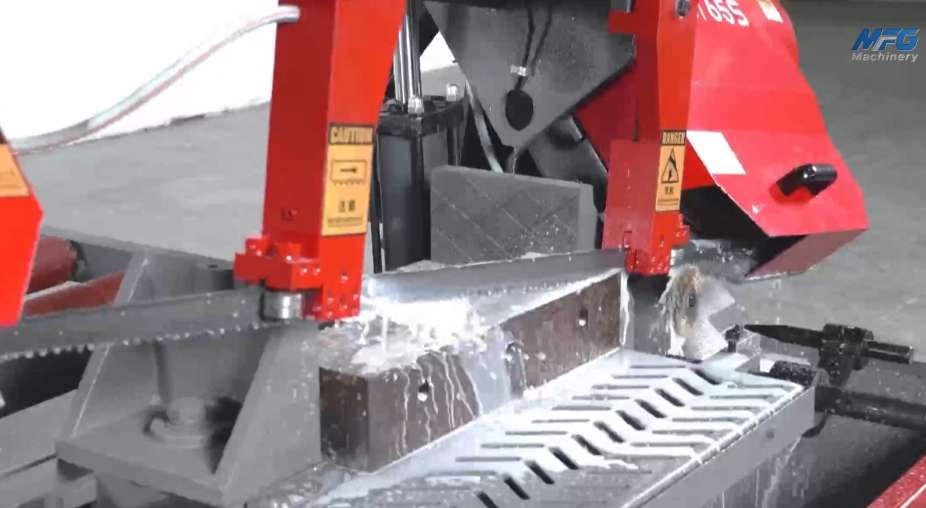
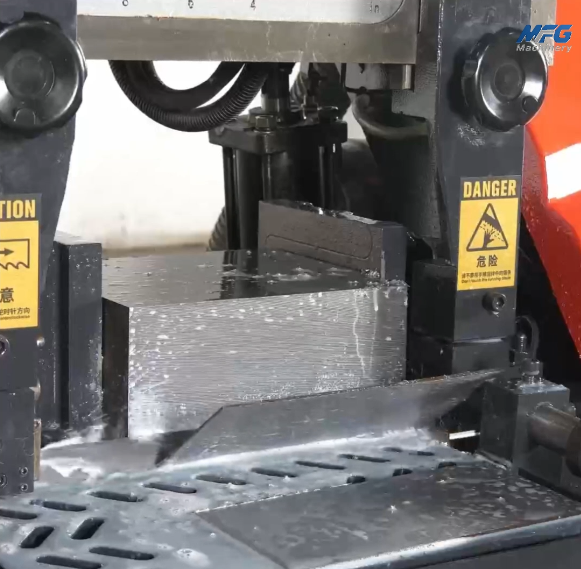
A crooked cut is one of the most expensive band saw problems. The part may need extra machining, or it may become scrap if there is not enough material left.
Start with blade condition. A blade with uneven tooth wear will pull toward one side. Installing a new blade may solve the problem, but only if the machine settings are also correct. If the guides are loose or the feed pressure is too high, the new blade will soon develop the same fault.
Check these points in order:
- Confirm that the blade is installed in the correct direction.
- Check blade tension with the value recommended for the blade.
- Inspect the carbide guide blocks or guide bearings.
- Move the guide arms close to the workpiece.
- Check whether both vises hold the material firmly.
- Reduce the feed pressure and make a test cut.
- Inspect wheel alignment if the blade keeps moving off line.
The distance between the guide arms matters. A wide unsupported blade section can twist under load. Keep the arms close to the material while leaving enough space for safe movement.
Why Is Band Saw Blade Life So Short?
Blade life cannot be judged only by the number of working days. A workshop cutting large stainless steel bars puts far more load on a blade than a workshop cutting thin mild-steel tubes.
- A better measure is the total cut area produced by one blade.
- Short blade life is often caused by:
- Using the same tooth pitch for every material size
- Starting a new blade at full feed pressure
- Cutting a loose bundle of tubes or profiles
- Running without enough coolant
- Allowing chips to return into the cut
- Using excessive feed pressure on hard material
- Continuing to cut after several teeth are damaged
A new blade also needs a break-in period. For the first cuts, use a lower feed rate so the tooth tips wear evenly. Full cutting pressure on a new blade can cause small tooth damage that is difficult to see. The blade may fail much earlier several hours later.
Chip shape gives useful information. Thin curled chips normally show that the teeth are cutting. Fine powder may mean that the teeth are rubbing rather than cutting. Thick, dark, or blue chips often show too much heat or feed pressure.
For machine selection and cutting solutions, buyers can review the metalworking equipment information on the MFG Machinery website
Why Does Automatic Feeding Lose Accuracy?
Automatic feeding saves labor only when the material moves to the same position every cycle. If finished lengths change, do not adjust the length value immediately. First find out whether the error is constant or random.
A constant error may come from calibration. A random error is more likely to come from material movement, chips in the vise, low hydraulic pressure, a worn feeding surface, or poor material support.
Long steel bars can also move sideways or bend between the machine and the roller table. This places extra force on the feeding vise. The machine may measure the correct travel distance while the material itself does not move correctly.
- A useful feeding test is simple:
- Mark the material before feeding.
- Run several feed cycles without cutting.
- Measure the actual travel after each cycle.
- Check whether the error grows or changes at random.
- Repeat the test with the material clamped under normal pressure.
This separates a measuring problem from a clamping or material-support problem.
When Should You Choose an Automatic Band Saw?
An automatic machine is useful when the workshop cuts repeat batches and spends too much time on manual measuring, clamping, and counting.
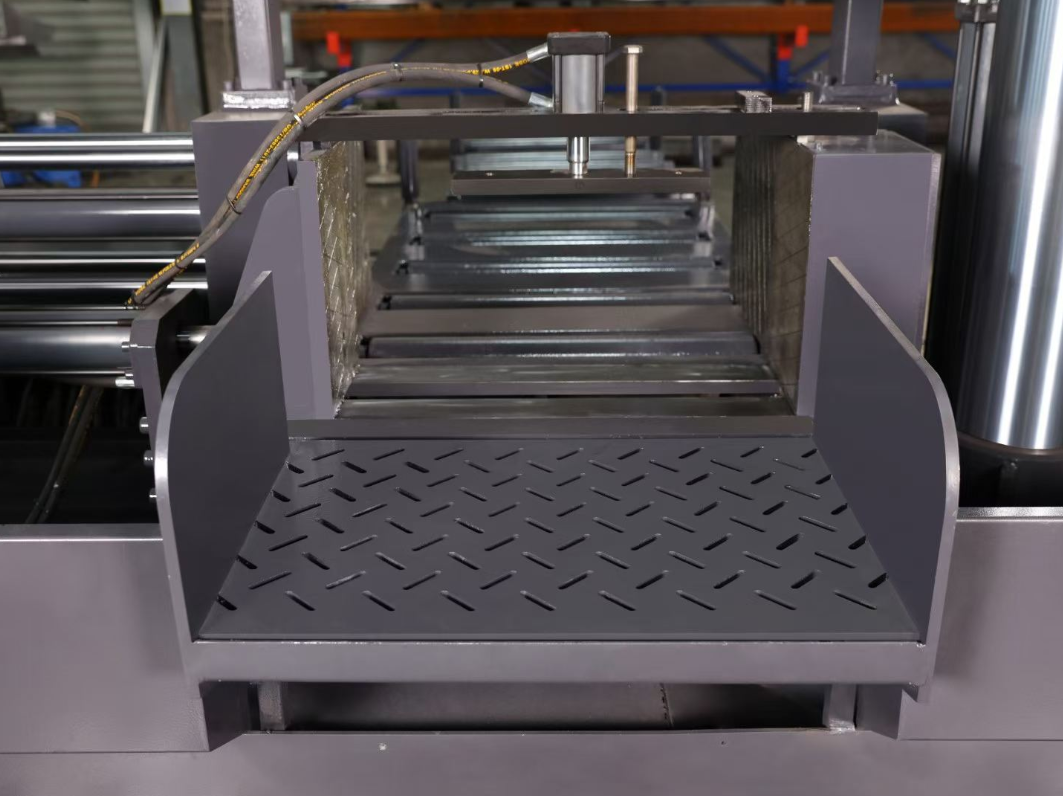
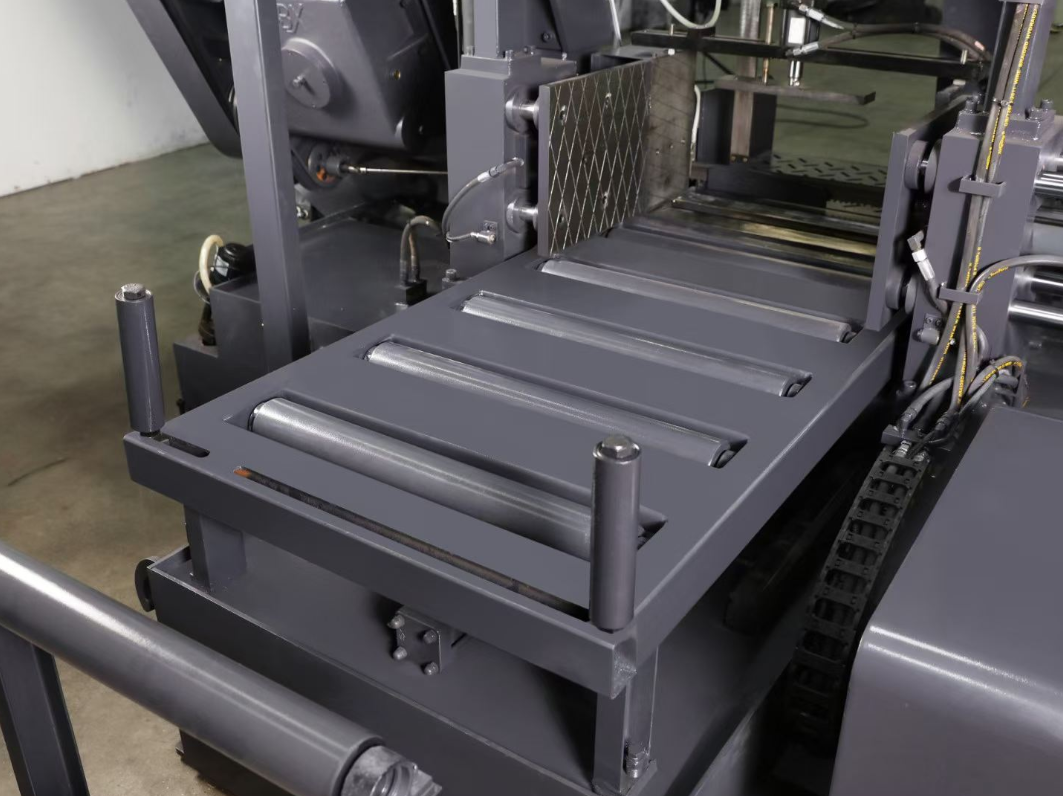
However, automation alone does not solve poor material handling. The machine, loading table, roller table, discharge area, and chip system should work as one line.
Before buying, record the following production details:
| Production question | Why it matters |
|---|---|
| What materials are cut most often? | Material type affects blade speed, feed rate, and coolant needs |
| What are the minimum and maximum sizes? | This helps select cutting capacity and blade tooth pitch |
| Are the parts solid, hollow, or bundled? | Each shape needs different clamping and blade support |
| How many pieces are required per shift? | This determines the needed feeding and cutting speed |
| What length tolerance is required? | It affects the feeding and measuring system |
| How are long and heavy bars loaded? | It decides the roller table and loading equipment |
| Who changes the cutting settings? | Simple controls and saved cutting data may be important |
The best machine is not always the one with the largest cutting capacity. A machine that is too large may use a wider blade, more power, and more floor space than the work requires. A machine that is too small may run near its limit every day and wear faster.
Market Insight: Buyers Are Looking Beyond Maximum Capacity
Many buyers used to compare band saws mainly by maximum round and square cutting capacity. That number is still important, but it does not describe daily production.
More workshops are now asking practical questions:
- How many cuts can the machine complete during one shift?
- How often does an operator need to intervene?
- Can the machine cut tubes, profiles, and solid bars without long setup time?
- How easy is it to clean chips and change the blade?
- Are common spare parts available?
- Can cutting settings be saved for repeat jobs?
- Does the supplier provide advice for blades and cutting parameters?
Labor availability is also changing machine choice. A low purchase price has less value if one operator must stay beside the machine for every cut. Buyers increasingly prefer stable feeding, clear alarms, easy maintenance access, and simple controls.
At the same time, high material prices make cutting accuracy more important. A few extra millimeters left on every part may appear small, but the waste becomes clear after hundreds of cuts. Accurate feeding and a straight cut can reduce both material loss and later machining work.
A Five-Minute Check Before Calling for Service
When cutting quality suddenly changes, stop the machine and check the basic items first:
- Is the blade damaged or missing teeth?
- Is blade tension within the correct range?
- Are the guide blocks clean and correctly adjusted?
- Does the wire brush remove chips from the blade?
- Does coolant reach both sides of the cut?
- Is the workpiece held firmly by the vise?
- Are chips trapped under the material?
- Are the guide arms close to the workpiece?
- Has the material grade or size changed?
- Were the blade speed and feed rate changed?
Write down what happened before the fault appeared. Material size, material grade, blade model, running time, chip shape, and alarm message are useful details. They help the service team find the cause faster.
Final Note
A stable metal band saw does not depend on one setting. Blade choice, blade tension, feeding, clamping, coolant, chip removal, and material support must work together.
When comparing machines, use real production details instead of checking only the largest cutting size. Ask the supplier to recommend a machine based on material grade, section shape, batch size, required length, and daily output.
For help selecting a metal band saw machine or discussing a cutting problem, visit MFG Machinery or contact:
Email: info@mfg-machinery.com
Tell/WA: +86 175 2133 1995