
Chatter marks on a turned part usually mean something in your setup is flexing.
First, check your tool stick-out, insert nose radius, and workpiece support. If your tooling is solid but the vibration continues during heavy roughing, the problem often comes from a weak machine frame.
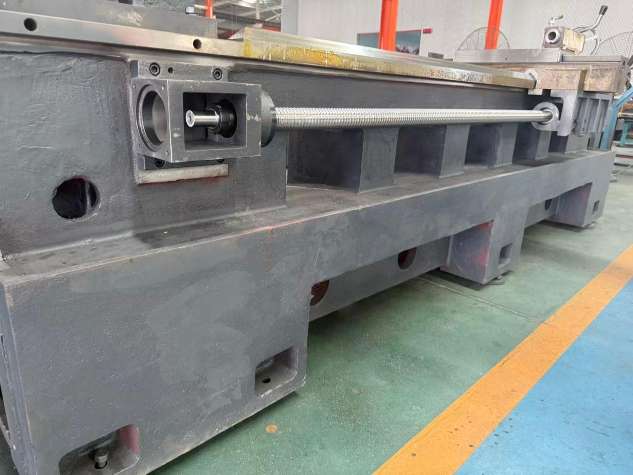
A lathe with a bolted frame will vibrate under heavy load, while a true one-piece cast iron bed absorbs the cutting forces.
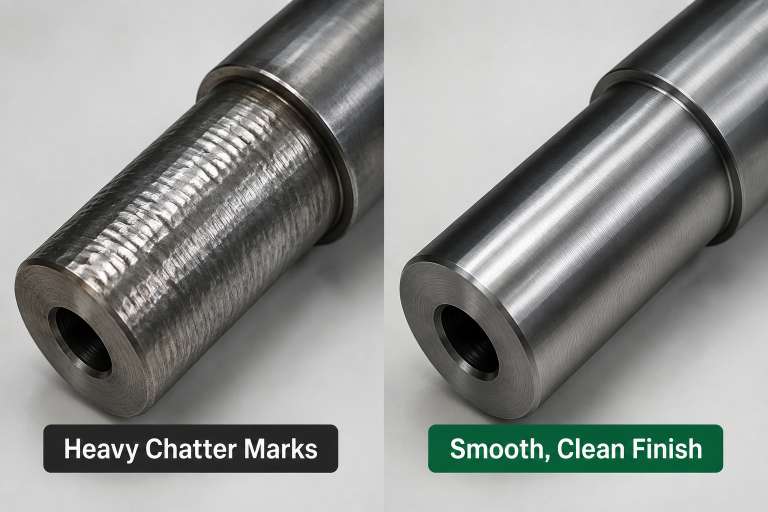
Quick Chatter Diagnostic Chart
Before you slow down the spindle or change your program, read the vibration to find the root cause:
| What You Hear or See | Likely Cause | First Workshop Fix |
|---|---|---|
| High-pitched squeal / scream | Tool flex or incorrect insert geometry | Reduce tool stick-out; use a smaller nose radius |
| Low-frequency rumble | Workpiece flexing or poor tailstock support | Increase tailstock pressure or use a steady rest |
| Chatter only at the center of the part | Long part pushing away from the tool | Take lighter passes or support the middle |
| Heavy vibration across the entire cut | Machine frame or spindle lacks rigidity | Check machine leveling; verify bed structure |
Step 1: Fix the Tool and the Feed
Most chatter starts at the cutting edge. When the cutting force pushes against the insert, the tool holder bends slightly.
- Shorten the Tool: Keep the tool stick-out as short as possible. A tool sticking out twice as far will bend eight times more.
- Check the Nose Radius: A large insert nose radius creates more radial cutting pressure, pushing the tool away from the part. Switch to a smaller nose radius for unstable setups.
- Adjust Feed and Speed: Do not just slow down the RPM. Often, increasing the feed rate slightly puts more consistent pressure on the insert, stopping the tool from bouncing and rubbing.
Step 2: Is Your Lathe Bed Cast or Bolted?
If your tooling is short and sharp, but the machine still shakes during heavy roughing in hard steel, you must look at the machine's foundation.
Many light-duty lathes use a split design to save manufacturing costs: the headstock, bed, and base are built as separate pieces and bolted together. Under heavy cutting loads, these bolted joints act like tiny hinges. The vibration travels from the spindle, hits the bolted joint, and bounces back into the workpiece.
A rigid one-piece cast iron bed solves this. Cast iron has a natural graphite structure that absorbs harmonic vibrations. When the bed and the base are poured as a single heavy casting, there are no joints to flex. The cutting force transfers smoothly down into the floor.
When comparing equipment for hard turning or heavy material removal, reviewing machines like the MFG Machinery CNC Lathe range —which features true one-piece cast beds and wide guideways—is critical for keeping tight tolerances.
Market Insight: Rigidity Controls Tooling Costs
Job shops processing tough materials like 4140 steel, stainless, or cast forgings track their carbide insert costs closely. A lathe that vibrates slightly might not scrap the part immediately, but it will chip the cutting edge of the insert much faster. Buyers are realizing that investing in a heavier, one-piece cast machine frame pays for itself simply by doubling or tripling the lifespan of their cutting tools.
Send Us Your Turning Requirements
If your shop struggles with surface finish on heavy turning jobs, send us your part details. We will help you match the right machine rigidity, spindle torque, and bed structure to your application.
Include the following in your email:
- Workpiece material and hardness
- Maximum turning diameter and length
- Required surface finish and tolerance
- Current heavy roughing cycle times
Email: info@mfg-machinery.com
Suggested Email Subject: CNC Lathe Selection – [Max Turning Diameter] / [Material]