
A steel plate can measure perfectly flat while clamped, then spring into a bow as soon as the clamps are released.
Two causes are common:
- Excessive clamping force: The clamps force an uneven plate flat during machining. After release, it returns toward its original shape.
- Residual stress: Removing metal from one face changes the stress balance inside the material.
To reduce bowing, support the part correctly, use only enough clamping force to stop movement, rough both faces, flip the part between cuts, and leave a small finishing allowance.
It Was Flat on the Machine. What Changed?
The operator finishes the last pass and checks the surface. The indicator reading looks good.
Then the vise or clamps are loosened. One end of the plate lifts from the table. A straightedge now shows a clear gap in the middle.
The shaper may have cut a flat surface. The problem is that the part was held in a false position, or its internal stress changed as material was removed.
That difference matters because the two causes need different corrections.
Watch What Happens During Clamp Release
Before removing the part, place a dial indicator on one end or corner. Loosen the clamps slowly and evenly.
The movement gives an early clue:
| What happens | Likely cause | First response |
|---|---|---|
| Part moves as clamps loosen | Clamping distortion | Reduce force and correct support |
| Part bends after heavy cutting | Residual stress | Rough both faces |
| One corner lifts | Uneven support or trapped chip | Clean and reset the part |
| Bow grows after each pass | One-sided stock removal | Flip the part earlier |
| Plate bends near a clamp | Local clamp pressure | Spread the clamping load |
| Shape changes while cooling | Cutting heat | Use lighter cuts and allow cooling |
This test is more useful than tightening the clamps harder for the next part. Extra force may improve the reading while the workpiece is held, but make the spring-back worse after release.
Problem One: The Clamps Are Bending the Plate
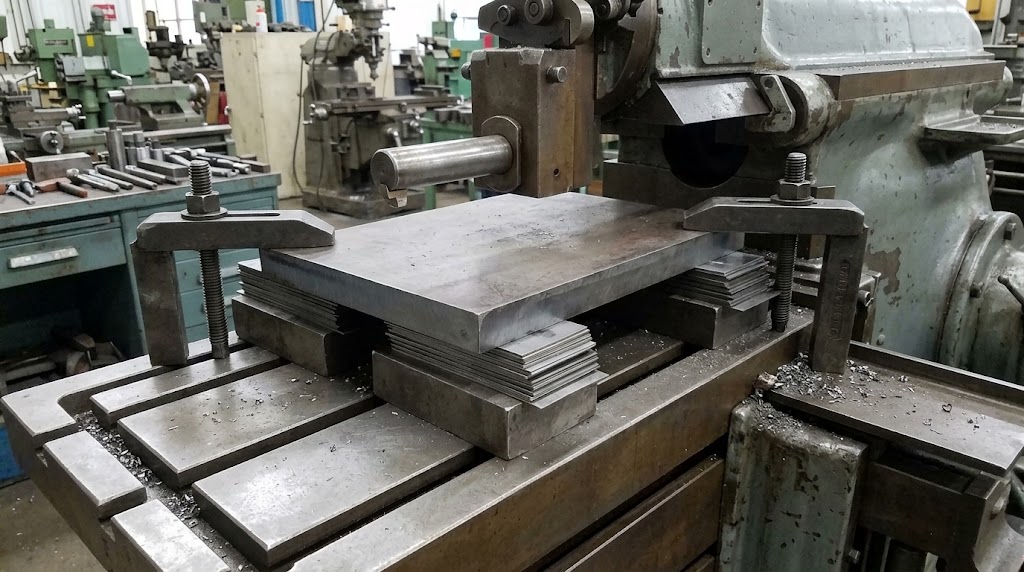
A rough plate rarely contacts the machine table at every point. If a high spot is forced down with a clamp, the plate bends elastically.
The shaper then machines the upper face while the plate is under load. When the clamps come off, the plate springs back and the newly cut surface follows the bend.
Start by cleaning the table, parallels and underside of the workpiece. A single chip or burr can become an unwanted support point and tilt the complete setup.
Use solid packing or controlled shims where support is needed. A thin copper or aluminium shim can spread local pressure and protect the surface. Do not use loose rubber or another material that may compress during the cut.
Clamp firmly enough to prevent movement, but not hard enough to force the plate flat.
Thin or wide plates often need several support points and a wider clamping area. Tighten each clamp in small, even steps while watching the dial indicator.
Problem Two: Machining Releases Stress Inside the Steel
Rolled, welded, flame-cut and heat-treated steel may contain residual stress. The stress can remain balanced while the original material is still in place.
Heavy cutting from one face removes part of that balance. The remaining material then pulls the plate into a new shape.
Be more careful when the blank comes from flame-cut plate, has welds near the machined area, or needs a large amount removed from one side. Long, thin parts are also more likely to move. If bowing returns after the clamping setup has been corrected, internal stress is the more likely cause.
Use a Balanced Roughing Sequence
Do not remove the full allowance from one face in a single setup.
- Take a light roughing pass from the first face.
- Release the clamps gradually and let the part settle.
- Flip the part and rough the opposite face.
- Repeat with smaller cuts if a large allowance remains.
- Let the part cool, then finish both faces from an even allowance.
The aim is balanced stock removal. Flipping the part only after one face has reached final size is often too late.
For welded or heavily flame-cut parts, thermal stress relief may be needed before final machining. The process must match the material grade and drawing requirements.
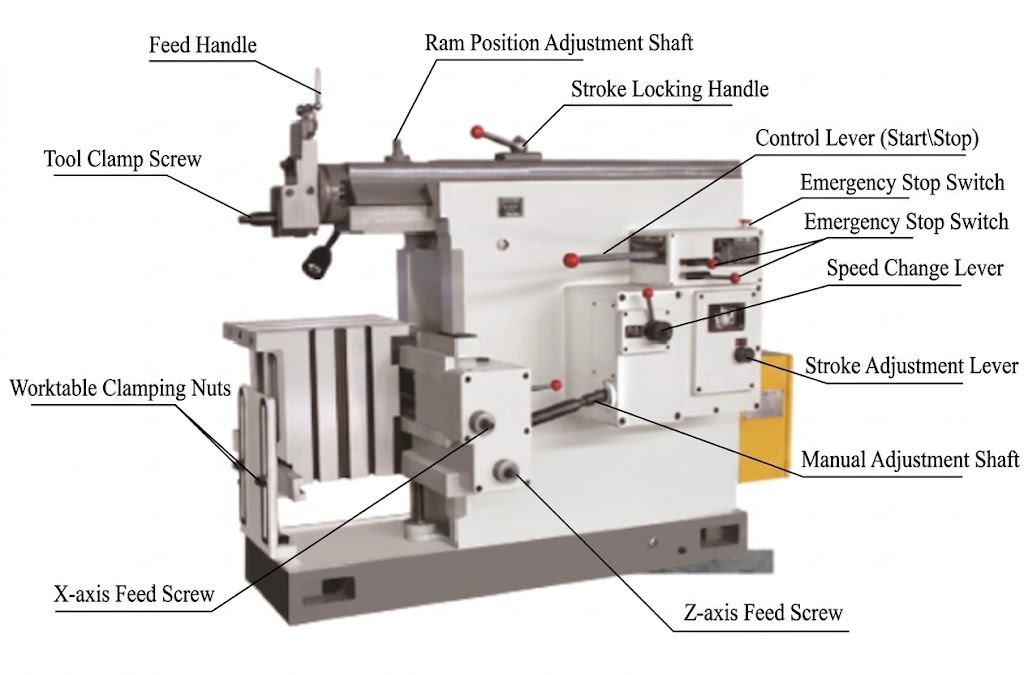
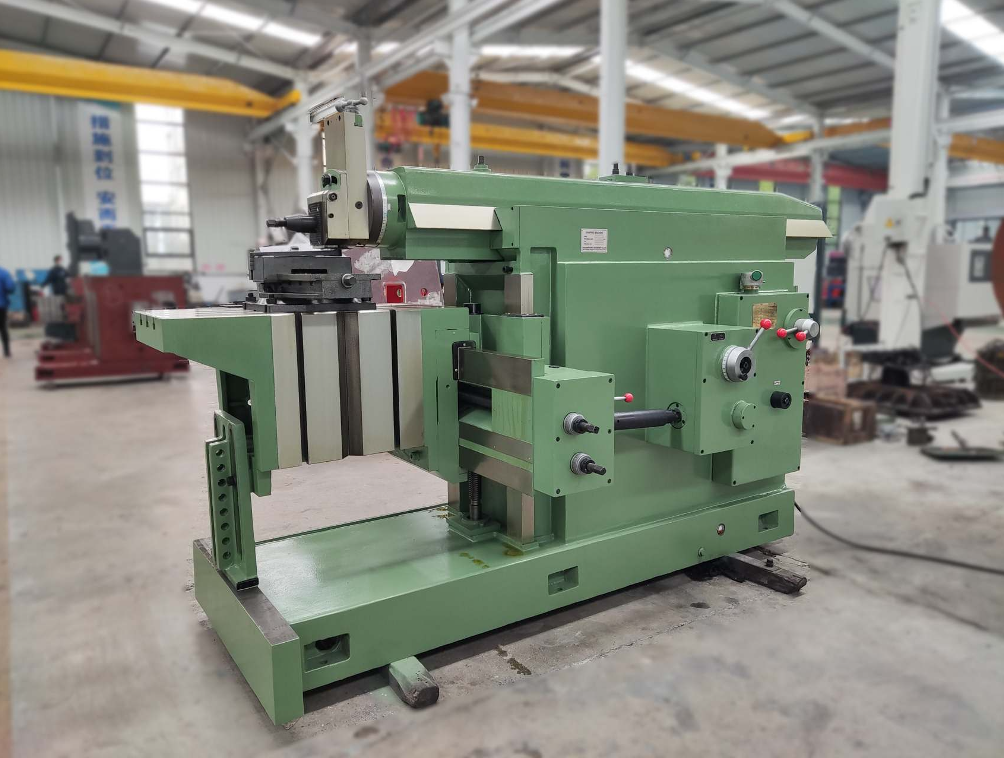
Machine stroke, table support and workpiece capacity also affect how securely a long plate can be machined. The MFG Machinery shaper machine range covers different sizes for flat-surface, groove and general shaping work.
Market Insight: A Flat Reading Is Not Always a Flat Part
Many fabricated parts are becoming thinner to reduce weight and material use. At the same time, mounting faces still need to remain flat during assembly.
This makes distortion control important for machine bases, steel frames, guide plates and repair parts. A plate that is flat only while clamped may create gaps, poor alignment or extra fitting work later.
Shops are therefore checking material history before machining, balancing stock removal between both faces, and inspecting parts after clamp release. These steps may add a short pause between roughing and finishing, but they help prevent a nearly completed part from becoming scrap.
Send Us the Actual Workpiece Conditions
For a useful shaping-machine recommendation, send the material grade, workpiece length, width and thickness, starting flatness, removal allowance on each face, final flatness requirement, part weight and batch quantity.
Please also state whether the blank is rolled, welded, flame-cut or heat-treated. A drawing and a clear photo of the current support and clamping setup will help us review the required stroke, table capacity and machining sequence.
Send the details to info@mfg-machinery.com/ Phone call: +86 175 2133 1995