
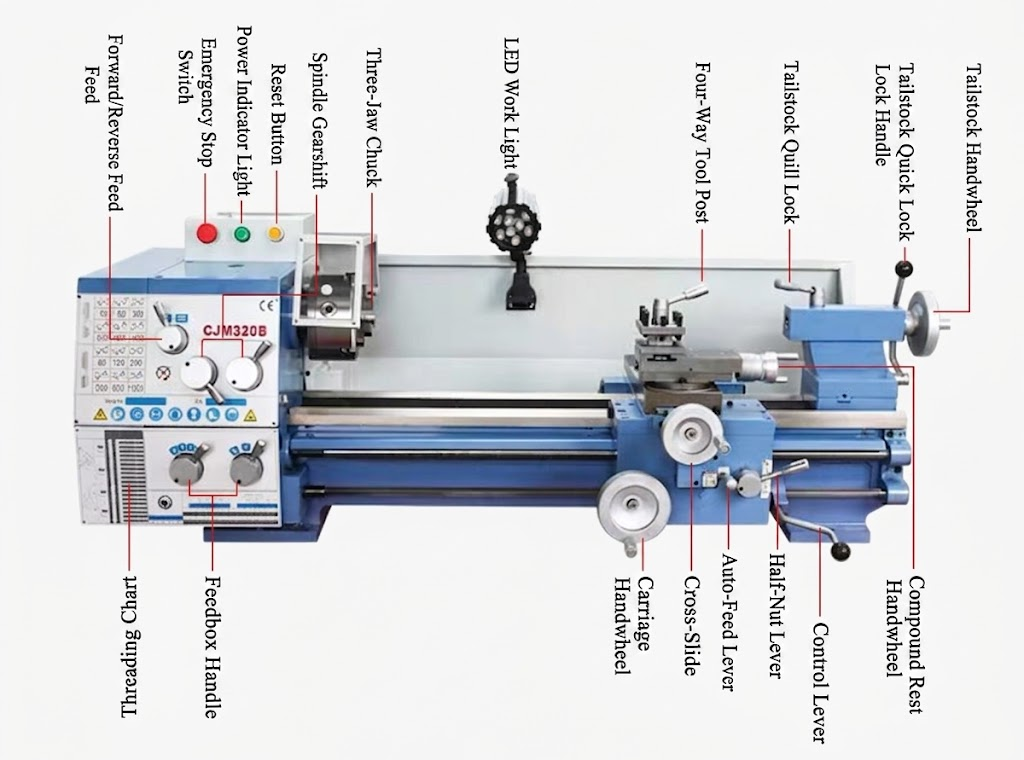
Parting off steel is one of the hardest jobs for a light bench lathe. A thin saddle, light bed and flexible tool setup can let the cutter vibrate, dig into the workpiece or break without warning.
Low-speed work creates a second problem. A basic brushed DC motor may lose power and stall when cutting a large diameter or threading at low RPM.
The first checks are simple: keep the parting blade short and square, lock unused slides, reduce the feed, and support the workpiece close to the cut. If the motor still struggles, the drive system may not be providing enough low-end torque.
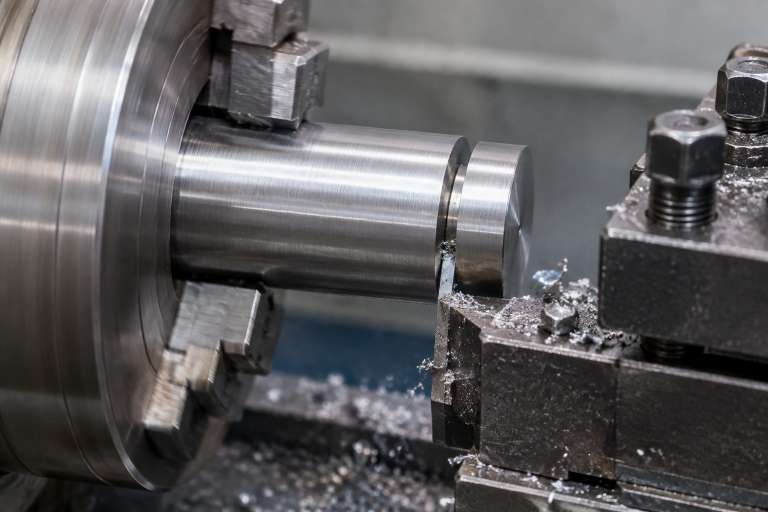
Why Parting Off Exposes a Weak Setup
Turning removes material around the outside of the workpiece. Parting off pushes the tool directly into the center of the bar. Cutting force rises as the groove becomes deeper, while the blade has less room to move chips away.
On a light bench lathe, the force can move the saddle, tool post or workpiece. The operator hears a low shaking sound, sees the blade move from side to side, and may feel the tool start to pull into the cut.
This is often called dig-in. It can break the blade, damage the tool holder or release the workpiece from the chuck.
The problem is not always the motor. A flexible cutting setup can create chatter even when the motor has enough power.
Check the Cutting Setup First
Before changing the motor or controller, make the cutting path as firm as possible:
- Keep the parting blade short and square in the tool holder.
- Set the blade at the correct center height.
- Tighten the tool post and make sure it sits flat on the slide.
- Lock the carriage and compound slide when they are not being used.
- Keep the workpiece overhang as short as practical.
- Use a tailstock center or steady support for long stock.
- Select a sharp, narrow blade that matches the material and machine power.
A wide blade removes more metal and needs more power. On a compact lathe, a narrow blade can reduce cutting load when the material and setup allow it.
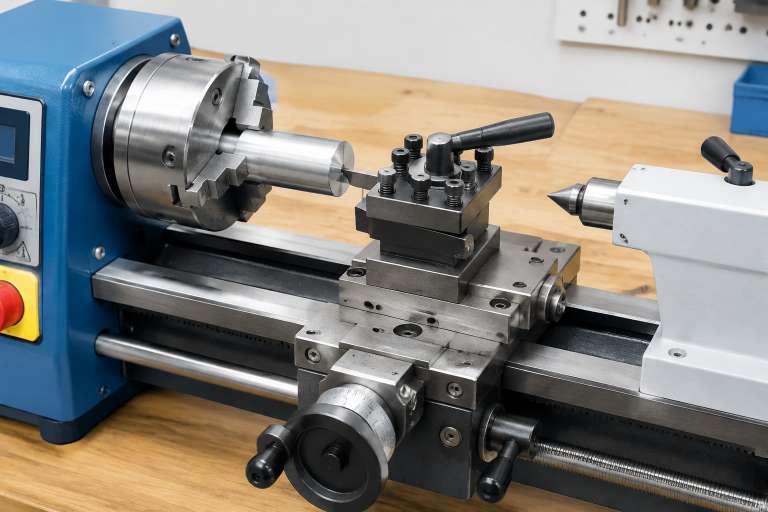
Bench Lathe Parting-Off Troubleshooting
| Symptom | Likely cause | First check |
|---|---|---|
| Blade shakes in the groove | Tool or saddle is too flexible | Shorten overhang and lock slides |
| Tool digs into the part | Tool height or feed is wrong | Set center height and reduce feed |
| Blade breaks at the tip | Side load or chip packing | Check alignment and coolant |
| Workpiece moves in the chuck | Poor grip or long overhang | Improve chuck contact and support |
| Cut slows near the center | Motor loses torque or blade rubs | Reduce speed and inspect blade |
| Motor stops at low RPM | Insufficient low-end torque | Check drive type and load |
| Cut face is rough | Vibration or dull blade | Replace blade and improve rigidity |
Low RPM Does Not Mean Low Cutting Load
Large diameters and threading require lower spindle speed. That is where many low-cost bench lathes show their limits.
A brushed DC motor may provide useful power at medium speed but lose torque as the speed drops. When the operator increases the feed to keep the tool cutting, the motor may slow sharply or stall.
A stall can damage the workpiece and leave the tool buried in the cut. Repeated stalls also place extra stress on the motor controller and drive belt.
A brushless DC motor can maintain torque more steadily across a wider speed range. An AC motor with a variable frequency drive (VFD) can also provide smooth speed control and useful low-speed power, provided the motor, inverter and cooling system are correctly matched.
This does not mean every VFD lathe will produce the same result. Available torque depends on motor size, drive settings, transmission ratio and the actual cutting load.
How to Test Low-Speed Torque
Use the same steel grade, tool and depth of cut for a simple comparison. Start at a safe low speed and watch whether the spindle holds speed as the tool enters the material.
Note whether the spindle speed drops sharply, whether the motor recovers without stopping, and whether the belt slips before the motor reaches its limit.
If the motor holds speed but the blade chatters, improve the mechanical setup first. If the setup is rigid but the spindle still slows or stops, the drive system needs review.
To compare bed weight, spindle range and motor options, review the MFG Machinery bench lathe range and match the machine to your actual steel-cutting work: MFG Machinery bench lathe range.
A Small Machine Needs a Firm Cutting Path
Bench lathes are useful for repair work, prototypes, small shafts and short production runs. Their compact size also means that setup quality has a larger effect on the result.
Keep the tool path short, support the workpiece, use a steady feed and avoid forcing a light machine through a cut that needs more rigidity than the bed can provide.
When parting off repeatedly causes broken blades, check the bed, saddle, cross-slide play and tool-post clamping. When low-speed cutting causes stalls, check the motor and drive system separately.
Mechanical rigidity and low-speed torque solve different parts of the same problem.
Market Insight: Buyers Are Checking the Drive System
Bench-lathe buyers often compare swing, spindle bore and motor power. For steel work, they are also asking how the machine behaves at low RPM and during interrupted cuts.
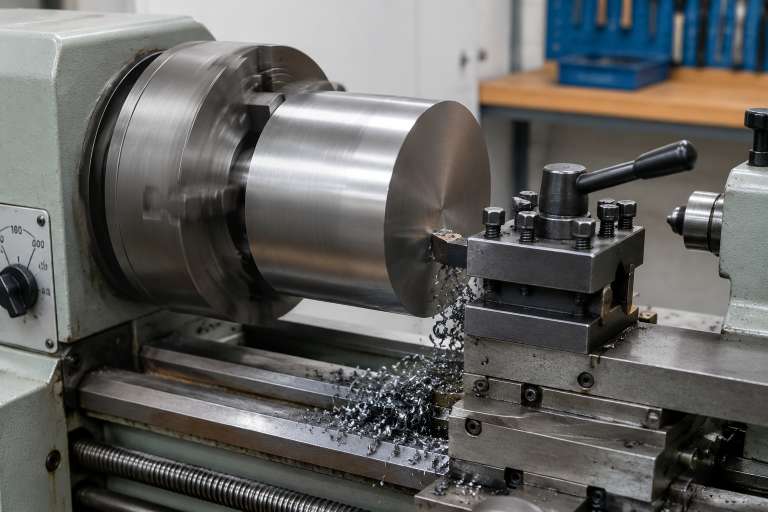
A compact lathe with a heavier bed and stable saddle may produce a cleaner part than a lighter machine with a higher advertised speed. Likewise, a motor with better low-speed control can reduce stalls during threading and large-diameter cutting.
The useful question is not “What is the highest spindle speed?”
Can the machine hold the required speed while the tool is under load?
Send the Cutting Details
For a bench-lathe recommendation, send the material grade, maximum diameter, parting diameter, workpiece length, required spindle speed and cutting tool size.
Please also state whether the work includes parting off, threading, boring or repeated low-speed cuts. A photo of the current tool setup and a short video of the chatter or motor stall can help identify whether the main limit is rigidity, tooling or drive torque.
Send the details to info@mfg-machinery.com with the subject:
Bench Lathe Application – Material / Diameter / Operation