
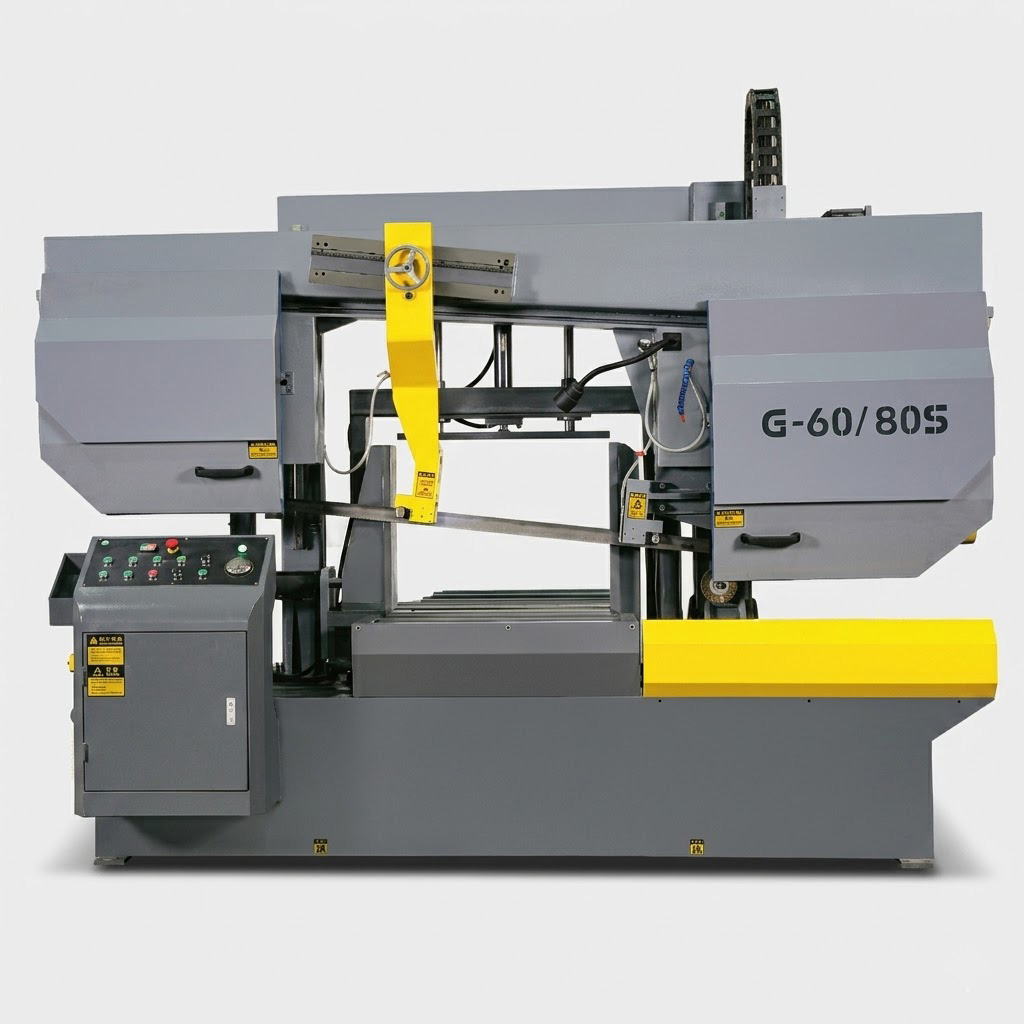
Not sure how to properly inspect a brand-new metal band saw upon delivery? Simply powering it on is a costly mistake! Ignoring mechanical precision, hydraulic systems, and actual trial cuts can lead to crooked cuts, frequent blade snapping, and unexpected downtime. This guide breaks down the core acceptance standards and testing methods for industrial band saws to help you identify hidden flaws and ensure your new equipment maximizes profitability from day one.
Investing in a new metal band saw is a major business decision. However, many shop owners make the mistake of simply turning the machine on to see if the blade spins before diving straight into heavy production. A machine that hasn't undergone a strict quality acceptance process can quickly become a black hole for your profit margins.
To protect your cutting precision and equipment lifespan, here is our comprehensive factory and on-site acceptance guide for industrial metal band saws.
1. Market Insight: Why Growing Fabrication Shops Need Stricter Machine Inspections
In fast-paced manufacturing hubs across Latin America and Southeast Asia, factories face immense production pressure and often have limited maintenance resources. If hidden defects in the gearbox or hydraulic leaks aren't caught during the acceptance phase, unexpected machine breakdowns during high-volume runs can result in devastating repair costs and delayed deliveries. Therefore, implementing strict factory acceptance tests is your first line of defense to protect your ROI and keep your production lines moving.
2. Core Mechanical & Precision Checklist: Tests vs. Hidden Risks
Do not blindly trust the factory certificate; you need to focus on the core parameters that directly affect cutting performance. Using tools like a dial indicator is essential.
| Inspection Area | Standard Method | Hidden Risks if Ignored |
|---|---|---|
| Gearbox & Noise Test | Run the machine idle and listen to the gearbox. Noise should be under 75 dB. | Excessive noise indicates poor gear meshing or large backlash, drastically reducing gearbox lifespan. |
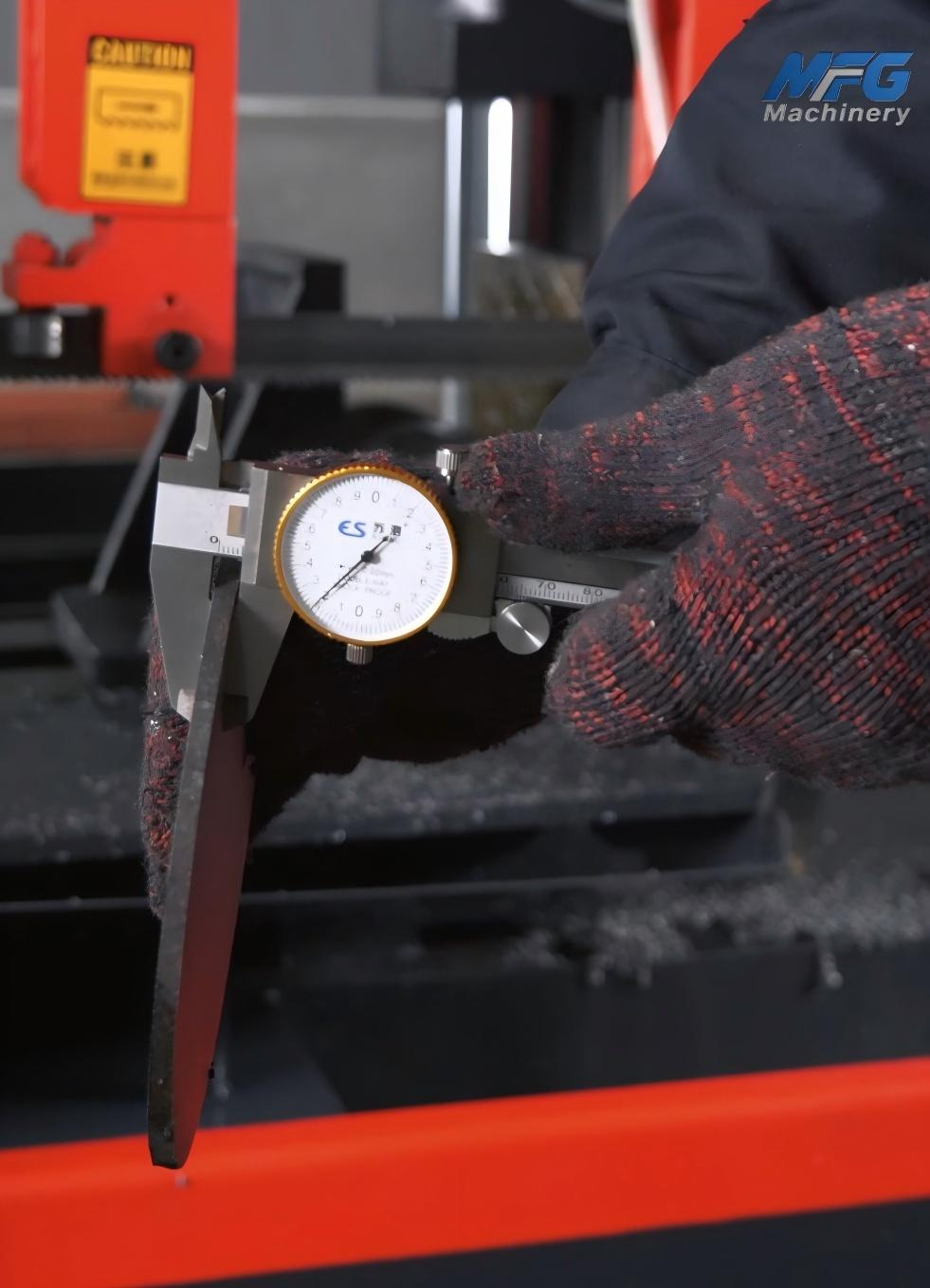
| Saw Wheel Precision | Use a dial indicator: radial runout must be < 0.10mm, face runout < 0.20mm. | High runout causes severe blade vibration, leading to frequent blade snapping or derailing. |
| Vise & Guiding Accuracy | Ensure the fixed vise is perpendicular to the table (max tilt deviation 0.40:100). | If the vise itself is crooked, the cut material will always be angled, regardless of operator skill. |
| Hydraulic Stability | Adjust system pressure to approx. 1.5Mpa. Check pumps and valves for leaks. | Unstable hydraulics cause weak clamping or erratic feed rates, instantly ruining expensive bi-metal blades. |
3. The Ultimate Trial: The Extreme Cutting Test
After the mechanical parameters pass, an actual cutting test is mandatory. When tensioning the blade, ensure the back of the blade rests against the wheel lip without falling off (optimal gap: 0.5–1.0mm).
Next, perform these comprehensive cutting precision tests:
- Heavy Bar Cutting: Cut a φ90–φ100 machined ferrous metal bar. Adjust the passive wheel angle and blade guides while cutting to find the sweet spot.
- Perpendicularity Check: After the cut, the deviation between the cut surface and the bar's axis must be within 0.5:100.
- Uniform Thin Slicing: This is the ultimate stability test. Continuously cut slices of 0.2mm, 0.5mm, and 3.0mm thickness. If the slices are uneven, the blade is deflecting inside the material.
4. Exterior Details: The Mark of Industrial Quality
A premium machine should be durable inside and out. Check the paint finish for smoothness and peeling, ensure clear color boundaries, and verify that all metal nameplates are securely riveted. These seemingly minor details often reflect the manufacturer's overall quality control standards.
5. Choose a Trusted Equipment Manufacturer: MFG Machinery
Instead of nervously searching for defects upon delivery, partner with a supplier who refuses to compromise on quality.
At MFG Machinery, no machine leaves our floor without passing strict standards. Every metal band saw undergoes rigorous mechanical runout tests, hydraulic pressure checks, and extreme thin-slice cutting trials to ensure it arrives at your shop ready to generate profit immediately.
Looking for a high-precision, hassle-free industrial metal band saw? Contact us today at info@mfg-machinery.com for detailed specifications and a customized quote!