
Which to Choose: Heavy Duty Lathe or Ordinary Lathe? Key Differences Explained
Lathe machines are the backbone of metal turning processing in the manufacturing industry. Many buyers and factory owners often feel confused when choosing equipment: what are the real differences between a heavy duty lathe and an ordinary lathe? Knowing these differences can help you pick the most cost-effective machine for your production projects, avoid equipment waste, and improve machining efficiency.
Shanghai MFG Machinery Equipment Co., Ltd, a professional lathe manufacturer and supplier with rich industry experience, will break down the core differences between heavy duty lathes and ordinary lathes in simple terms. If you have equipment procurement or customization needs, feel free to contact us via email: info@mfg-machinery.com.
1. Different Structural Design & Overall Build
The most intuitive difference between heavy duty lathes and ordinary lathes lies in their overall structure and material build. Ordinary lathes are designed for conventional, light-to-medium machining tasks. They adopt a standard lightweight cast iron structure with simple bed rails and common accessory parts. The whole machine is small in size, light in weight, easy to install and move, and suitable for small workshops with limited space.
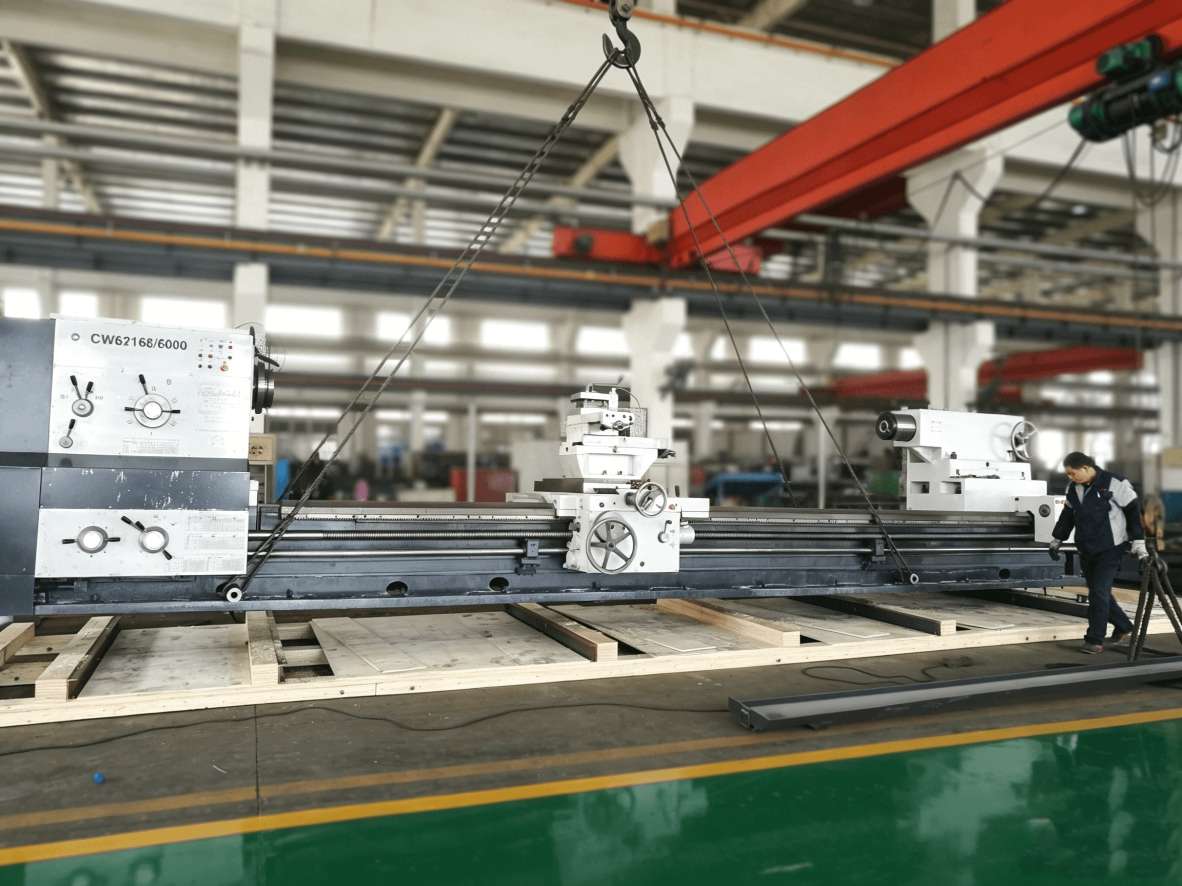
In contrast, heavy duty lathes feature a reinforced and thickened body structure. The machine bed, spindle box, tailstock and base are all made of high-strength thick cast iron or steel plates with dense rib reinforcement. This sturdy structure greatly improves the overall rigidity and stability of the equipment. Even during long-term high-load operation, heavy duty lathes will not produce obvious vibration or deformation, which ordinary lathes cannot achieve.
2. Varied Machining Load & Workpiece Capacity
Machining load is the key standard to distinguish heavy duty lathes from ordinary lathes. Ordinary lathes are only applicable for processing small and medium-sized workpieces with low weight and small diameter. Their bearing capacity is limited, and they can only bear light cutting force. Once processing oversized or overweight metal parts, the machine will vibrate violently, resulting in unqualified workpiece size and surface finish.
Heavy duty lathes are professionally built for large, heavy and super-thick workpieces. They are equipped with enlarged spindle bearings, thickened guide rails and reinforced clamping devices, which can stably bear ultra-heavy workpieces and support large-diameter, long-size metal turning. This makes heavy duty lathes widely used for processing large mechanical parts that ordinary lathes cannot handle.
3. Distinct Power & Cutting Performance
Power configuration directly determines the cutting ability of lathe equipment. Ordinary lathes are matched with low-power motors and low-torque spindle systems. They are only suitable for fine turning, light cutting and finishing of soft and conventional metal materials, with slow cutting speed and low processing efficiency. They work well for small-batch and precision fine machining of standard parts.
Heavy-duty lathes are equipped with high-power motors and high-torque spindle drive systems. They can provide strong and stable cutting force, supporting heavy cutting, rough turning and deep cutting of hard materials such as alloy steel, stainless steel and thick steel plates. Whether it is high-intensity continuous processing or high-hardness material turning, heavy duty lathes can maintain stable working performance and greatly improve production efficiency.
4. Different Machining Precision & Stability
Although ordinary lathes can meet the precision requirements of ordinary standard parts, their stability is poor under long-term or slightly heavy working conditions. Vibration generated during cutting will cause tiny errors in workpiece size and rough surface texture. After long-term use, ordinary lathes are prone to rail wear and precision attenuation.
Thanks to the ultra-rigid overall structure and high-quality matching parts, heavy duty lathes have excellent anti-vibration performance and precision retention. They can maintain consistent high precision during long-time, high-load and continuous batch processing. The finished workpieces have smooth surfaces and accurate dimensional tolerances, which fully meet the high-standard processing needs of engineering machinery, shipbuilding, energy and other industries.
5. Different Service Life & Maintenance Cost
Ordinary lathes have simple structures and low configuration standards, so their service life is relatively short. Frequent high-load use will accelerate parts wear and equipment aging, requiring frequent replacement of accessories and regular maintenance. Although the initial purchase cost is low, the later maintenance cost and failure rate are relatively high.
Heavy duty lathes adopt thickened and reinforced wear-resistant parts and high-quality core components, with low wear rate and strong durability. They can adapt to long-term uninterrupted industrial production. The failure rate is extremely low, and the later maintenance cycle is longer. Despite the higher initial investment, heavy duty lathes have longer service life and lower comprehensive operating cost, bringing higher long-term economic benefits.
6. Different Application Scenarios
Due to performance limitations, ordinary lathes are mostly used in small processing workshops, repair shops, school laboratories and light manufacturing industries. They are mainly used for processing small hardware parts, standard mechanical accessories and daily maintenance parts.
Heavy duty lathes are widely applied in heavy industrial fields, including shipbuilding, mining machinery, power equipment, engineering machinery, steel processing and large mold manufacturing. They are the core processing equipment for producing large industrial supporting parts.
Core Differences Between Heavy Duty Lathe and Ordinary Lathe (Quick Comparison Table)
To help you quickly and intuitively grasp the differences between heavy duty lathes and ordinary lathes, we have sorted out a detailed comparison table covering core performance, structure, application and cost indicators:
| Comparison Item | Ordinary Lathe | Heavy Duty Lathe |
| Pictures | 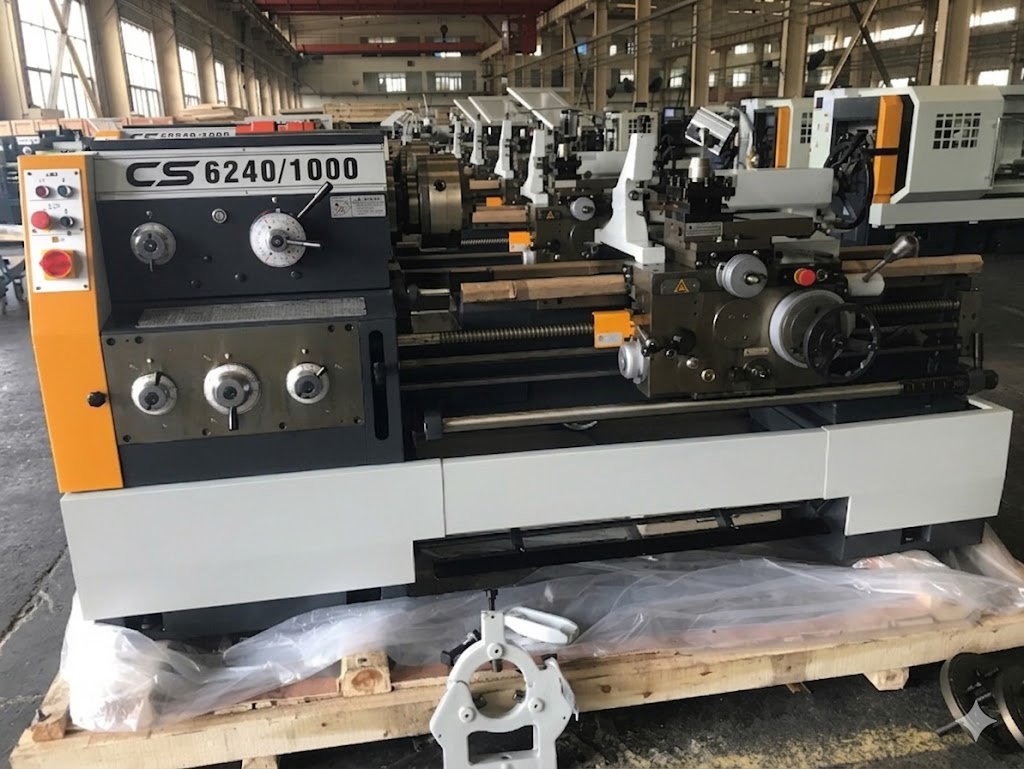 |
|
| Structural Design | Lightweight standard cast iron structure, simple guide rails and accessories, small body and easy to move | Reinforced thickened body with high-strength materials and dense rib reinforcement, high overall rigidity and stable structure |
| Workpiece Processing Capacity | Suitable for small and medium-sized, light-weight, small-diameter workpieces | Supports large-size, super-heavy, long and thick industrial workpieces |
| Power & Cutting Performance | Low power and low torque, only for light cutting, fine turning and soft material processing | High power and high torque, supports heavy cutting, rough turning and high-hardness material processing |
| Working Stability & Precision | Prone to vibration under heavy load, easy precision attenuation after long-term use | Excellent anti-vibration ability, stable precision retention for long-term high-load continuous processing |
| Service Life & Maintenance | Short service life, frequent accessory wear, high daily maintenance frequency and cost | Strong durability, low failure rate, long maintenance cycle and low comprehensive operating cost |
| Main Application Scenarios | Small processing workshops, repair shops, laboratories, light manufacturing | Shipbuilding, mining, power, engineering machinery, steel and heavy mold manufacturing |
How to Choose Between Heavy Duty Lathe and Ordinary Lathe?
If you only process small and medium-sized workpieces, pursue low cost and meet daily light processing needs, an ordinary lathe is enough to meet your production requirements. If your business involves large-size, heavy-weight, high-hardness workpiece processing, and you need long-term high-efficiency batch production, a heavy duty lathe is the best choice.
As a reliable lathe supplier, Shanghai MFG Machinery Equipment Co., Ltd provides high-quality ordinary lathes and heavy duty lathes with complete models, stable performance and competitive prices. We also support equipment customization and after-sales technical guidance according to customer needs.
For equipment quotation, parameter consultation and procurement cooperation, please send your demands to our official email: info@mfg-machinery.com. We will reply to you within 24 hours and provide professional processing equipment solutions.