
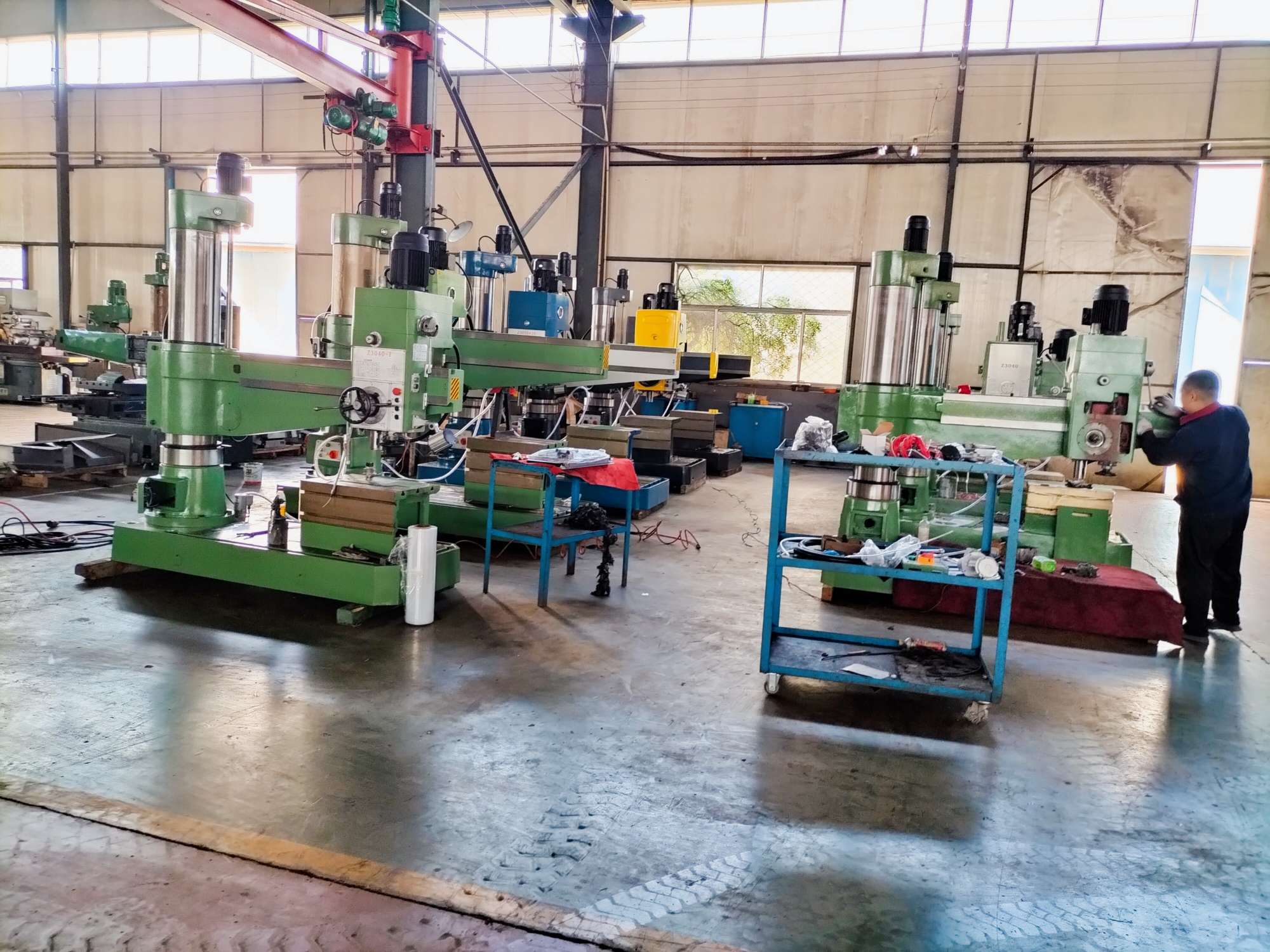
Wondering what is a radial drilling machine and how it can eliminate bottlenecks in your shop? Unlike standard vertical drills that require you to move heavy workpieces, a radial drill allows the spindle to swing and extend directly over massive parts. This guide breaks down its core components, movement capabilities, and crucial safety procedures to help you handle oversized metal fabrication safely and profitably.
If your shop frequently machines large, heavy, or awkwardly shaped metal components, you already know the frustration of using a standard vertical drill. Aligning a massive 500-pound steel plate under a fixed spindle is not only inefficient—it’s dangerous.
This is exactly where the radial drilling machine (or radial arm drill) becomes your shop floor's MVP. Instead of wrestling the workpiece into position, you simply move the tool to the work.
1. How Does a Radial Drilling Machine Work?
A radial drilling machine is a heavy-duty hole processing equipment designed for maximum flexibility. Whether you need to perform drilling, reaming, tapping, or end-face scraping, this machine can handle it all in single-piece or mass-production runs.
Depending on your budget and production scale, these machines are generally divided into two clamping structures: mechanical radial drills (cost-effective) and hydraulic radial drills (faster, automated clamping).
2. Anatomy of a Heavy-Duty Radial Drill (Quick Reference Table)
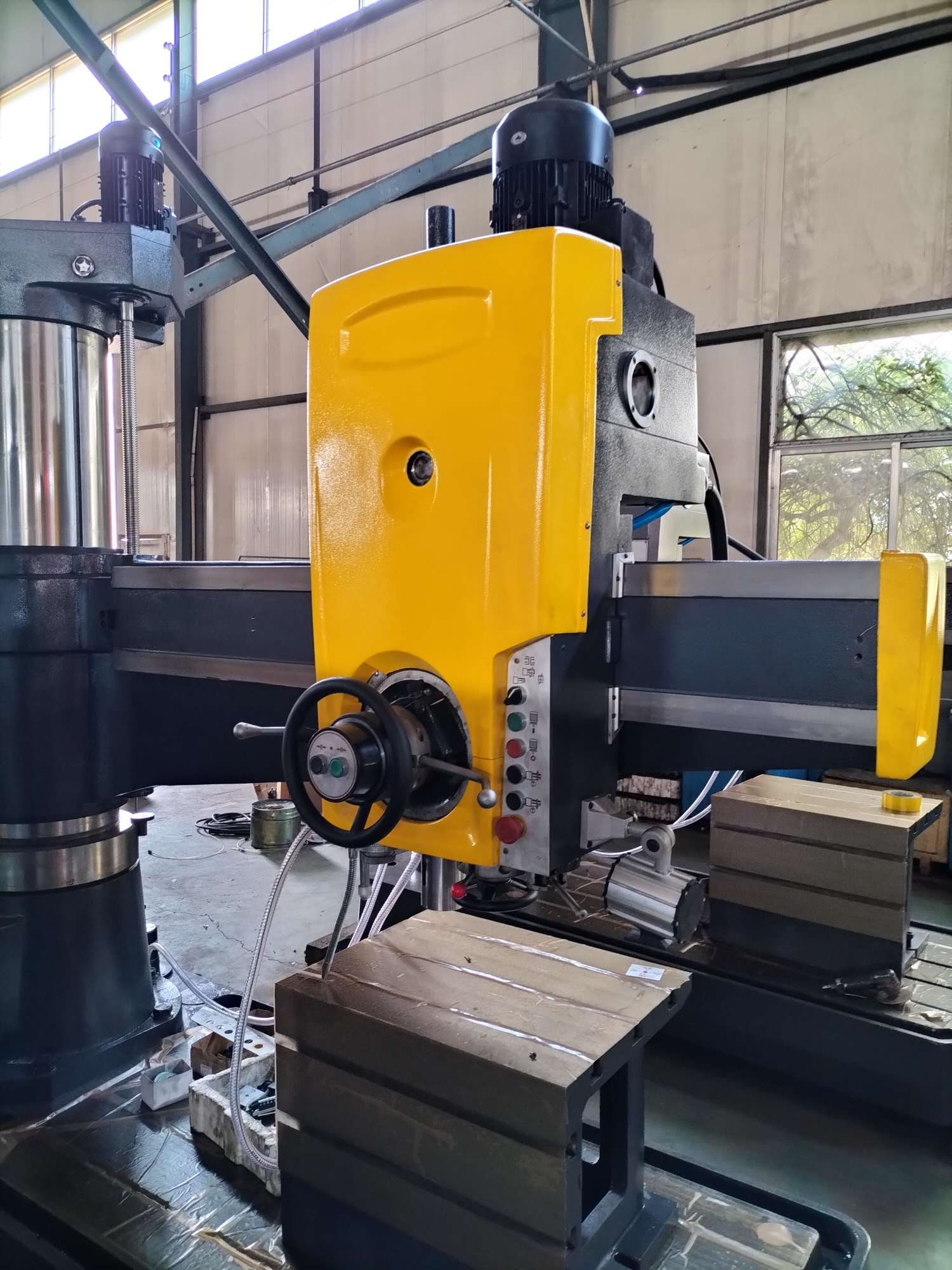
To understand why this machine is so versatile, you need to look at its robust architecture.
We’ve broken down the main structure into a quick-reference table:
| Core Component | Structural Design | Operational Function |
|---|---|---|
| Inner & Outer Columns | The inner column is fixed to the base. The outer column sleeves over it. | Allows the entire arm to rotate a full 360 degrees around the base. |
| Radial Arm (Wishbone) | A heavy cast-iron arm that mounts onto the outer column. | Moves vertically (up and down) via a lifting nut to accommodate tall workpieces. |
| Headstock | A composite unit housing the motor, spindle, and transmission gears. | Slides horizontally back and forth along the radial arm's guide rails. |
| Spindle | The rotating shaft that holds the drill bit. | Delivers the main rotational cutting force and the longitudinal downward feed. |
3. Understanding the 3 Core Movements in Machining
Once the headstock is locked onto the radial rail, the outer column to the inner column, and the arm to the outer column, the actual drilling begins. The machine executes three distinct movements:
Main Movement: The high-speed rotational movement of the spindle.
Feed Movement: The downward, longitudinal feed of the drill bit into the metal.
Auxiliary Movements: The setup movements (swinging the arm 360°, moving the arm up/down, and sliding the headstock horizontally) to find the perfect center point.
4. 11 Essential Safety & Operating Procedures
Because radial drills handle massive parts and generate immense torque, strict operating procedures are non-negotiable.
Pre-Operation Checklist:
- Clear all obstacles within the 360-degree rotation range of the radial arm.
- Never store objects or tools on the radial arm or workbench.
- Ensure the workpiece is clamped tightly according to regulations. A shifting workpiece can cause catastrophic equipment failure and personal injury.
- Do not wear gloves, and ensure long hair is securely tied back inside a hat.
During Machining:
- Never use your hands or blow with your mouth to remove long iron shavings wrapped around the drill bit. Always stop the machine and use a dedicated brush or iron hook.
- When using manual feed, apply gradual pressurization and decompression to avoid snapping the tool.
- Never attempt to flip, clamp, or measure a workpiece while the spindle is rotating. Keep your hands entirely clear of the rotating tool.
- When reaming deep holes, remove the circlip and pin rod carefully without excessive force.
Post-Operation Protocol:
- At the end of your shift, lower the radial arm to its lowest possible position.
- Move the headstock close to the column to minimize leverage stress.
- Ensure all locking mechanisms are clamped tightly before powering down.
5. Real-World ROI: Handling Oversized Parts Profitably
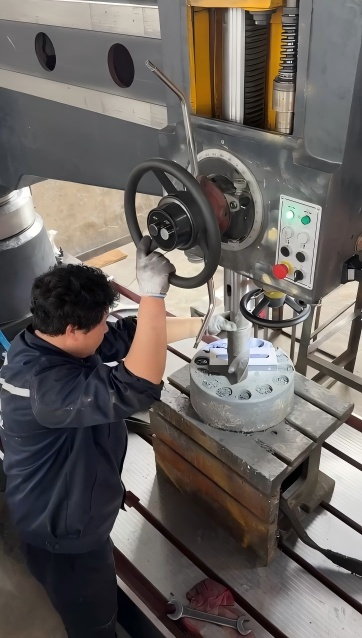
Let's talk about your bottom line. If you are running a busy metal fabrication shop anywhere in the world, turning down lucrative contracts for massive valve housings or structural steel beams because your equipment can't handle the size is a direct hit to your revenue.
Investing in a robust radial drilling machine removes that bottleneck immediately. By allowing your operators to bring the drill directly to the heavy workpiece, you drastically cut down on material handling time, eliminate dangerous crane maneuvers to adjust the part, and speed up your overall workflow. That translates to faster delivery times and a much stronger competitive edge in heavy industries.
6. Upgrade Your Shop Floor with MFG Machinery
Stop letting oversized parts slow down your production. At MFG Machinery, we engineer and supply industrial-grade radial drilling machines built to withstand the most demanding metalworking environments. Whether you need an agile mechanical radial drill or a high-capacity hydraulic model, our experts can match you with the exact specs you need.
Ready to boost your heavy-duty machining capabilities? Please send your inquiry or questions to info@mfg-machinery.com for instant feedback and a customized quote!