
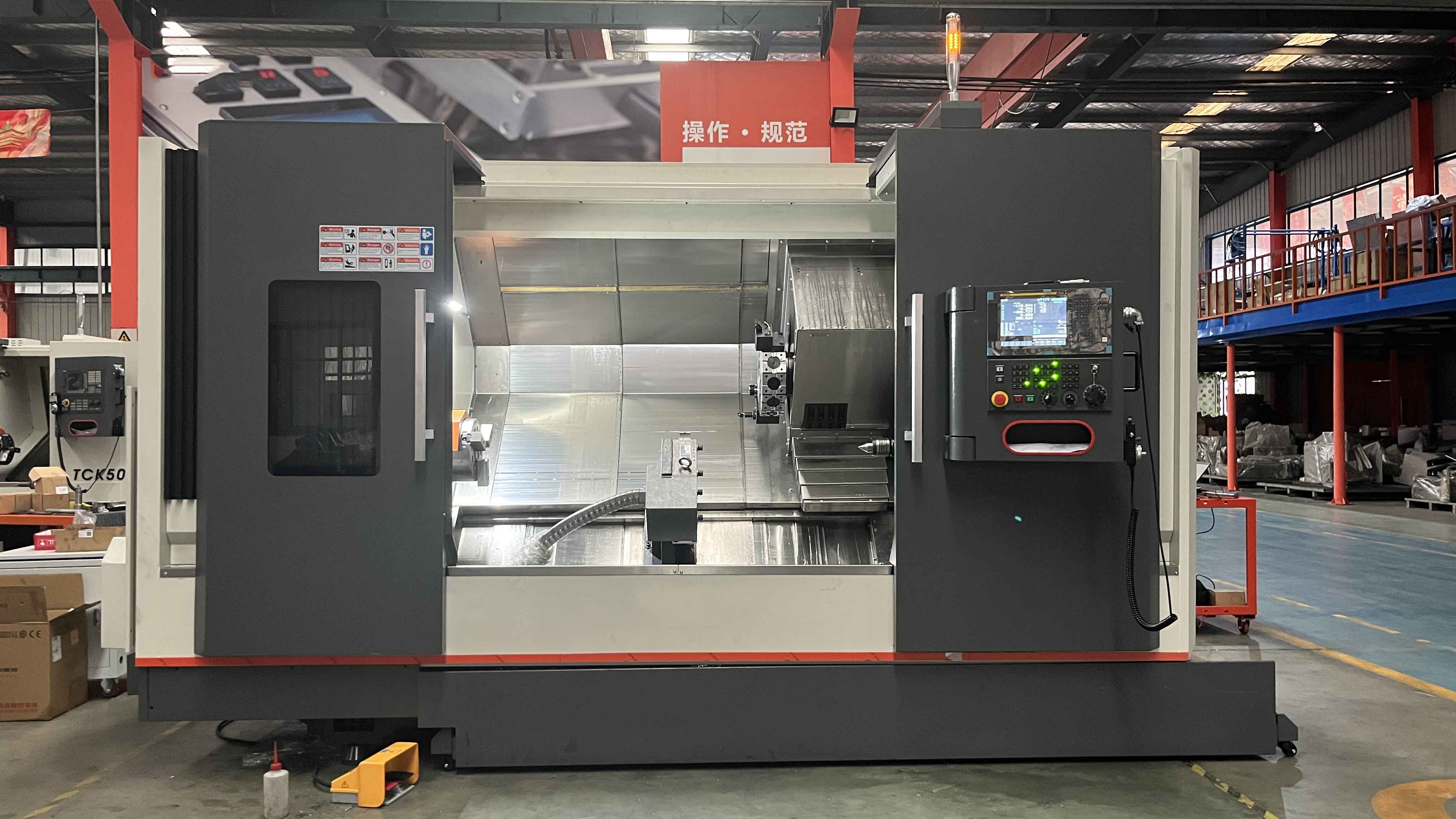
Traditional CNC lathes operate primarily on two linear axes: the Z-axis (longitudinal travel along the spindle length) and the X-axis (radial travel controlling diameter). However, modern turning centers equipped with a live tooling turret often feature a third linear axis—the Y-axis. Understanding how the Y-axis functions is essential for machinists, manufacturers, and buyers looking to invest in advanced multi-tasking machine tools.
 |
|
1. Understanding the CNC Coordinate System
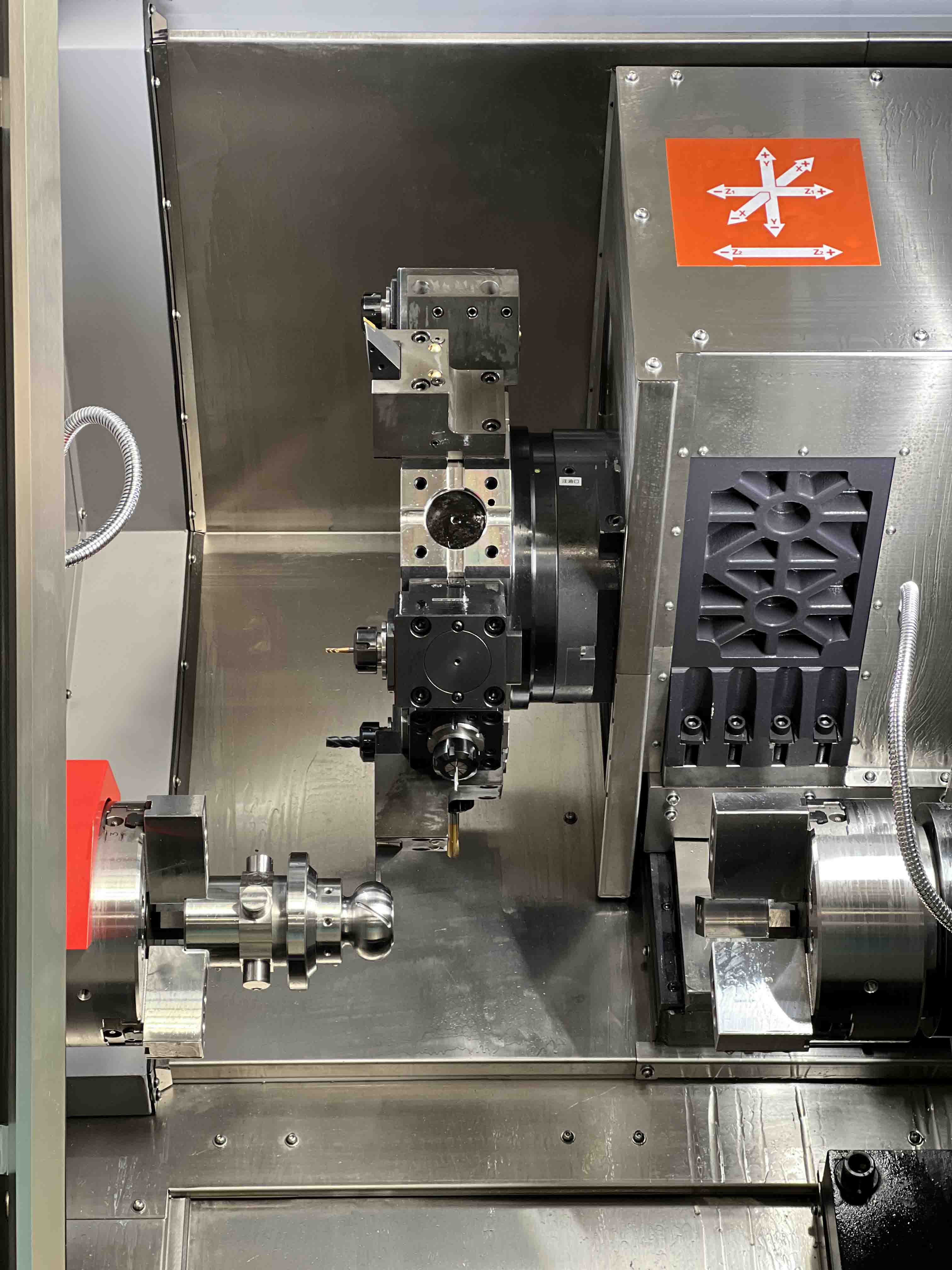
Z-Axis: Moves parallel to the main spindle, governing the length of the workpiece.
X-Axis: Moves radially, perpendicular to the Z-axis, controlling the diameter of turned features.
Y-Axis: Operates perpendicularly to the X-Z plane, shifting the tool vertically above or below the spindle center line (Y0).
2. Key Machining Applications of the Y-Axis
While standard lathes rely strictly on X and Z movements, adding a Y-axis transforms a lathe into a powerful turning-milling center capable of complex operations in a single setup:
Milling Flat Surfaces, Keyways, and Key Flats: Machine square, hexagonal, or dual-flat profiles; mill precise keyways, slots, and notches; cut long longitudinal slots and pockets.
Eccentric Holes and Eccentric Turning: Shift the tool cutting point away from the main spindle centerline to manufacture eccentric shafts, pins, and off-center drilled holes.
Polygon Turning: Synchronize C-axis rotation with Y-axis reciprocating motion to turn polygonal shapes directly through interpolation.
Complex Contour and Side Milling: Use interpolated Y and Z axis movements combined with C-axis indexing to mill intricate side contours, curved slots, and cam profiles.
Auxiliary Chip Breaking & Tool Height Compensation: Perform micro-adjustments to align tool center heights precisely and assist with chip breaking.
3. Standard Lathe vs. Turning-Milling Center (With Y-Axis)
| Feature / Operation | Standard Lathe (C-Axis + Live Tools, No Y) | Turning-Milling Center (With C & Y Axes) |
|---|---|---|
| Basic OD Turning | Handled via X and Z axes | Handled via X and Z axes (Y stays at Y0) |
| Milling Long Keyways | Not possible (limited to short radial slots) | Full Y+Z interpolation for deep, long slots |
| Eccentric Machining | Requires custom off-center fixtures | Direct programmatic offset via Y-axis |
| Flat & Polygon Milling | Restricted to very short faces | Full multi-axis milling capability |
| Overall Part Complexity | Requires secondary milling operations | Complete 'Done-in-One' machining |
4. Common Misconceptions: What the Y-Axis Cannot Do
Important Rule: The Y-axis is not used for standard inner/outer diameter turning. If you attempt to turn standard cylinders with Y ≠ 0, you will accidentally machine an eccentric or oval shape!
Furthermore, it is vital to distinguish between the live tool turret and the Y-axis:
Live Tool Turret: Acts as the tool holder and provides the rotary drive power to spin milling cutters or drills.
Y-Axis: Provides the linear vertical motion that shifts the entire turret assembly off-center.
About Shanghai MFG Machinery Equipment Co., Ltd
Shanghai MFG Machinery Equipment Co., Ltd specializes in industrial machine tools manufacturing and export. For inquiries regarding our CNC turning and milling centers,
Contact us today at info@mfg-machinery.com or visit our official website at https://www.mfg-machinery.com/ to discuss your technical specifications and get a custom quote.