
In the metal processing industry—whether you are working with profiles, pipes, or solid bars—choosing between an automatic circular saw and an automatic band saw is a critical decision. These two machines are the backbone of automation in sectors like hardware manufacturing, automotive parts, steel structures, and mold making.
Both machines offer automated feeding, length-cutting, and discharging. However, they differ fundamentally in precision, efficiency, material compatibility, and operating costs. Choosing the wrong machine—such as using a band saw for high-precision tasks or a circular saw for heavy, large-scale cutting—can lead to bottlenecks, high scrap rates, and wasted budget.
In this guide, we break down the differences and provide a clear framework to help you choose the equipment that perfectly matches your production needs.
1. The Core Difference: How They Work
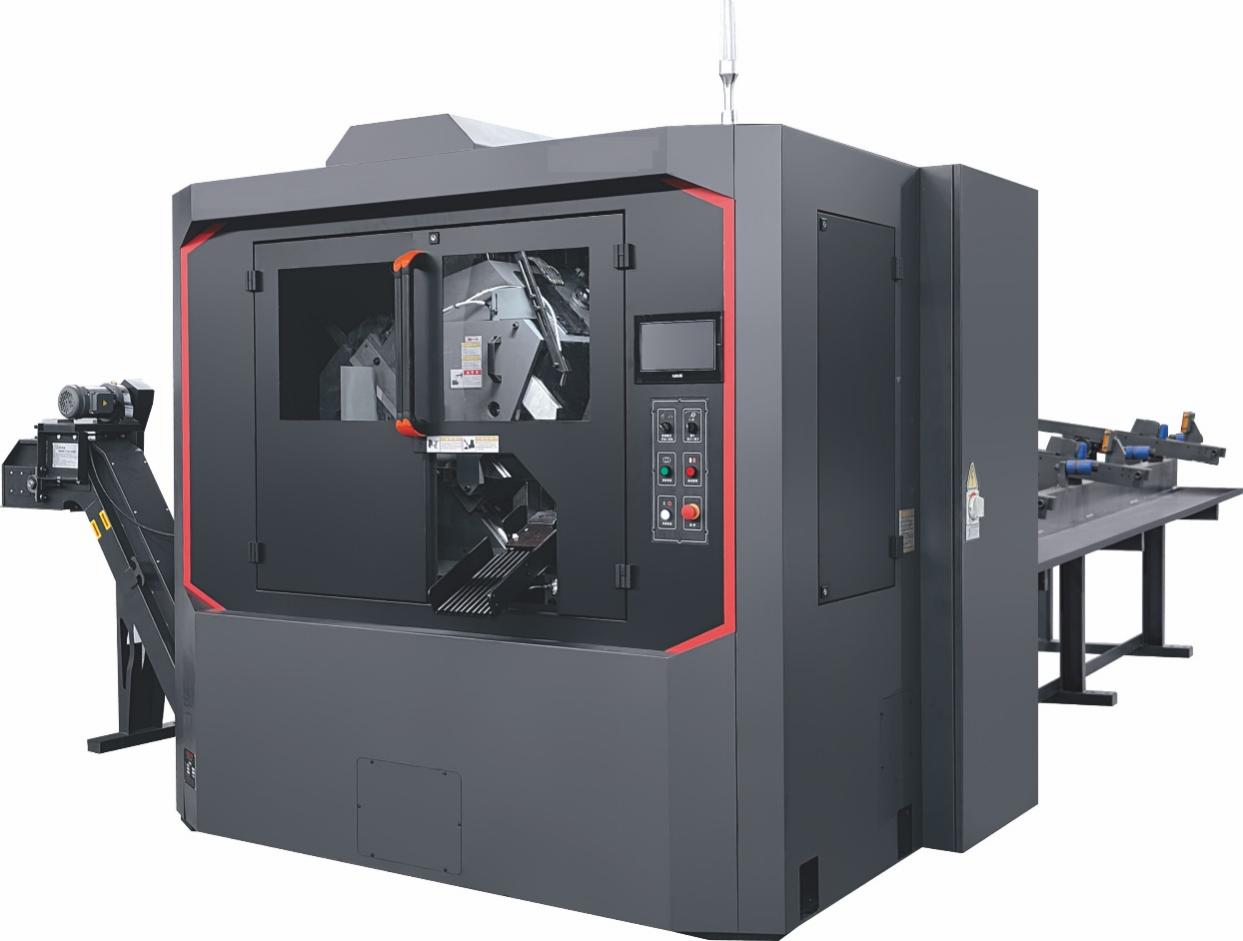
Automatic Circular Saw (High-Speed Rigid Cutting)
The circular saw uses a high-speed rotating alloy or ceramic circular blade. It employs a rigid cutting process where the blade cuts through the material with high stability. Because the blade is rigid and does not vibrate, it delivers an extremely smooth surface finish with almost no thermal deformation.
Key Traits: Rigid cutting, instant separation, high precision, and perfect end-face quality.
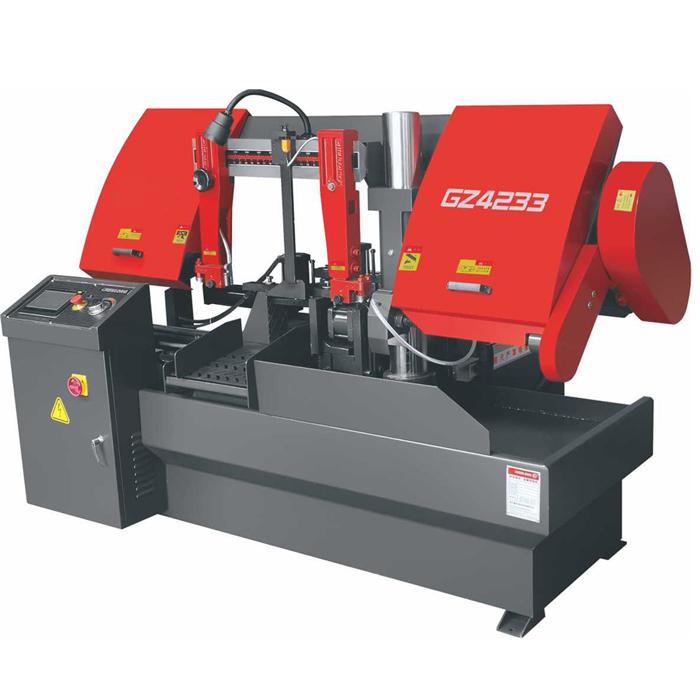
Automatic Band Saw (Flexible Continuous Cutting)
The band saw uses a continuous, flexible loop blade that cuts as it rotates. It relies on the teeth of the blade to "grind" or chip away the material layer by layer. Because the blade is thin and flexible, it is highly adaptable but less rigid than a circular blade.
Key Traits: Flexible cutting, gradual material removal, narrow kerf (cutting width), and excellent versatility for large-scale work.
2. Performance Comparison
| Feature | Automatic Circular Saw | Automatic Band Saw |
| Pictures | |
 |
| Cutting Precision | Excellent (±0.05mm), high verticality | Moderate (±0.1–0.3mm), minor deviation possible |
| Efficiency | Extremely fast (instant cut) | Slower (gradual layered cutting) |
| Surface Finish | Smooth, no burrs, no heat damage | Rougher, may have fine burrs/saw marks |
| Material Loss | Higher (due to thicker blade) | Very low (due to thin blade) |
| Best For | Medium/small diameter bars & pipes | Large diameter, thick-walled materials |
| Maintenance | Lower frequency, but higher part cost | Frequent blade changes, lower part cost |
3. Deep Dive: Advantages and Limitations
Why Choose an Automatic Circular Saw?
Pros: It provides a "finished" cut that usually requires no secondary processing (no milling or grinding needed). It is the king of mass production, offering speeds 3–8 times faster than a band saw.
Cons: Limited by the diameter of the circular blade; it cannot handle massive, oversized workpieces. Initial equipment investment is higher.
Why Choose an Automatic Band Saw?
Pros: Incredible versatility. It can cut almost any size, thickness, or irregular shape. It is highly cost-effective for expensive materials (like titanium or thick stainless steel) because the thin blade produces very little scrap.
Cons: Slower production speed. The cutting surface often requires secondary finishing, and the blades wear out quickly, requiring more frequent manual intervention.
4. Selection Guide: Which One Fits Your Factory?
Choose an Automatic Circular Saw If:
You are performing high-volume, standardized mass production.
Your workpieces are small to medium-sized pipes, bars, or aluminum profiles.
You require high precision and a clean finish that allows for immediate assembly or welding.
Typical Industries: Automotive parts, hydraulic fittings, furniture tube manufacturing.
Choose an Automatic Band Saw If:
You handle small batches, diverse custom orders, or non-standard parts.
You need to cut large-diameter, thick-walled, or heavy steel structures.
You are working with high-value materials where minimizing scrap is a top priority.
Typical Industries: Steel construction, heavy machinery, mold making, forging.
The Pro Strategy: The Hybrid Setup
For large-scale factories with diverse production lines, the optimal solution is a combination. Use the Circular Saw for precision, high-speed mass production of standard parts, and the Band Saw as your "universal workhorse" to handle large, custom, or rough-cut jobs.
5. Summary: Avoiding Common Pitfalls
Don't just look at the price tag: A band saw may be cheaper to buy, but higher labor and slower output can make it more expensive in the long run for mass production.
Respect the process: Using a band saw for precision parts will balloon your labor costs due to the need for secondary polishing.
Material value matters: For high-cost materials, the material savings from a band saw’s thin blade can pay for the machine over time.
Need Expert Advice?
At Shanghai MFG Machinery Equipment Co., Ltd.,we specialize in high-performance cutting solutions tailored to your production goals. Whether you need the precision of a Circular Saw or the heavy-duty power of a Band Saw, we are here to help you optimize your production line for maximum efficiency.
Contact our engineering team:info@mfg-machinery.com today for a free capacity analysis!