
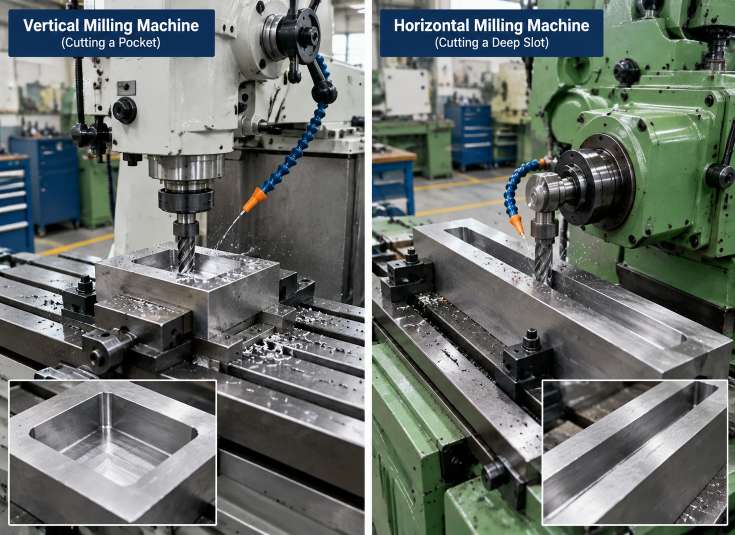
A vertical mill cuts from the top down and is perfect for plunging, drilling, and shaping flat plates. A horizontal mill cuts from the side using a thick arbor, making it the best choice for heavy material removal and cutting deep slots. The right choice depends entirely on your part shape and how many chips you need to move per hour.
Where the Spindle Points Changes Everything
The spindle direction decides what the machine can handle. On a vertical machine, the cutting tool points straight down at the work table. You use end mills to plunge into the metal, cut pockets, or drill blind holes. The downside? When cutting deep cavities, steel chips pile up at the bottom. The tool catches these old chips and cuts them again. This "chip recutting" wears out carbide inserts quickly.
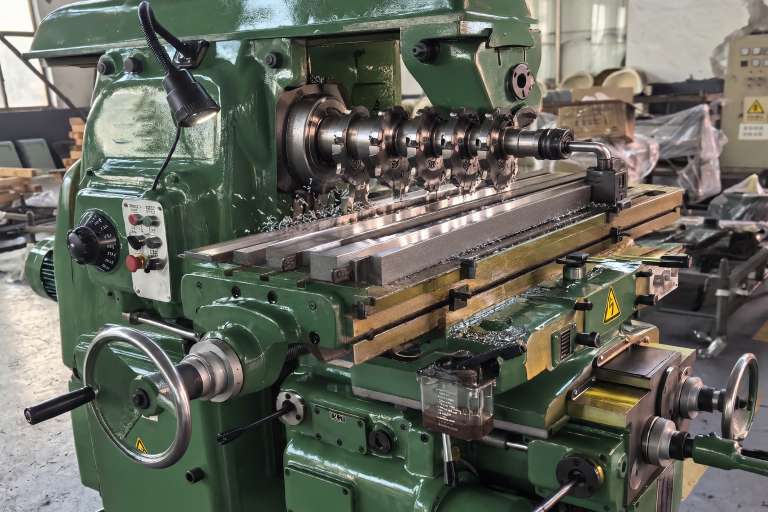
On a horizontal machine, the spindle sits parallel to the table. Instead of a small end mill, you slide heavy circular cutters onto a thick steel arbor. Because the cutter bites into the side of the part, gravity pulls the chips straight down to the floor. You do not recut chips, which means you can push the machine much harder without breaking tools.
Shop-Floor Pain Points (And How to Fix Them)
Operators face different struggles depending on which frame they use. Here is what usually goes wrong and how to correct it:
| Machine Type | The Operator's Problem | The Real Cause | Quick Shop Fix |
|---|---|---|---|
| Vertical Mill | Loud chatter during deep cuts | Tool stick-out is too long | Shorten the end mill; use a lighter depth of cut |
| Vertical Mill | Cutter chips or breaks | Chips are trapped in the pocket | Use an air blast to clear chips and stop recutting |
| Horizontal Mill | Setup takes over an hour | Aligning arbor supports is slow | Keep dedicated arbors built for repeat jobs |
| Horizontal Mill | Operator crashes the tool | Poor visibility from the side | Run a slow dry pass before the real cut |
Which Machine Matches Your Parts?
You cannot buy a machine based on price alone. You have to look at the geometry of your daily work.
If your daily work involves custom molds, aluminum parts, or drilling holes into flat plates, a vertical conventional milling machine fits your needs perfectly. It takes up less floor space, tooling is cheap, and operators can easily see the cut.
If your shop builds agricultural equipment, heavy gearboxes, or needs to cut wide slots into hard steel, a horizontal conventional milling machine is the better investment. You can stack several cutters on one arbor (a process called gang milling) to cut multiple faces at the same time. This cuts your cycle time in half on heavy jobs.
Market Insight: Splitting the Workload
Many growing shops eventually buy both machine types. They use the horizontal mill to rapidly rough out heavy blocks of steel and remove the bulk of the material. Then, they move the part to a vertical mill to finish the fine details, tap holes, and clear small pockets. Buying the right frame for the right step stops you from wearing out light machines on heavy jobs.
Send Us Your Print
Not sure if you need a vertical plunging setup or heavy horizontal cutting power? Send us your part drawings and material types. We will help you select the right machine for your shop.
- Email: info@mfg-machinery.com
- Tell/WA: +86 175 2133 1995