
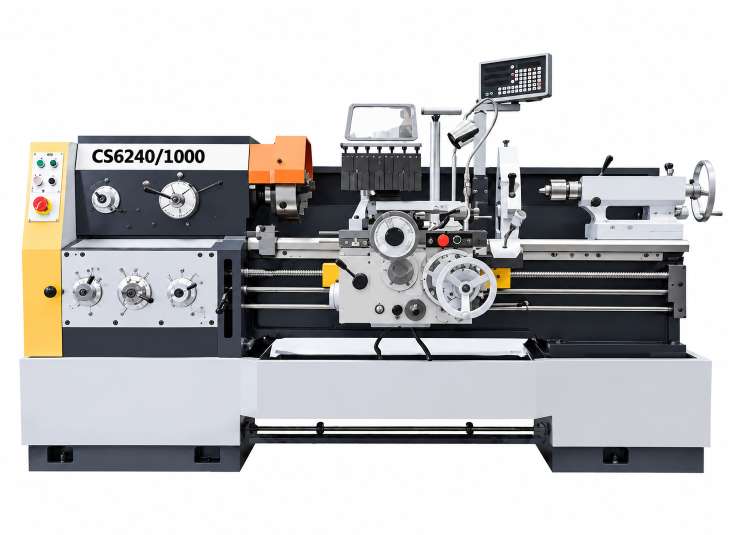
A gap bed lathe (like the CS6240) features a removable cast-iron block under the chuck, allowing you to turn oversized, large-diameter parts without buying a massive machine. A straight bed lathe (like the CS6140) has a continuous, unbroken casting that provides maximum rigidity for heavy roughing and long shafts. Choose the gap bed for ultimate versatility in a repair shop, but stick to the straight bed if you run heavy continuous turning.
How the Gap Bed "Breaks the Rules" (CS6240)
Job shops never know what part will walk through the door next. You might spend all week turning 400 mm steel shafts, and then a customer drops off a massive 630 mm pump housing that needs a quick facing cut.
This is where a gap bed lathe saves the day. By unbolting and removing the "gap block"—a section of the bed rails directly in front of the headstock—you instantly increase the machine's swing capacity.
Instead of turning down a profitable job or spending extra capital on a heavy-duty lathe just for one large part, the gap bed allows a standard mid-sized lathe to punch above its weight class. It is the ultimate tool for repair and maintenance shops.
The Hidden Catch: Why Straight Beds (CS6140) Still Rule
If a gap bed is so useful, why do many production managers insist on buying straight bed lathes?
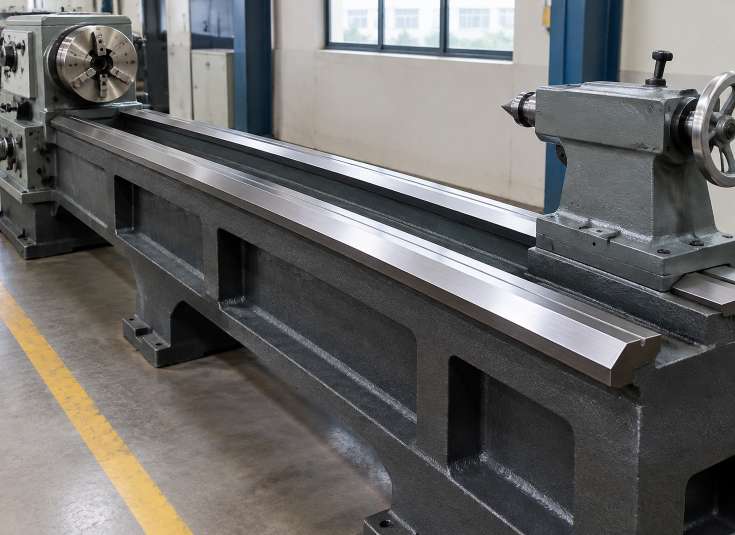
The answer is structural rigidity. A lathe bed acts as the spine of the machine. When you cut a gap into that spine, you introduce a weak point. Even when the gap block is bolted firmly in place, the joint can slightly flex under extreme cutting forces.
Furthermore, removing the gap block is easy, but putting it back is difficult. If even a microscopic piece of dirt or a tiny steel chip is trapped under the block when it is re-installed, the bed rails will no longer be perfectly aligned. The carriage will bind or judder when it rolls over the joint, leaving chatter marks on your workpiece.
If your shop focuses on aggressive material removal, deep cuts on alloy steels, or machining long shafts that require a steady rest, the unbroken foundation of a straight bed is non-negotiable.
Whether you need the continuous rigidity of the CS6140 or the expanded swing capacity of the CS6240, you can compare the exact dimensions and spindle specs on the MFG Machinery conventional lathe series page.
Quick Selection Matrix: CS6140 vs. CS6240
Use this chart to match the correct machine frame to your daily workload:
| Shop Requirement | Straight Bed (CS6140) | Gap Bed (CS6240) |
|---|---|---|
| Primary Advantage | Maximum rigidity and cutting stability | Maximum versatility and swing capacity |
| Best Workpiece Types | Long shafts, heavy cylinders, bar stock | Odd-shaped castings, large short flanges |
| Carriage Travel | Perfectly smooth from tailstock to chuck | Joint requires careful cleaning to prevent binding |
| Heavy Roughing | Excellent; absorbs heavy harmonic vibration | Good, but limit heavy cuts when the gap is removed |
| Best Shop Environment | Production turning, heavy equipment repair | Custom job shops, general maintenance labs |
Market Insight: The "Never Remove It" Rule
Many experienced machinists buy gap bed lathes purely for "insurance." They want the ability to turn a massive part just in case, but they follow a strict shop floor rule: Never remove the gap block unless it is absolutely necessary. Buyers are realizing that if their business model revolves primarily around standard shaft work, paying for a gap bed introduces unnecessary alignment risks, making the solid straight bed the smarter long-term investment.
Need Help Sizing Your Next Lathe?
Do not let an oversized flange or a heavy roughing job ruin your production schedule. Send us your most common part dimensions, maximum required swing, and material types. MFG Machinery will help you evaluate whether a straight bed or a gap bed structure is the right fit for your shop.
- Email: info@mfg-machinery.com
- Tell/WA: +86 175 2133 1995