
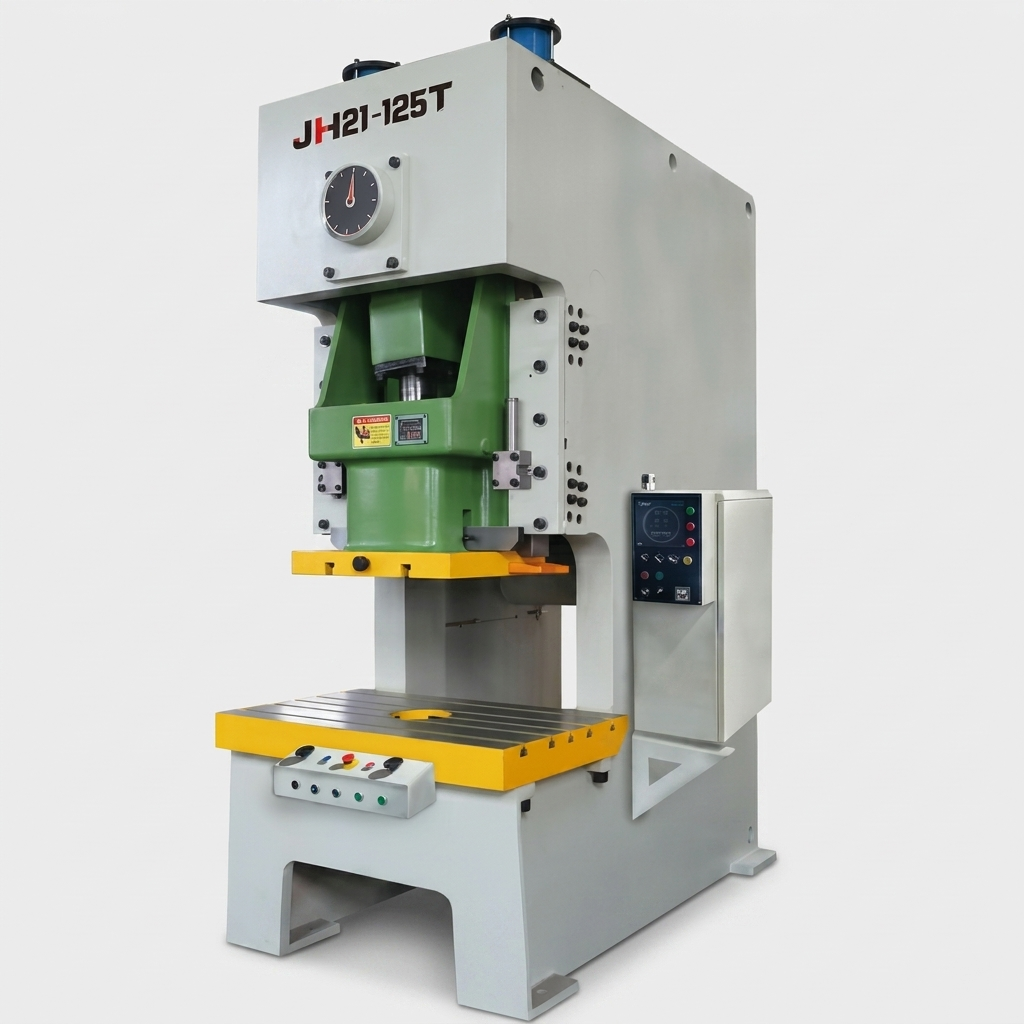
Choosing the right punch press is a crucial decision for any metal stamping or manufacturing workshop. Whether you are upgrading your production line or setting up a new facility, selecting the wrong machine can lead to safety hazards, frequent downtime, or wasted budget.
At Shanghai MFG Machinery Equipment Co., Ltd, we help global clients find the most efficient and cost-effective metal forming solutions. In this guide, we break down the key differences between pneumatic punch presses and traditional mechanical punch presses to help you make the right choice.
Quick Summary
Choose a Pneumatic Punch Press if: You need high-volume stable stamping, strict safety features, adjustable stroke/speed, and frequent mold changes.
Choose a Mechanical Punch Press if: You only need simple punching or blanking, are working with a tight budget, or are producing low-speed, small parts.
Core Working Principle Differences
1. Mechanical Punch Press (Rigid Clutch)
The motor drives a flywheel, and the clutch uses a rigid mechanical engagement. Once engaged, the slider must complete the entire stroke and cannot stop midway.
2. Pneumatic Punch Press (Pneumatic Friction Clutch)
It uses a pneumatic cylinder to drive friction plates for engagement. The slider can stop, inch, or jog at any position, providing significantly higher safety performance.
Comparison Table: Pneumatic vs. Mechanical Punch Press
| Feature | Mechanical Punch Press (Rigid Clutch) | Pneumatic Punch Press (Friction Clutch) |
|---|---|---|
| Pictures | 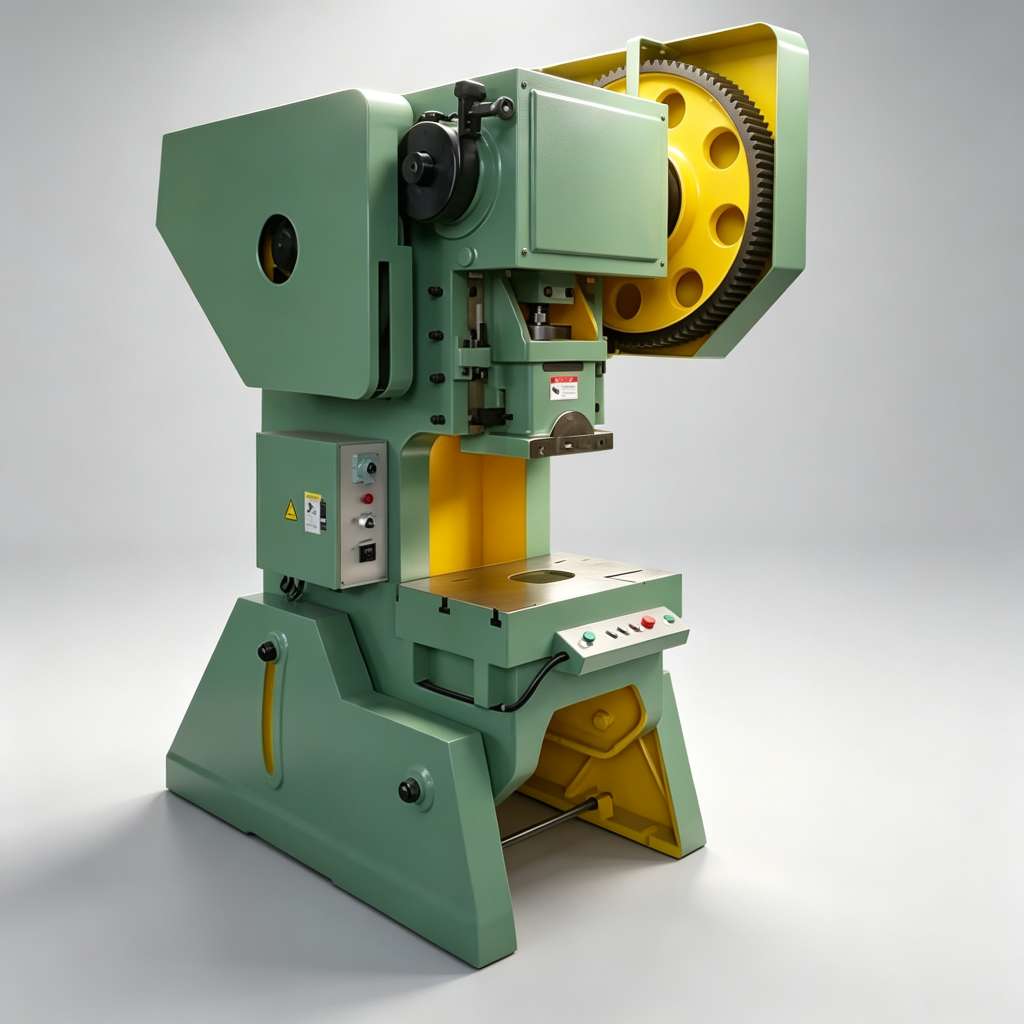 |
|
| Safety | Poor (rigid bite, high risk of hand injuries; lacks emergency stop) | Good (can stop midway, equipped with light curtains for safe operation) |
| Operation Modes | Continuous / Single stroke only; cannot inch | Jog, inch, single stroke, and continuous; easy mold adjustment |
| Stroke & Speed | Fixed stroke and non-adjustable speed | Supports adjustable stroke and variable frequency speed control (on select models) |
| Noise Level | Flywheel runs continuously; higher noise level | Flywheel can run at low load on standby; slightly lower noise |
| Maintenance | Simple structure, cheap spare parts; clutch wears out easily and is hard to repair | Complex structure, seals and friction plates need regular replacement; parts are costlier |
| Energy Efficiency | Motor runs constantly; high idle energy consumption | Controls clutch start/stop; more energy-efficient for batch production |
| Price | Much cheaper for the same tonnage | 30% to 80% more expensive for the same tonnage |
| Suitable Applications | Simple punching, cutting, thin sheet blanking; simple dies with few adjustments | Deep drawing, forming, precision blanking, multi-process progressive dies; frequent adjustments needed |
| Die Protection | Almost none; material jams can directly break the molds | Overload protection available; jams can trigger a stop to protect the molds |
When to Choose a Mechanical Punch Press
Single-Product Production: Your products are consistent, running simple punching and cutting tasks year-round with rare mold changes.
Budget Constraints: Your budget is limited, production volume is low, and you are mainly working with thin steel sheets and small components.
Experienced Operators: You have skilled, veteran operators and proper safety guards in place.
❌ Not Recommended For: New product prototyping, frequent multi-product changeovers, deep drawing/forming, or manual feeding close to the danger zone.
When to Choose a Pneumatic Punch Press (The Modern Industry Standard)
High Product Variety: You produce many different parts, require frequent mold changes or test runs, and need inching modes for quick setup.
Advanced Processes: You require deep drawing, shaping, precision blanking, and high stamping stability.
Strict Safety Standards: You need light-curtain safety protection for manual loading and place a high priority on operator safety.
Expensive Molds: Your molds are costly, and you need overload protection to prevent "stuck press" (dead center lock) disasters.
Extra Factors to Consider
Air Source Requirements: Pneumatic presses require a stable air compressor supply (usually 0.5 to 0.7 MPa). Moisture in the air line will wear down the friction plates quickly. Do not choose pneumatic if you lack a reliable air supply.
Tonnage Selection: Always reserve at least a 130% safety margin on your actual required stamping force. Do not run your press at full capacity long-term. For deep drawing, you must calculate the total work energy required, not just the tonnage.
New vs. Used Equipment: Second-hand rigid-clutch presses carry massive safety hazards, and many safety authorities heavily restrict them. For new projects, pneumatic friction presses are strongly recommended.
Handling a Stuck Press (Dead Center Lock): Both types can occasionally jam, but pneumatic presses can be reversed to clear the jam easily, whereas older rigid-clutch presses are notoriously difficult to fix.
Partner with Shanghai MFG Machinery Equipment Co., Ltd
Are you planning to upgrade your production line or looking for custom stamping solutions?
Contact Shanghai MFG Machinery Equipment Co., Ltd today! Whether you need a high-speed pneumatic punch press, a mechanical press, or hydraulic machines, please share your tonnage requirements, sheet metal material, thickness, processes (punching/blanking/drawing), and monthly production volume. Our engineering team will recommend the most suitable, cost-effective machine for your business.
Website:https://www.mfg-machinery.com/type/punching-machine
Email: info@mfg-machinery.com
Phone: 008615803802793