
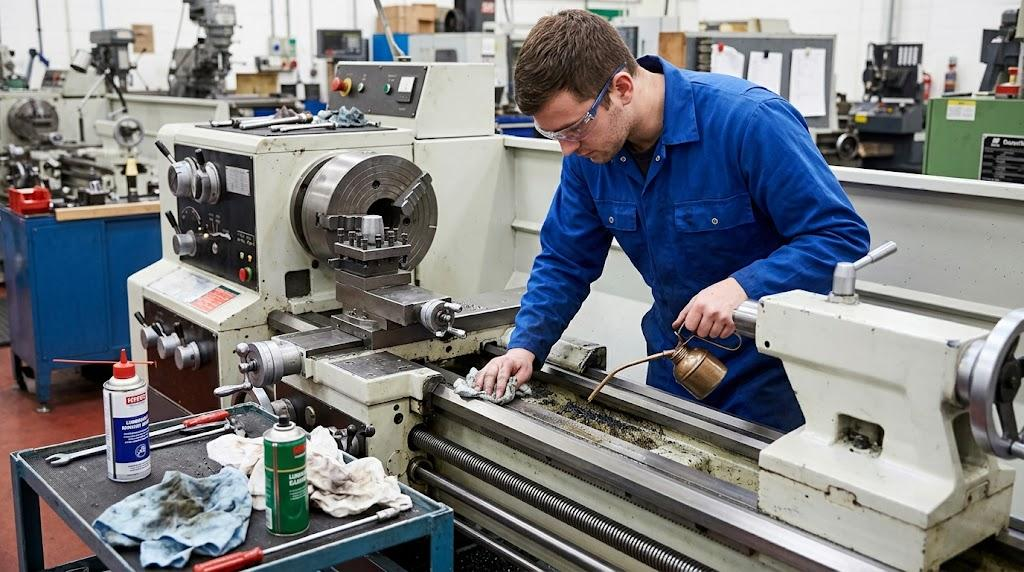
A manual lathe rarely loses accuracy overnight. In most workshops, the first warning signs appear on the workpiece: a long shaft develops taper, a turned surface becomes rough, thread cutting feels unstable, or the chuck needs more adjustment than usual.
These problems are often treated as operator issues. In many cases, they are maintenance signals.
For repair shops, training centers, toolrooms and small-batch manufacturers, a conventional lathe is expected to be available whenever a shaft, sleeve, roller or custom part needs machining. Keeping that machine accurate is not complicated, but it does require regular checks on the parts that carry load, movement and alignment.
When the Workpiece Shows the Problem First
A practical way to maintain a manual lathe is to start from the machining result.
If the diameter changes from one end of the shaft to the other, check the tailstock alignment, bed level and tool deflection.
If the surface finish becomes rough, inspect guideway lubrication, tool rigidity, spindle bearing condition and cutting parameters.
If the part is not concentric after turning, check chuck runout, jaw condition and spindle nose cleanliness.
If thread cutting becomes inconsistent, inspect the lead screw, half nut, feed rod and backlash in the carriage system.
This problem-to-machine approach helps maintenance teams find the cause faster instead of replacing parts blindly.
Guideway Lubrication: The First Line of Protection
The bed guideways carry the carriage during every turning operation. If chips, dust or dried coolant remain on the sliding surface, they can increase friction and accelerate wear.
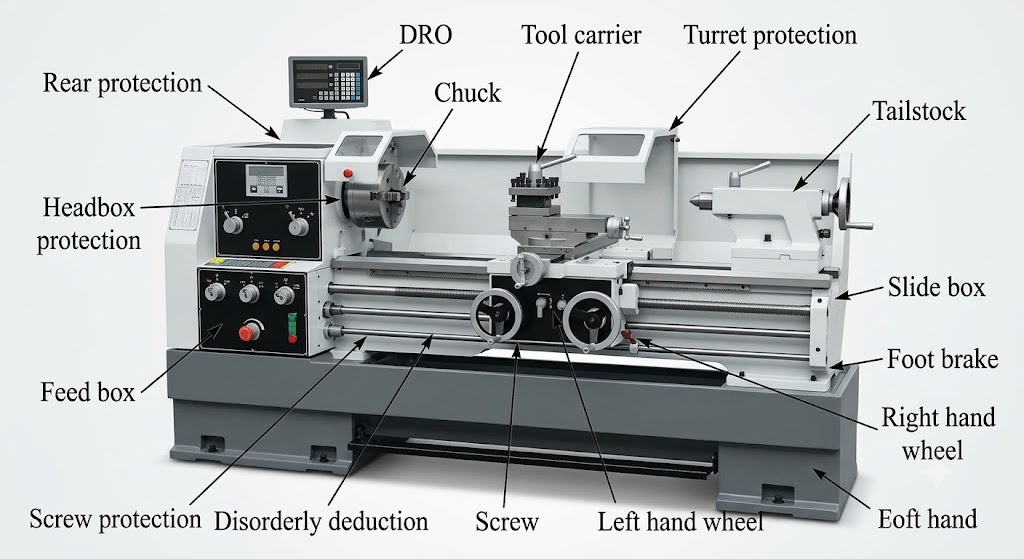
For daily operation, the guideways should be cleaned before machining and lubricated according to the machine manual. The cross slide, compound rest, tailstock base, lead screw and apron lubrication points should also be checked.
A dry guideway does not only reduce machine life. It can also make carriage movement uneven, which affects dimensional control and surface finish.
Spindle Bearing Condition: Listen Before Failure Happens
The spindle system directly affects roundness, surface finish and cutting stability. Early bearing problems often show up as noise, heat or vibration.
Operators should pay attention to:
· Unusual sound at low or high spindle speed
· Spindle temperature after continuous running
· Vibration during heavier cuts
· Visible changes in surface finish
· Inconsistent diameter on similar parts
For precision inspection, a test bar and dial indicator can be used to check spindle runout. If the result changes noticeably over time, the spindle nose, bearings and chuck mounting surface should be inspected before heavy-duty machining continues.
Learn more about MFG Machinery's manual lathe machine Spindle and gearbox options.
Chuck Runout: A Small Error That Becomes a Big Defect
Chuck condition is often overlooked because it looks simple. In practice, worn jaws, chips on the clamping surface or poor mounting can quickly affect concentricity.
For repair and small-batch work, chuck runout should be checked regularly with a dial indicator. A ground test bar is usually enough for routine inspection.
Basic inspection method:
1. Clamp the test bar.
2. Place the dial indicator near the chuck.
3. Rotate the spindle by hand.
4. Record the total indicator reading.
5. Repeat farther from the chuck if long-part accuracy is important.
Lead Screw Backlash and Feed Accuracy
Backlash is common in manual lathes, but excessive backlash makes feed control less predictable. This is especially important when cutting threads, finishing shoulders or machining parts that require repeated manual adjustment.
Maintenance teams should check:
· Cross slide backlash
· Compound rest backlash
· Lead screw wear
· Half-nut engagement
· Feed rod movement
· Carriage response when reversing direction
Backlash does not always mean the machine must be repaired immediately. The key is to record the value and watch whether it increases.
Tailstock Alignment for Long Shafts
Tailstock alignment matters most when machining between centers or supporting long workpieces. If the tailstock is offset, the finished shaft may show taper even when the tool and cutting parameters are correct.
A simple workshop test is to machine a light finishing cut on a test bar between centers, then measure both ends with a micrometer. If the diameter difference exceeds the required tolerance, the tailstock should be adjusted.
Tailstock alignment should be checked after:
· Machine installation
· Relocation
· Heavy impact
· Long-term high-load machining
· Repeated long-shaft turning
For larger shaft work, compare MFG Machinery’s heavy duty conventional lathe models.
Maintenance Rhythm for Different Workshops
A training school, a repair shop and a heavy machining workshop do not use a lathe in the same way. The maintenance plan should match the workload.
| Workshop Type | Main Risk | Maintenance Focus |
|---|---|---|
| Training center | Misoperation, poor cleaning habits | Daily cleaning, lubrication, safety checks |
| Repair shop | Irregular workpieces, emergency jobs | Chuck runout, tailstock alignment, spindle noise |
| Toolroom | Precision one-off parts | Backlash, carriage movement, surface finish |
| Heavy-duty machining | High load and vibration | Bed level, spindle bearing, gearbox condition |
| Small-batch factory | Repeated dimensional control | Feed accuracy, chuck condition, guideway wear |
What Buyers Should Check Before Purchasing
A maintenance-friendly manual lathe usually has better long-term value. Buyers should not only compare swing over bed, distance between centers and motor power. They should also check whether the machine is easy to inspect, lubricate and service.
Key points include:
· Hardened and ground guideways
· Rigid cast iron bed
· Stable spindle bearing structure
· Clear lubrication points
· Reliable gearbox and feed system
· Adjustable tailstock
· Safety guard and emergency stop
· Spare parts availability
· Operation and maintenance documentation
· Remote technical support for overseas customers
For international buyers, these details affect not only machine life, but also downtime, operator confidence and spare parts planning.
MFG Machinery Support
MFG Machinery supplies manual lathes and heavy duty conventional lathes for repair shops, schools, maintenance departments and general machining workshops.
For overseas buyers, we can provide technical specifications, machine videos, spare parts support and online factory inspection before shipment. If a customer needs a lathe for long shafts, large spindle bore requirements or frequent repair work, our team can help compare suitable machine configurations.
Conclusion
Extending the service life of a manual lathe starts with small routines: clean the guideways, keep sliding surfaces lubricated, check chuck runout, monitor spindle condition, control backlash and verify tailstock alignment.
These checks do not take much time, but they help protect the accuracy of the machine and reduce avoidable downtime.
Download the manual lathe technical specification sheet, or schedule an online factory video inspection with the MFG Machinery engineering team:
Email: info@mfg-machinery.com
Tell/WA: +86 175 2133 1995
Web: www.mfg-machinery.com
FAQ
How often should a manual lathe be lubricated?
Guideways and sliding surfaces should be lubricated daily. Gearbox and apron lubrication should follow the machine manual and actual workload.
What causes taper when turning a long shaft?
Common causes include tailstock misalignment, bed level error, guideway wear, tool deflection and insufficient workpiece support.
How can I check chuck runout?
Use a ground test bar and dial indicator. Rotate the spindle by hand and record the total indicator reading.
When should spindle bearings be inspected?
Inspect them when spindle noise, heat, vibration, poor surface finish or unstable dimensions appear.
Is a manual lathe still suitable for small-batch production?
Yes. For simple turned parts, repair jobs and low-volume production, a manual lathe can reduce setup time and provide flexible operation.