
Hydraulic vs. Mechanical Radial Drilling machine: Which One Should You Choose?
When equipping your machine shop, choosing between a Hydraulic Radial Drill and a Mechanical Radial Drill is a critical decision. While they may look similar, their performance, precision, and operational costs differ significantly.
This guide breaks down the structural differences and helps you decide which machine fits your production needs.
1. Quick Overview: Structural Differences
Hydraulic Radial Drill (e.g., Z3050, Z3063, Z3080)
These are "heavy-duty" machines designed for precision and efficiency.
Transmission: Features hydraulic pre-selection gear shifting. A single lever controls spindle speed, forward/reverse, and braking.
Clamping: Automatic hydraulic clamping for the column, arm, and headstock. No manual wrenching required.
Protection: Equipped with an oil-pressure clutch for overload protection, preventing gear damage during heavy cutting or tapping.
Stability: Massive cast-iron construction (3 tons+), offering superior vibration damping.
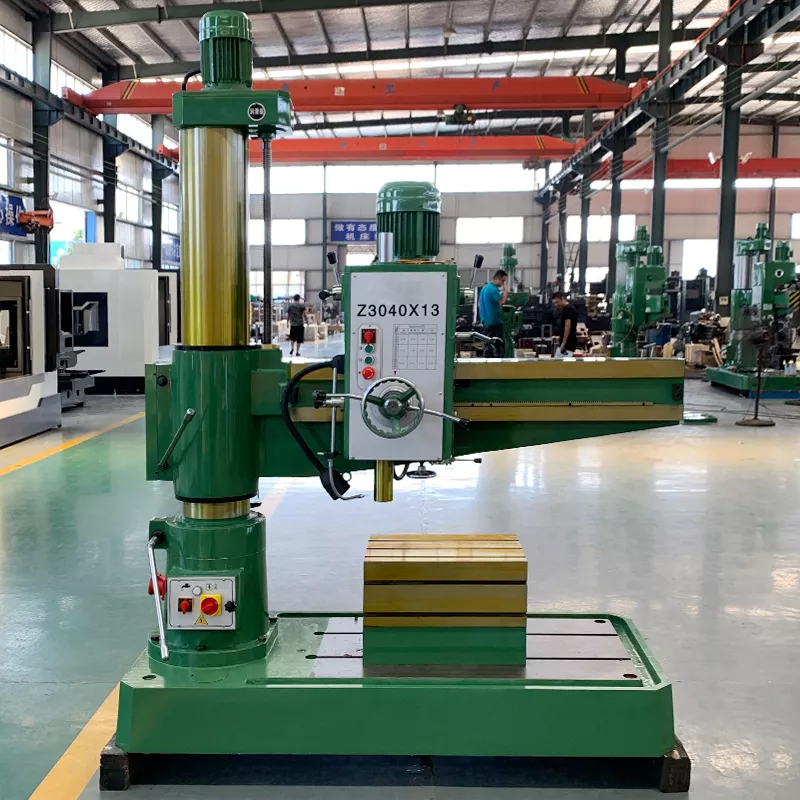
Mechanical Radial Drill (e.g., Z3040, Z3032)
These are "entry-level" machines built for simplicity.
Transmission: Pure manual sliding gears. Speed changes require stopping the machine and manually shifting forks.
Clamping: Manual T-bolts or cam levers. Requires manual physical effort to lock.
Protection: Relies on simple shear pins, which can lead to gear damage if the machine is overloaded.
Design: Lightweight construction (1.8–2.5 tons), suitable for light-duty tasks.
2. Comparison Table: Performance & Precision
| Feature | Hydraulic Radial Drill | Mechanical Radial Drill |
| Pictures | 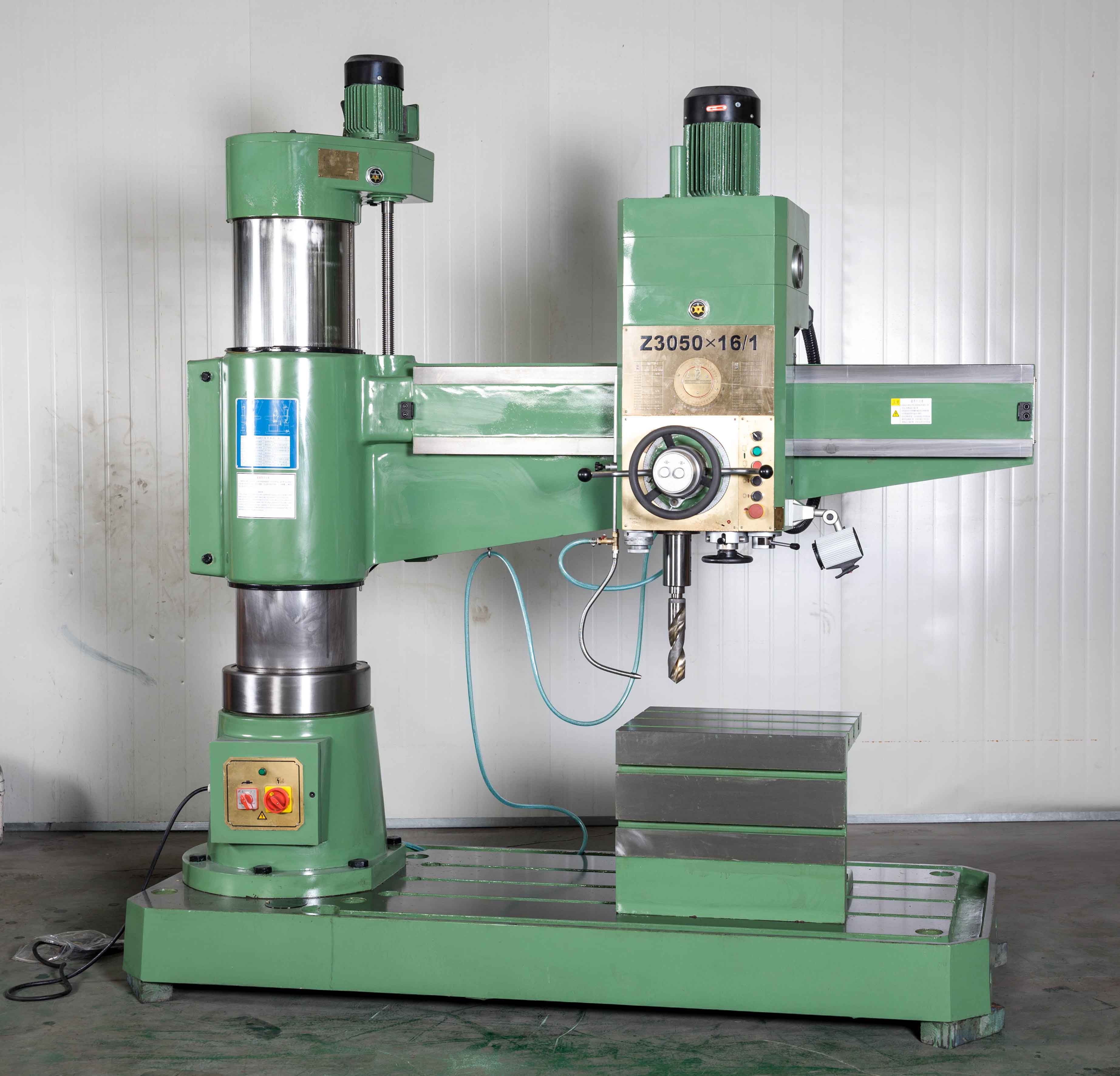 |
|
| Clamping Rigidity | High-pressure hydraulic; no vibration | Manual; prone to slight shifts |
| Precision (Hole) | IT7–IT8 (High) | IT8–IT9 (Standard) |
| Surface Finish | Excellent (Ra 1.6–3.2μm) | Moderate (Ra 3.2–6.3μm) |
| Operational Efficiency | High (Single-lever automation) | Lower (Manual adjustments) |
| Longevity | Excellent (Hardened components) | Moderate (Higher wear) |
3. Total Cost of Ownership (TCO)
Initial Investment: Hydraulic models are typically 40% more expensive than mechanical equivalents.
Maintenance:
Hydraulic: Requires periodic hydraulic oil changes and seals/valve maintenance. Higher repair cost, but less frequent mechanical failures.
Mechanical: Lower maintenance cost. Parts are cheap and easy to fix for general mechanics.
Energy Consumption: Hydraulic models consume slightly more electricity due to the additional hydraulic pump motor.
4. How to Choose: Expert Recommendations
Choose a Hydraulic Radial Drill if:
You run continuous, 8-hour production shifts.
You perform precision tasks like reaming, boring, or tapping.
You regularly drill holes larger than 40mm or deep holes (300mm+).
You want to minimize operator fatigue and maximize batch processing speed.
Choose a Mechanical Radial Drill if:
You run a small workshop with low usage (2–3 hours per day).
You only perform basic, general-purpose drilling.
You work primarily with thin steel or aluminum and do not require tight tolerances.
Your budget is limited, and you prioritize a "zero-complex-maintenance" setup.
5. Quick Pro-Tips for Identification
The Clamping Test: If the arm locks automatically after moving—it’s Hydraulic. If you have to tighten bolts/levers manually—it’s Mechanical.
The Control Test: A single integrated joystick for speed and direction? Hydraulic. Multiple levers and a manual gearbox? Mechanical.
Still unsure which model fits your specific project?
Let me know your target materials, maximum drilling diameter, and daily workload, and I will recommend the perfect machine configuration for you.
At MFG Machinery, we specialize in helping operators optimize their production needs. Contact our team today: info@mfg-machinery.com ,for professional advice on equipment selection tailored to your output goals.