
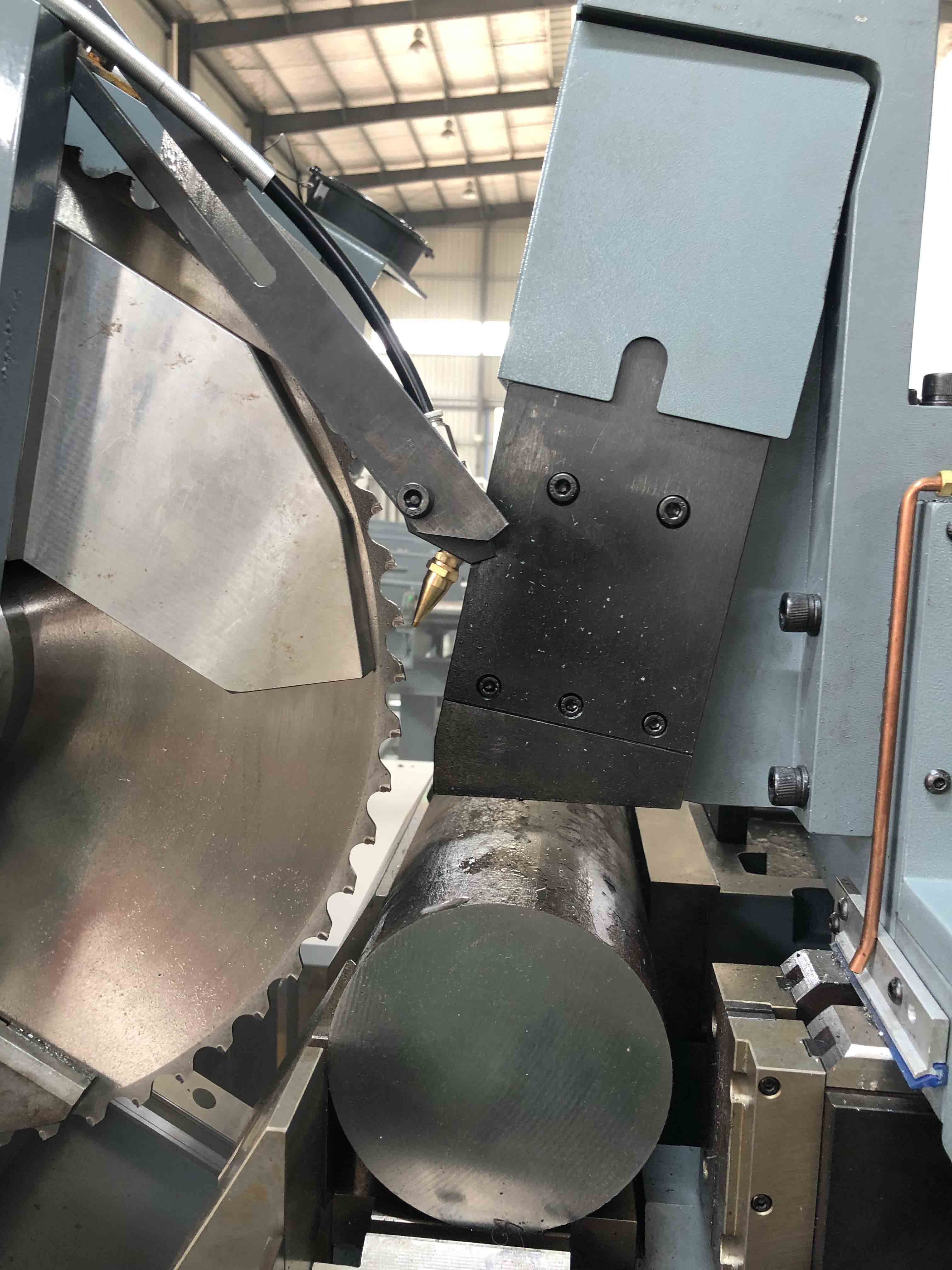
HSS vs. TCT Saw Blades: Which One Does Your Metal Circular Saw Machine Need?
Choosing the right saw blade is critical for metal cutting operations. Whether you are cutting metal profiles, tubes, or solid bars, the wrong blade can lead to tooth breakage, burning, short service life, and wasted  money.
Many buyers struggle to decide between an HSS (High-Speed Steel) saw blade and a TCT (Tungsten Carbide Tipped) saw blade. Neither is universally "better"—it all depends on your equipment, materials, and production volume.
1. Material and Performance Differences
Understanding the core material properties helps explain why these two blades belong in different environments.
HSS Saw Blades (Toughness First): Made of solid high-speed steel alloyed with tungsten, molybdenum, chromium, and vanadium. They offer excellent toughness and impact resistance, meaning they rarely break or chip. Their hardness is around HRA 83-86, with a heat resistance of about 600°C. They are easy to resharpen, cost-effective, and very forgiving.
TCT Saw Blades (Hardness First): Built with an alloy steel body welded with tungsten carbide tips. Their hardness reaches HRA 89-94, and heat resistance hits 800-1000°C. They offer superior wear and heat resistance, but are brittle. TCT blades handle shock poorly; vibration, unstable feeding, or hard spots will cause teeth to chip. They require professional resharpening and are built for high-precision, heavy-load production.
2. Machine Compatibility: Matching Speed and Stability
Your metal circular saw machine's speed and stability dictate which blade you can use.
For HSS Blades (Low Speed, High Torque): Designed for low-speed cold saws, semi-automatic pipe cutters, and general profile saws running at 100–300 RPM. The low speed minimizes vibration, protects the tough HSS material from shock, and prevents overheating. It is the safest choice for older or standard manual/semi-automatic machines.
For TCT Blades (High Speed, High Precision): Require professional, high-speed, CNC automatic metal circular saws running at 2800–3000 RPM. These machines offer rigid frames and stable feeding to prevent impact damage to the carbide tips. Using a TCT blade on an old, vibrating low-speed machine will result in broken teeth and poor cuts.
3. Application Guide: Material, Volume, and Precision
| Cutting Factor | Choose HSS Saw Blades | Choose TCT Saw Blades |
| Material | Carbon steel (Q235), copper, aluminum, thin-wall tubes | Stainless steel, alloy steel, bearing steel, thick-wall profiles |
| Production Volume | Small batches, maintenance shops, intermittent work | High-volume, 24/7 automated production lines |
| Cut Quality | General cutting; minor burrs are acceptable | High precision, smooth, burr-free cuts (no secondary grinding) |
| Machine Type | Standard, semi-automatic, or older circular saws | CNC automatic cold saws, precision flying saws |
4. Cost and Long-Term Value
HSS Blades: Low initial purchase price (about 1/3 to 1/2 the cost of TCT), easy and cheap to resharpen. Ideal for short runs and soft materials. However, cutting hard materials in high volumes will wear them out fast, increasing labor costs for frequent blade changes.
TCT Blades: Higher initial investment, but 3 to 5 times the lifespan of HSS blades in matching conditions. They drastically reduce downtime and labor costs for mass production, making their long-term cost per cut much lower in industrial settings.
5. Common Selection Mistakes to Avoid
Putting TCT blades on low-speed machines: High vibration will chip the carbide teeth instantly.
Using HSS blades for heavy-duty hard steel cutting: This causes rapid wear, heavy burrs, and endless downtime for tool changes.
Ignoring blade coatings: HSS blades need coatings (like TiN or TiAlN) when cutting stainless or alloy steel to prevent burning.
Using universal tooth shapes for everything: Always match the TCT tooth geometry to your specific material (tubes, profiles, or solid bars).
Summary
| Feature | HSS High-Speed Steel Saw Blade | TCT Carbide Tipped Saw Blade |
| Best Machine | Low-speed, standard, semi-automatic saws | High-speed, precision CNC automatic saws |
| Best Materials | Soft steel, copper, aluminum, thin profiles | Hard steel, stainless steel, thick-walled materials |
| Best Workload | Small batches, intermittent cutting | Mass production, continuous heavy-duty cutting |
| Core Advantage | High toughness, low cost, easy maintenance | High wear resistance, long life, clean cuts |
Need Help Choosing the Right Blade for Your Machine?
At Shanghai MFG Machinery Equipment Co., Ltd, we provide professional metal cutting solutions, including high-performance circular saw machines and premium saw blades tailored to your exact production needs.
Website: https://www.mfg-machinery.com/
Email: info@mfg-machinery.com
Phone:+86 17321191875