
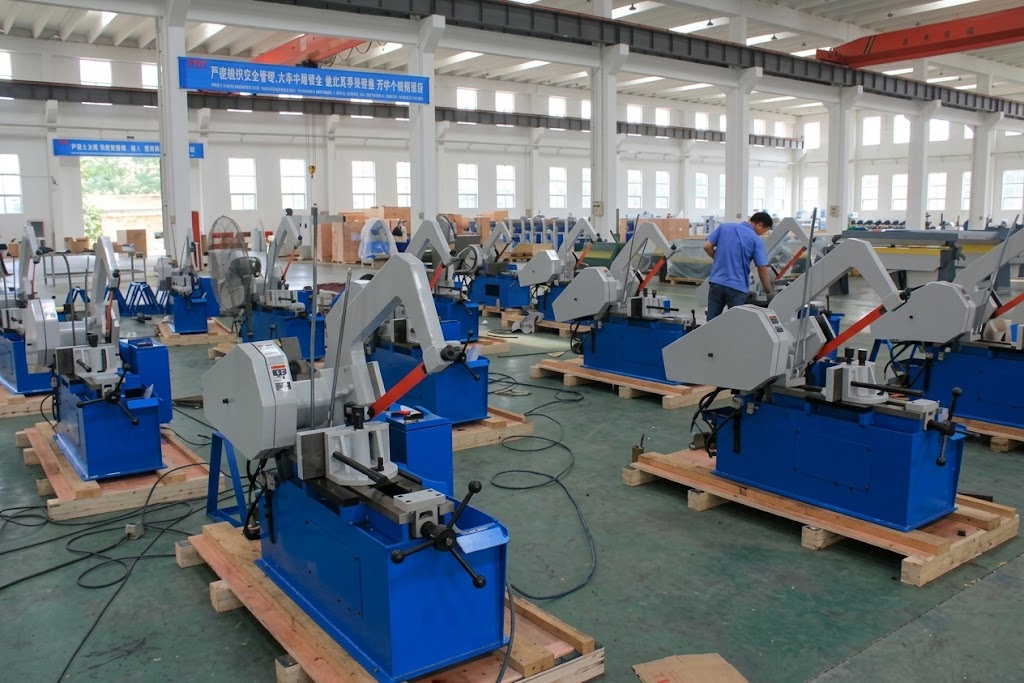
A crooked cut on a power hacksaw happens when the blade flexes inside the material.
This deflection is almost always caused by loose blade tension, worn guide blocks, or applying too much downward hydraulic feed pressure.
Fixing these three simple setup variables will stop the blade from wandering and give you perfectly square cuts every time.
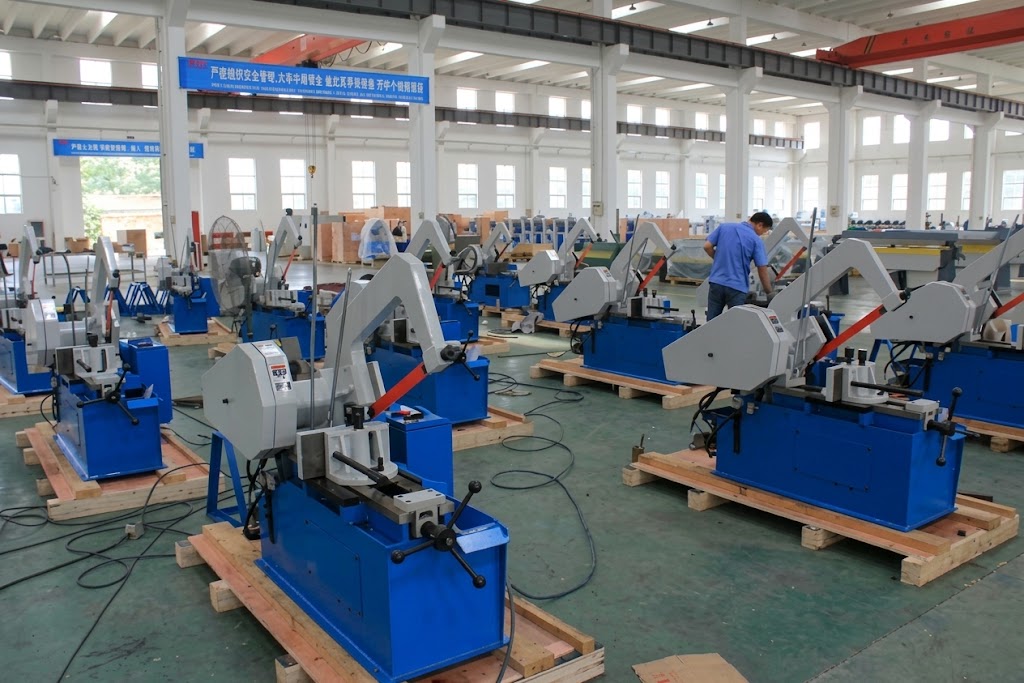
The Hidden Cost of an Off-Square Cut
Many operators ignore a slight angle on a saw cut, thinking the lathe will clean it up. But if you cut a 100mm solid steel shaft with a 5-degree slant, the lathe operator now has to waste time taking multiple facing passes just to flatten the end before they can even drill a center hole.
A well-maintained power hacksaw machine should cut straight enough that you only need a single 0.5mm facing pass on the lathe. If your cuts are coming out crooked, the blade is bowing under pressure. Here is how to keep it perfectly straight.
1. Tighten the Blade Tension
A hacksaw blade acts like a guitar string. If it is loose, it will bend and follow the path of least resistance as soon as it hits a hard spot in the steel.
When installing a new heavy-duty blade, use a wrench to tighten the tension nut until the blade "rings" with a high pitch when tapped. Run the machine for five minutes to let the new blade warm up and stretch, then stop the machine and tighten it one more time.
2. Check for Worn Guide Blocks
The blade guides are the only things holding the blade perfectly vertical. Over time, the metal blocks that sandwich the blade wear down, creating a gap.
If you can grab the back of the blade and twist it side-to-side by hand, the guides are too loose. Adjust the guide blocks so they are almost touching the blade, but still allow it to slide freely without binding.
3. Back Off the Hydraulic Feed Pressure
This is the most common mistake when cutting solid round bar. Operators want the job done faster, so they open the hydraulic valve to force the heavy bow down into the material.
A hacksaw blade can only clear so much metal per stroke. If you push the blade down faster than the teeth can cut, the immense pressure forces the blade to bow sideways. Reduce your downward feed rate. The cut will take slightly longer, but the blade will stay perfectly straight and last twice as long.
Quick Troubleshooting Table
Use this guide on the shop floor to quickly diagnose wandering cuts:
| What is Happening | The Likely Cause | The Fix |
|---|---|---|
| Blade wanders immediately on the first cut | Blade tension is too loose | Tighten the tensioning nut until the blade is fully rigid |
| Blade twists side-to-side by hand | Gap between guide blocks is too wide | Adjust guides closer to the blade sides |
| Cut starts straight but curves in the middle | Too much downward feed pressure | Close the hydraulic feed valve slightly to slow the drop rate |
| Blade cuts crooked and teeth strip off | Pushing too hard or using the wrong tooth pitch | Slow the feed and ensure at least 3 teeth are in the metal at all times |
Slow but Reliable
In the race for cutting speed, many shops overlook the traditional power hacksaw. While a band saw will cut a steel billet faster, the heavy, thick blade of a power hacksaw is extremely difficult to break. For heavy maintenance shops and remote job sites cutting solid tool steel, a properly adjusted hacksaw remains the most cost-effective and reliable way to get a square cut with minimal tooling costs.
Get the Right Saw for Your Material
If you are constantly snapping blades or fighting crooked cuts, you might be using the wrong machine settings for your material. Send us your typical material types, diameters, and daily cutting volume. MFG Machinery will help you choose the right sawing equipment for your shop.
- Email: info@mfg-machinery.com
- Tell/WA: +86 175 2133 1995