
In heavy-duty machining, vibration (chatter) and workpiece deformation are the two greatest challenges for engineers. These issues compromise surface finish, geometric accuracy, and significantly accelerate tool wear.
As the technical team at MFG Machinery, we have developed a robust strategy to help you control these variables and optimize your heavy-duty turning processes.

1. Why Do Vibration and Deformation Occur?
When machining heavy, long, or thin-walled components, the combination of high mass and uneven rigidity makes the workpiece prone to elastic deformation under cutting forces. If the machine tool lacks sufficient stiffness, the alternating cutting forces can trigger resonance, resulting in chatter.
2. Key Technical Strategies for Control
To mitigate these issues, we focus on three pillars: Machine Rigidity, Workholding, and Cutting Parameters.
A. Enhancing System Rigidity
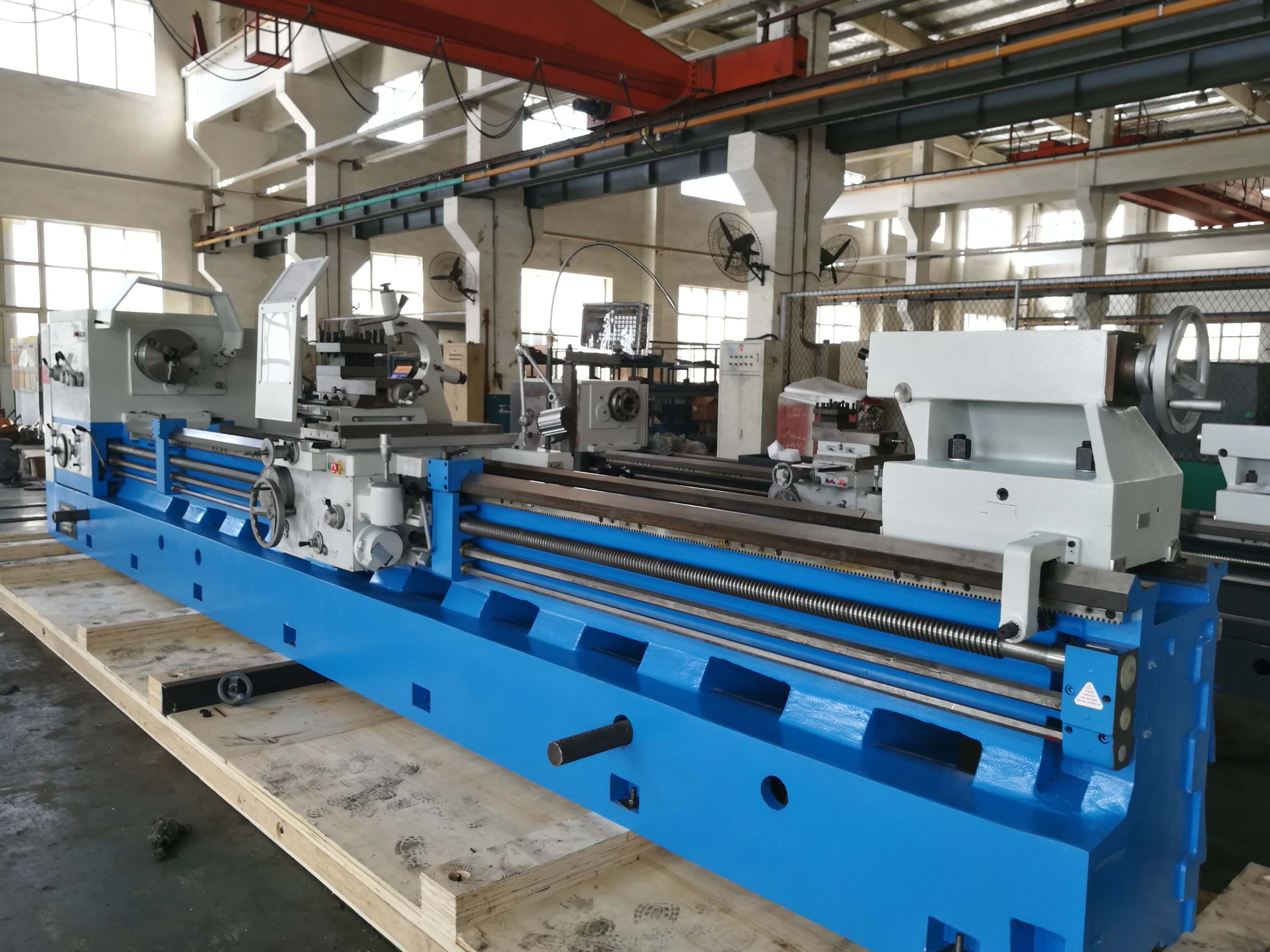
The foundation of stability is the machine structure. MFG heavy-duty lathes feature high-grade cast iron beds and wide-rail designs, specifically engineered to increase damping coefficients and minimize structural resonance.
B. Optimizing Workholding
For long shafts, simple center-to-center clamping often leads to mid-section deflection. We recommend utilizing steady rests or hydraulic follower rests to provide additional support points and increase the system's structural frequency.
C. Matching Cutting Parameters
Achieving a balance between speed, feed, and depth is essential for stability.
| Parameter | Impact on Process | Optimization Strategy |
| Cutting Speed | Resonance frequency | Avoid the machine's natural frequency |
| Feed Rate | Cutting force stability | Increase feed to improve damping |
| Tool Geometry | Cutting resistance | Use negative rake angle inserts |
| Support Layout | Structural stiffness | Use steady rests to reduce overhang |
3. How MFG Machinery Empowers Your Production
At MFG, we prioritize stability in every build. Our heavy-duty CNC lathes are engineered with:
High-Damping Bed Structures: Designed to absorb heavy-load cutting shocks.
High-Torque Spindle Systems: Ensuring smooth, steady output even during low-speed heavy cutting.
Optional Real-time Monitoring: Integrated sensors to detect and alert operators of vibration anomalies.
4. Conclusion
Reducing vibration and deformation requires a systematic approach. If you are struggling with precision issues, it may be time to evaluate your hardware foundation.
MFG Machinery is dedicated to providing high-precision machining solutions tailored to your specific requirements. From single-column to double-column heavy-duty lathes, we offer the expertise to optimize your shop floor efficiency.
Need Help Optimizing Your Process?
Visit us at mfg-machinery.com to view our latest heavy-duty lathe specifications, or contact our team email:info@mfg-machinery.com today for a custom evaluation of your workpiece requirements.