
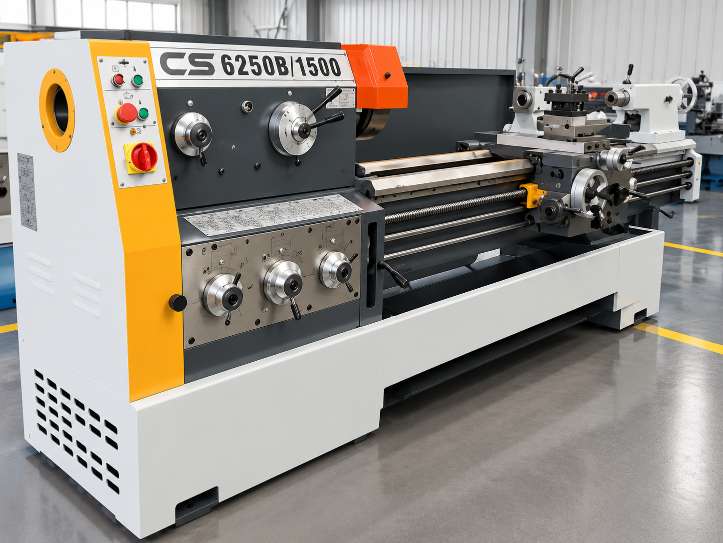
A rough, torn surface finish on a manual lathe usually points to three setup errors: running the spindle too slow, feeding the tool too fast, or using the wrong insert nose radius. If your feeds and speeds are correct but the finish is still poor, machine vibration is the likely culprit. Upgrading to a heavier machine frame is often the only permanent fix for persistent chatter.
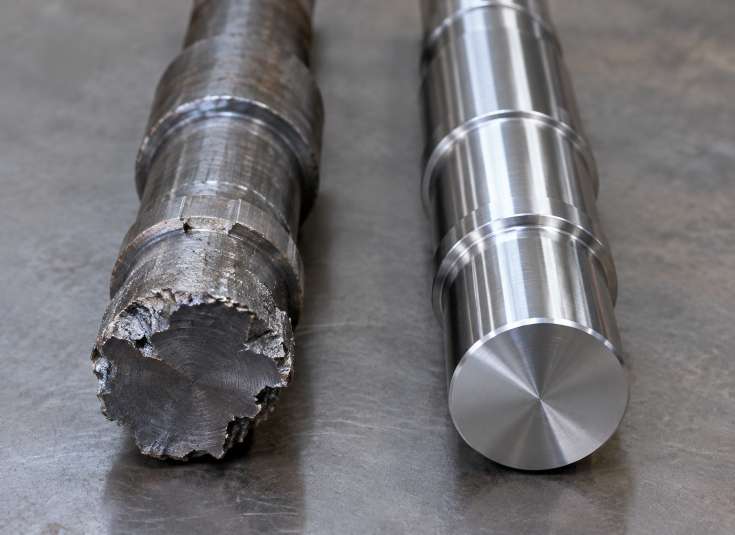
Three Setup Adjustments for a Cleaner Cut
Before blaming the machine or the material, operators should check the "Big Three" cutting variables.
1. Push the Spindle RPM Higher
Taking a finishing pass at a low RPM causes the metal to tear rather than shear cleanly. Low speeds also create a "built-up edge" (BUE)—where microscopic pieces of steel weld themselves to the cutting tip. This lump of metal drags across the workpiece, leaving a cloudy, scratched finish. For your final shallow cut, increase the spindle speed to generate a clean shearing action.
2. Drop the Feed Rate
If your part looks like a threaded screw with visible spiral lines, your feed rate is too high. The cutting tool is moving across the part faster than the tool nose can smooth the metal. Cut your feed rate in half for the final 0.5 mm pass.
3. Match the Nose Radius
A sharp, pointy tool tip leaves deep feed grooves. A larger tool nose radius overlaps those grooves, acting like a wiper to smooth the metal. However, a radius that is too large creates excessive cutting pressure, which can push the workpiece away and trigger vibration. A 0.4 mm or 0.8 mm radius is a safe starting point for most steel finishing work.
Quick Surface Finish Fixes
| What the Surface Looks Like | Likely Cause | First Workshop Fix |
|---|---|---|
| Cloudy, torn, or scratched | Built-up edge on the tool tip | Increase spindle RPM and use coolant |
| Distinct spiral grooves | Feed rate is too fast | Slow down the carriage feed |
| Scaly or repeating chatter marks | Tool flex or workpiece movement | Shorten tool stick-out and check tailstock |
| Finish gets worse near the center | Part is bowing away from the tool | Use a steady rest to support the shaft |
The Foundation: Why Machine Weight Matters
You can dial in the perfect RPM and select the sharpest tool, but if the machine shakes, your surface finish is ruined.
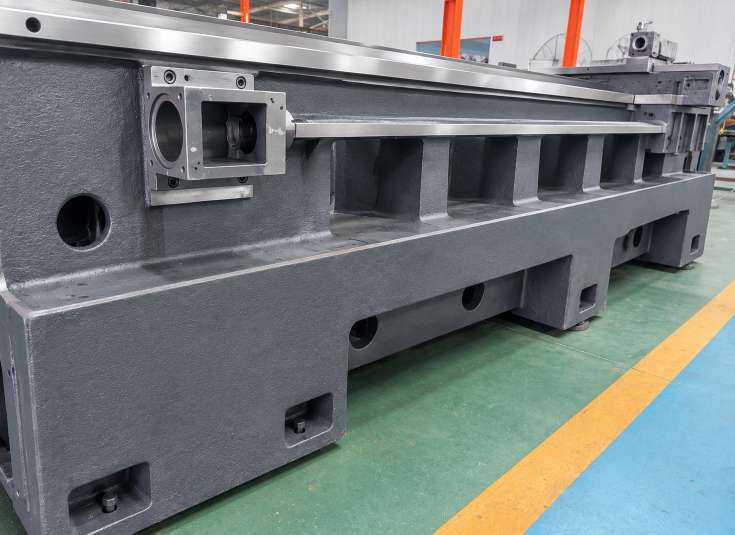
During a cut, the interaction between the tool and the steel generates harmonic vibrations. Light-duty lathes with bolted, hollow frames allow this vibration to travel straight into the workpiece, leaving chatter marks.
A heavy-duty conventional engine lathe solves this through sheer mass. A true one-piece cast iron bed naturally absorbs and deadens vibration before it reaches the cutting zone. When hogging off tough materials or chasing a mirror finish, a solid cast iron foundation keeps the tool perfectly stable.
Market Insight: Skipping the Cylindrical Grinder
Machine shops are under constant pressure to lower cycle times and reduce part handling. In the past, a rough turned part had to be moved to a cylindrical grinder to achieve the final surface finish. Today, buyers expect their manual lathes to be rigid enough to hit tight surface roughness (Ra) tolerances straight off the cutting tool, saving an entire secondary grinding operation.
Send Us Your Turning Challenges
If your shop is struggling with chatter, poor surface finishes, or maintaining tolerances on long shafts, send us your typical part dimensions and material types. We will help you select a machine with the right bed weight and spindle capacity for the job.
- Email: info@mfg-machinery.com
- Tell/WA: +86 175 2133 1995