
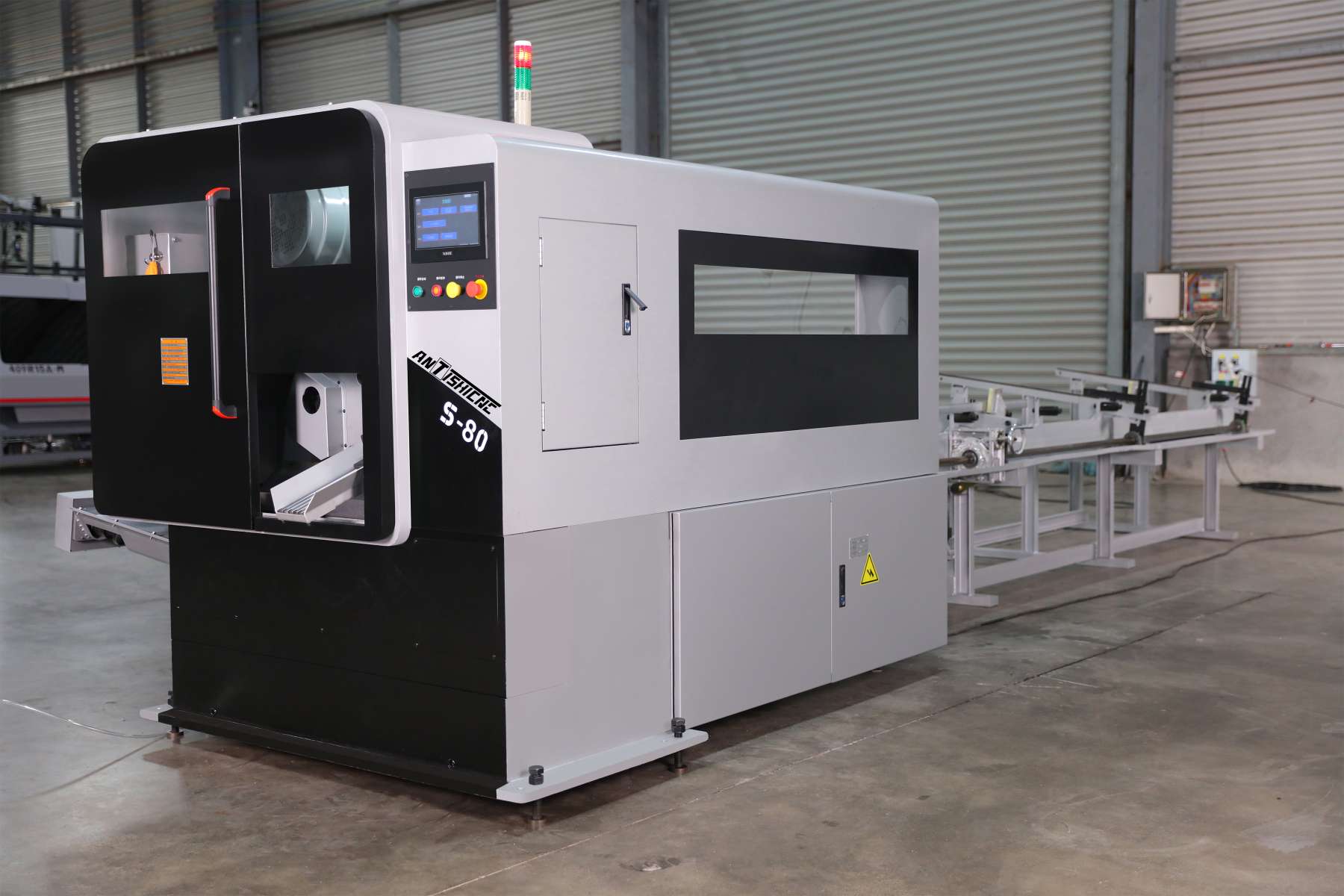
A clean steel-tube cut depends on four things working together: blade speed, tooth pitch, feed rate and clamping.
If the blade runs too fast, heat builds up and dulls the teeth. If the cutting speed is too low or the feed is unstable, the blade may push and tear the tube wall. Poor support at the blade exit can leave a heavy burr even when the cutting settings are correct.
The practical target is a repeatable, near burr-free cut that can go straight to welding or assembly with little hand grinding.
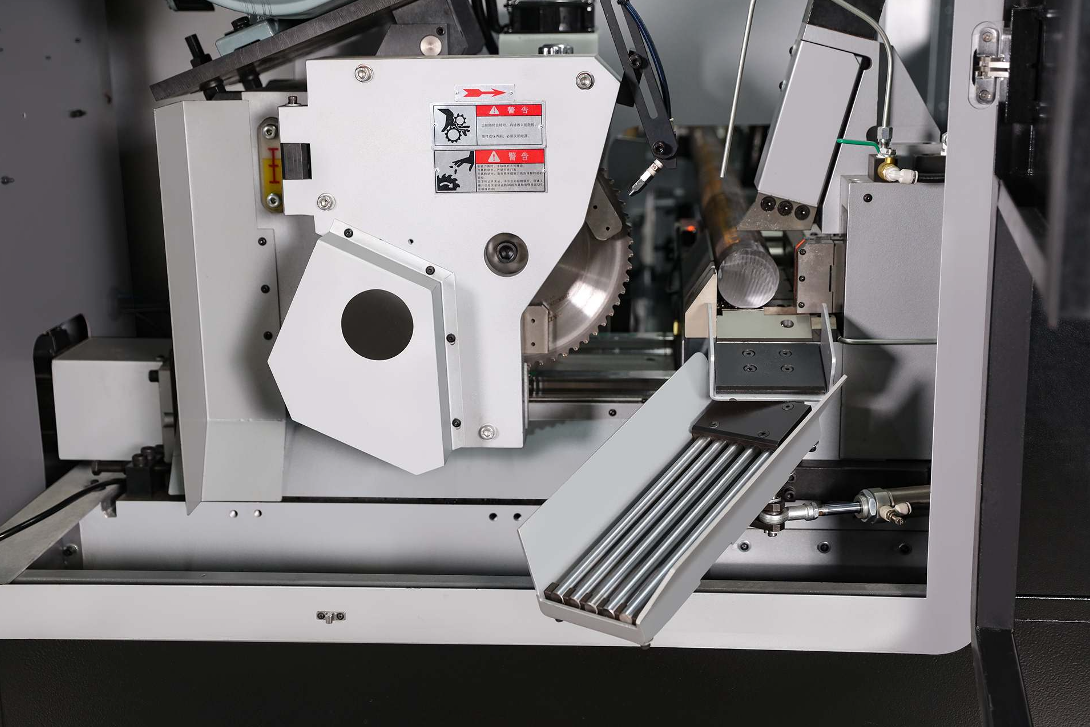
One Cut Becomes Two Jobs
A tube is cut to length, but a thick burr remains around the end. The part then moves to another station, where a worker removes the burr with a grinder.
For one tube, this may take only a short time. For several hundred tubes, it can delay the full order.
Heavy grinding also brings other problems: tube length may change, sharp edges slow handling, and grinding dust spreads through the work area.
The useful production figure is not cuts per hour. It is finished parts ready for welding per hour.
Replacing the blade may improve the cut for a while. If the same burr returns, the blade setting or clamping system is usually the next place to look.
Read the Cut Edge First
The burr itself can help locate the problem.
| What you see | Likely cause | Check first |
|---|---|---|
| Heavy exit burr | Tube moves near cut-off | Clamp and support |
| Burr around the full edge | Dull blade or wrong speed | Teeth and RPM |
| Blue or dark surface | Too much cutting heat | Speed and coolant |
| Torn thin wall | Tooth pitch too coarse | Blade selection |
| Burr on one side | Runout or uneven grip | Blade and jaws |
| Rough but cool cut | Low speed or uneven feed | Speed and feed |
A thin, even edge may be normal for some materials. A thick folded burr shows that the final part of the tube wall was pushed away rather than cut cleanly.
Match Blade Speed to the Steel
There is no single RPM that works for every steel tube.
The correct setting depends on the blade diameter, blade material, steel grade, tube wall thickness, tooth pitch and feed rate. Hard steel normally needs a lower cutting speed than mild steel.
RPM Too High
Excess speed creates heat. Material may stick to the teeth, the cutting edges wear quickly, and the tube end may look dark or smeared.
Cutting Speed Too Low
A very low speed does not always cause burrs by itself. Trouble starts when the teeth stop cutting steadily and begin to push the tube wall. A dull blade or poor feed makes this worse.
Start with the blade maker’s recommended cutting-speed range. Convert it to RPM using the actual blade diameter, then make small changes.
Do not increase RPM just to shorten the cycle. A fast cut followed by grinding is not a faster process.
Tooth Pitch Must Fit the Wall Thickness
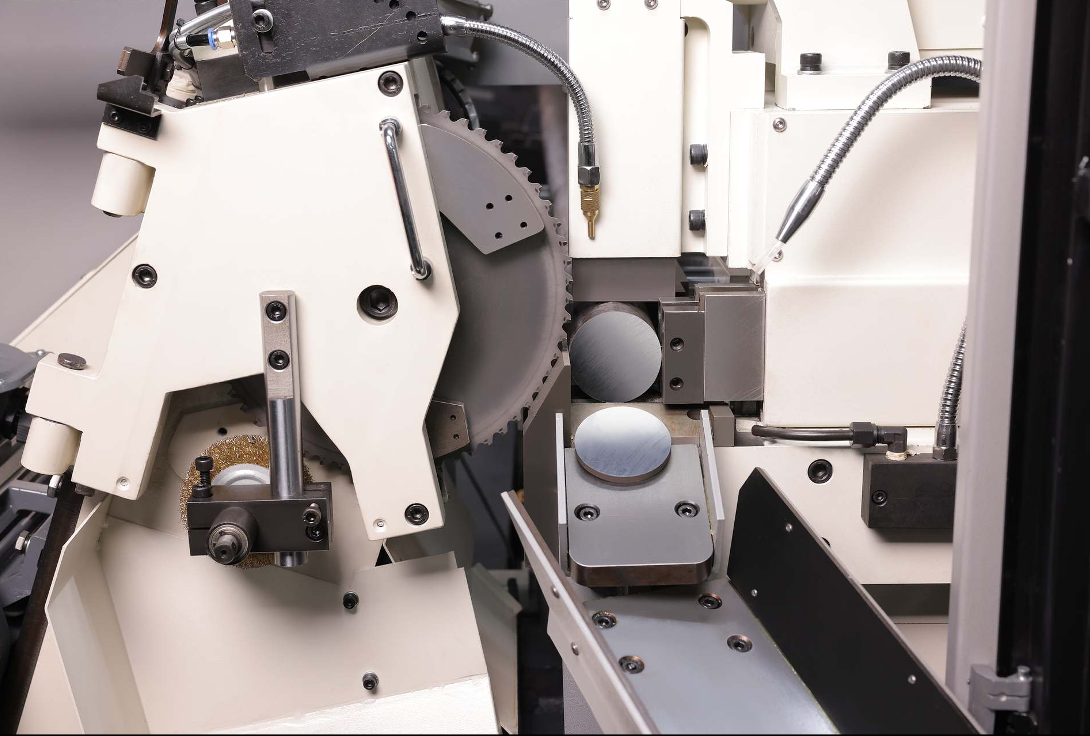
Several teeth should stay in contact with the material during cutting.
A pitch that is too coarse can catch a thin tube wall and tear it. A pitch that is too fine leaves too little room for chips. Packed teeth then rub, generate heat and lose their cutting edge.
For repeat jobs, keep a simple setup record beside the machine:
Tube size + steel grade + blade type + tooth pitch + RPM + feed setting
This gives the next operator a tested starting point instead of asking them to find the settings again.
Workshops that also machine holes, slots or mating faces after tube cutting can review the available MFG Machinery Circular saw for related metalworking operations.
The Fixture Controls the Final Millimeters
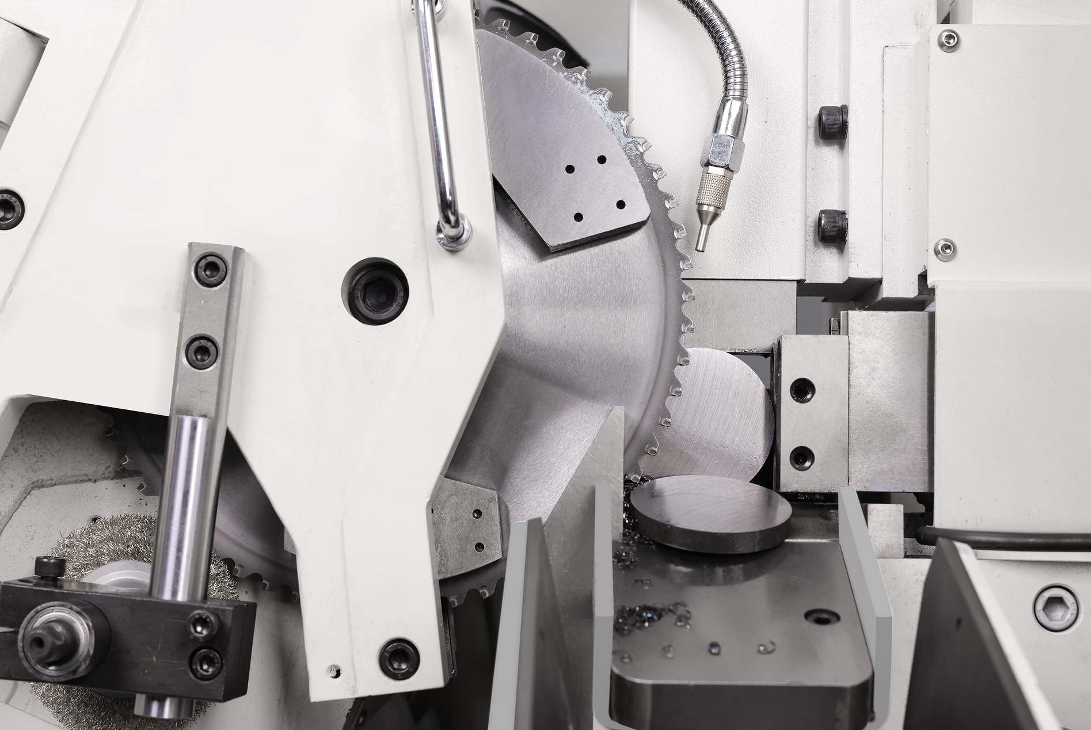
The heaviest burr often forms as the blade exits the tube. At this point, only a small part of the wall remains. If that section bends or moves, the blade tears it away.
- An anti-burr fixture should:
- Clamp close to the cutting line
- Support both sides of the blade
- Hold the cut-off piece until separation
- Match the tube shape without crushing it
- Leave enough space for chips to escape
Round tubes are normally held with V-shaped jaws. Thin rectangular tubes may need shaped or soft jaws to spread the pressure.
The cut-off side matters just as much as the feed side. If the short piece drops before the blade completes the cut, even a sharp blade can leave a heavy exit burr.
For bundle cutting, each tube must stay in place. Clamping only the outside of the bundle will not stop inner tubes from turning or lifting.
Run a Five-Cut Test
Do not change speed, feed and clamping pressure at the same time. Use five samples to find the cause.
- Install a sharp blade and check runout.
- Clamp the tube close to the blade.
- Use the blade maker’s starting speed.
- Inspect the first cut for heat, chips and exit burr.
- Change only one setting before each new cut.
Write the RPM and feed setting on every sample. Keep the cleanest piece near the machine as the quality standard.
If the burr stays on the same side after several setting changes, inspect the spindle, blade runout and jaw alignment.
Market Insight: Grinding Time Is Now Part of Saw Selection
Tube-processing shops are looking beyond the cutting cycle.
A saw may finish each cut quickly, but the shop still loses time when every part waits for hand grinding. This is common in steel frames, handrails, pipe fittings and welded tube assemblies.
Buyers are therefore checking blade-speed control, support near the cutting line, jaw-change time, blade life and the condition of the tube end after cutting.
The goal is simple: move the tube from cutting to the next process with as little extra handling as possible.
What to Send Us for a Cutting Recommendation
To discuss a steel-tube cutting application, send MFG Machinery the following details:
- Tube shape and outside dimensions
- Wall thickness
- Steel grade or material name
- Required cut length
- Number of parts per shift
- Single-piece or bundle cutting
- Maximum acceptable burr size
- Photos of the current cut edge, if available
With these details, the blade type, tooth pitch, speed range, feed method and clamping layout can be reviewed against the real job.
Send your cutting requirements to:
Email: info@mfg-machinery.com
Phone/Whatsapp: +86 175 2133 1995