
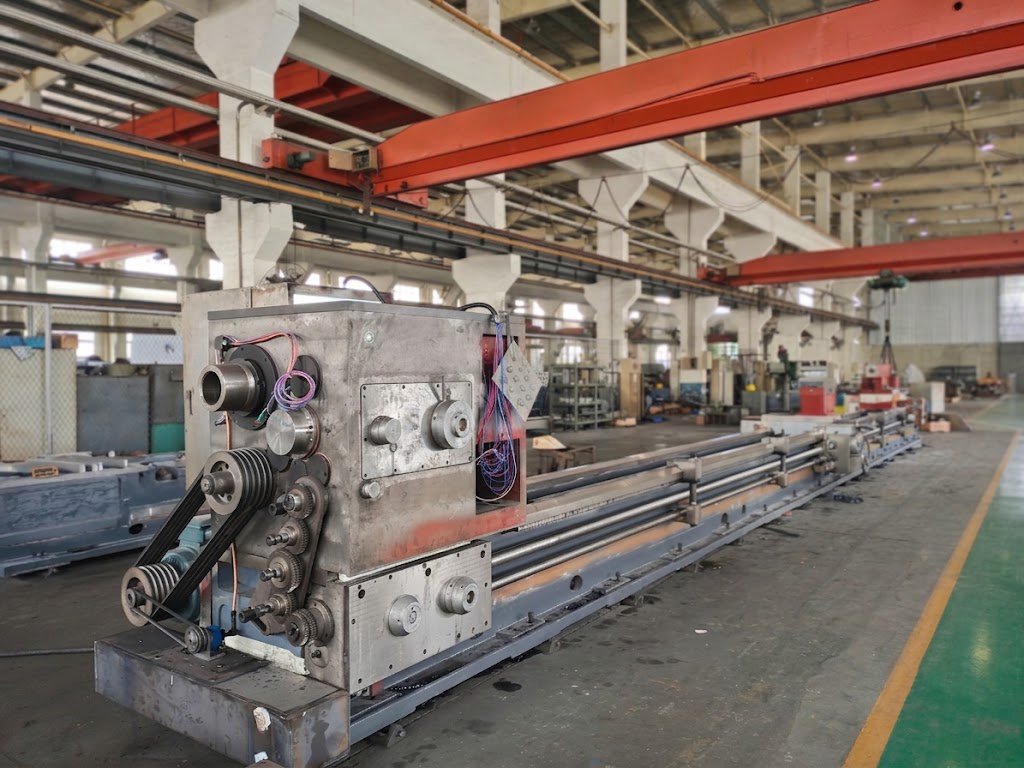
How to Fix Lathe Headstock Overheating, Abnormal Vibration, and Noise? 【Troubleshooting Guide】
For medium and large ordinary horizontal lathes (especially old-model and standard spindle lathes), headstock overheating, abnormal vibration, and strange noise are the most common coupled faults during operation. These issues are clear warning signs of abnormal friction, severe wear, or failure in the internal transmission mechanism, spindle bearings, and lubrication system. If left unaddressed, they will reduce machining accuracy, ruin workpiece surface finish, and even cause irreversible damage to the lathe spindle and headstock.
As a professional lathe maintenance and mechanical equipment service provider, MFG Machinery has summarized practical, field-tested causes and step-by-step solutions for lathe headstock overheating, vibration, and noise faults. This guide is suitable for most ordinary horizontal lathes and helps technicians quickly troubleshoot and fix problems.
Basic Standard: Normal Working Temperature of Lathe Headstock
Before troubleshooting, confirm the normal temperature range to avoid misjudgment. The standard working temperature of a qualified lathe headstock should not exceed 60°C-70°C, and the temperature rise should be no more than 30°C-40°C higher than the ambient temperature. If the headstock housing feels extremely hot during operation, stop the machine immediately for inspection to prevent burned bearings and spindle seizure.
1. Lathe Headstock Overheating: Main Causes & Effective Solutions
Headstock overheating is mainly caused by excessive friction resistance and heat accumulation. The core reasons are divided into bearing clearance failure, poor lubrication, and abnormal gear meshing. MFG Machinery sorts out targeted solutions for each fault:
1.1 Excessively Tight Spindle Bearing Preload (Most Common Cause)
Most ordinary lathe spindles adopt double-row tapered roller bearings or angular contact ball bearings. Many operators over-tighten the bearing preload by adjusting the rear locking nut to pursue high machining precision. Too small bearing clearance will sharply increase rotational friction resistance, generate massive heat in a short time, and cause continuous headstock overheating.
Solutions:
Properly loosen the spindle rear locking nut to adjust the bearing preload to the factory standard range.
Use a dial indicator to detect spindle radial runout and axial play, and control the tolerance within 5-10 microns to ensure reasonable bearing clearance.
Avoid blind excessive preloading; balance precision requirements and bearing rotation flexibility.
1.2 Poor Lubrication: Oil Shortage, Dirty Oil or Incorrect Oil Level
The headstock gear and bearing system rely entirely on circulating lubrication for heat dissipation and wear reduction. Any lubrication system failure will directly cause dry friction and overheating.
Main Fault Manifestations:
Oil shortage: Damaged oil pump, blocked oil pipeline or oil distributor hole leads to insufficient oil supply and bearing dry grinding.
Deteriorated & dirty oil: Long-term unreplace lubricant mixes with metal debris and impurities, accelerating internal component wear and heat generation.
Excessive oil level: Too much lubricant in the headstock causes severe oil stirring resistance during high-speed gear operation, producing a large amount of stirring heat.
Solutions from MFG Machinery:
Check the headstock oil window to keep the oil level between the upper and lower standard scales.
Inspect the oil pump operation status, clean and unblock lubrication pipelines and oil distributors to ensure smooth circulating oil supply.
Clean the headstock thoroughly if the lubricant turns black or contains iron scraps, and replace with new 32# or 46# spindle oil/mechanical oil.
1.3 Over-Tight Gear Meshing of Transmission Mechanism
Inaccurate positioning of the speed change handle or improper assembly adjustment will lead to abnormal meshing distance of transmission gears. Excessive meshing pressure causes gear surface friction and extrusion heat, resulting in headstock local overheating.
Solutions:
Calibrate the positioning accuracy of each speed change handle, fine-tune the axial position of the transmission shaft, and check the gear backlash to ensure all gear pairs mesh smoothly without excessive compression friction.
2. Lathe Headstock Abnormal Vibration & Noise: Causes & Fixes
Abnormal vibration and noise of the headstock always accompany overheating. These faults will cause workpiece chatter marks, poor surface roughness, and accelerate the aging and scrapping of lathe core components. To help users quickly identify and solve problems, MFG Machinery sorted out a lathe headstock vibration & noise fault quick-check table for intuitive reference:
| Abnormal Phenomenon | Core Fault Cause | Hazard | Quick Solution |
| Continuous dull buzzing noise + uniform vibration + slight heating | Fatigued, pitted or worn spindle bearings | Reduced machining precision, gradual bearing seizure | Locate faulty bearing via listening stick, replace high-precision spindle bearings, renew lubrication |
| Periodic impact noise + irregular jitter | Worn gear teeth, burrs or broken gear teeth, poor meshing | Workpiece chatter marks, gear tooth collapse failure | Inspect and polish slightly worn gears, replace damaged paired gears |
| High-speed obvious vibration + no regular noise | Bent spindle/shaft, unaligned workpiece/chuck, dynamic balance failure | Poor workpiece surface finish, spindle permanent deformation | Calibrate spindle straightness, re-align chuck and workpiece, eliminate eccentric rotation |
| Squeaking noise + intermittent jitter + input shaft heating | Too tight/loose V-belt, inconsistent belt stress | Belt abrasion, power transmission loss, shaft bearing damage | Adjust motor base tension, standardize belt deflection (10-15mm), unify belt stress |
Beyond the above quick-check faults, MFG Machinery summarizes four key fault causes and detailed professional repair methods for in-depth maintenance:
Abnormal vibration and noise of the headstock always accompany overheating. These faults will cause workpiece chatter marks, poor surface roughness, and accelerate the aging and scrapping of lathe core components. MFG Machinery summarizes four key fault causes and repair methods:
2.1 Damaged or Fatigued Spindle Bearings
Long-term heavy-load operation leads to fatigue pitting, spalling, deformation or even fragmentation of bearing rolling elements and raceways. Damaged bearings will produce continuous dull buzzing noise or periodic impact noise, accompanied by obvious spindle vibration and heat accumulation.
Solutions:
Use a listening stick or screwdriver to locate the faulty bearing accurately by listening to operating noise.
Remove and replace high-precision special spindle bearings; thoroughly clean the bearing chamber during replacement.
Apply appropriate high-speed bearing grease and confirm the lubrication system is unobstructed to avoid secondary wear.
2.2 Worn, Chipped or Poorly Meshed Gears
Improper operation such as overload heavy cutting or forced gear shifting during lathe operation will cause serious gear tooth surface wear, tooth profile deformation and even broken teeth. Abnormal gear meshing is the main source of periodic headstock noise and vibration.
Solutions:
Open the headstock cover, manually turn the shaft to inspect the wear condition of all gears one by one.
Polish and remove burrs for slightly worn gears; replace paired gears immediately if there are broken teeth or severe wear.
2.3 Bent Spindle/Transmission Shaft & Unbalanced Dynamic Balance
Lathe collision, workpiece ejection, long-term eccentric processing and other impacts will cause spindle or spline shaft bending deformation. Meanwhile, unaligned chucks and workpieces will generate huge centrifugal force during high-speed rotation, causing severe vibration and abnormal noise of the headstock.
Solutions:
Detect spindle runout with a dial indicator; perform precision straightening or replace the spindle if bending deformation occurs.
Accurately align the chuck and workpiece to ensure the rotation center coincides with the spindle axis and eliminate eccentric vibration.
2.4 Improper Tension of Input V-Belt
The motor drives the headstock through V-belts. Over-loose belts cause slipping and jitter noise; over-tight belts apply excessive radial pressure on the input shaft, resulting in input shaft bearing heating, vibration and continuous noise.
Solutions:
Adjust the tensioning rod of the motor base to keep the belt tension moderate. The standard tightness is 10-15mm deflection when pressing the middle of the belt by hand. Ensure all V-belts have the same length and uniform stress.
3. Fast Troubleshooting Rules for Lathe Headstock Faults | MFG Machinery
For rapid diagnosis of headstock overheating, vibration and noise, we summarize the "Listen-Touch-Observe" three-step inspection method for daily maintenance:
Listen to the sound: Sharp screeching usually indicates insufficient lubrication or over-tight bearings; dull impact noise means broken gear teeth or damaged bearing rolling elements.
Touch the temperature: Touch the headstock housing to locate the overheating source and judge the fault range of bearings and gears.
Observe the status: Check the oil window oil level and oil cleanliness; open the box cover to check gear integrity and meshing status.
4. Daily Maintenance Tips to Avoid Headstock Faults
Most lathe headstock faults are caused by irregular maintenance and overload operation. MFG Machinery recommends the following preventive measures to extend lathe service life and ensure stable precision:
Replace spindle lubricating oil regularly to keep the lubrication system clean and unobstructed.
Prohibit overload heavy cutting and running gear shifting to avoid gear and spindle impact damage.
Check belt tension and bearing clearance regularly to keep the transmission system in optimal condition.
Stop the machine immediately once overheating or abnormal noise occurs to avoid spindle and box hole burning failure.
Conclusion
Ordinary lathe headstock overheating, vibration and noise are not single faults, but early warnings of lubrication failure, bearing wear or gear damage. Standardized inspection, timely maintenance and correct operation are the key to solving and avoiding such problems.
MFG Machinery focuses on lathe maintenance, fault repair and equipment daily maintenance guidance. If you encounter complex lathe headstock faults that cannot be solved by daily operation, welcome to contact us for professional technical support and solutions.