
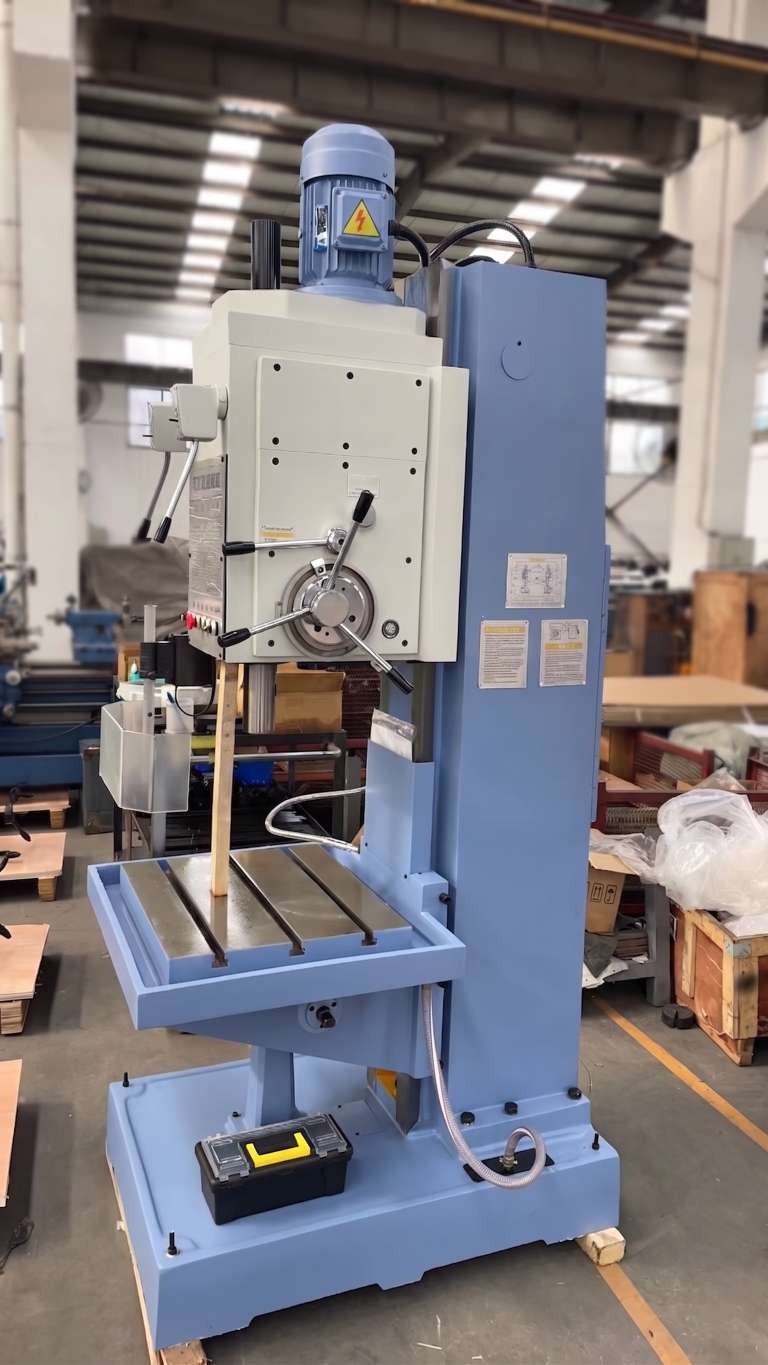
1. Core Components of a Vertical Drilling Machine
Regardless of the model, every vertical drilling machine consists of these 6 key parts:
Base: Usually heavy-duty cast iron to absorb vibrations. Features T-slots for mounting vises or fixtures.
Column: The backbone of the machine. Defines the machine's rigidity and movement capabilities.
Worktable: Supports the workpiece. Available in fixed (high-rigidity), cross-sliding (coordinate positioning), and tilting/rotating (versatile) types.
Spindle Head (Gearbox): Houses the motor and gear system. Controls speed levels, manual/automatic feed, and auto-reverse for tapping.
Feed Mechanism: Enables precision depth control and automatic drilling, essential for deep-hole consistency
Auxiliary Systems: Includes coolant pumps, LED work lights, automated lubrication, and electrical safety protections (emergency stops).
2. Main Types: Square Column vs. Round Column
Choosing between a Square Column (Z51 Series) and a Round Column (Z50 Series) is your most important decision.
| Feature | Square Column (Z51) | Round Column (Z50) |
| Pictures | 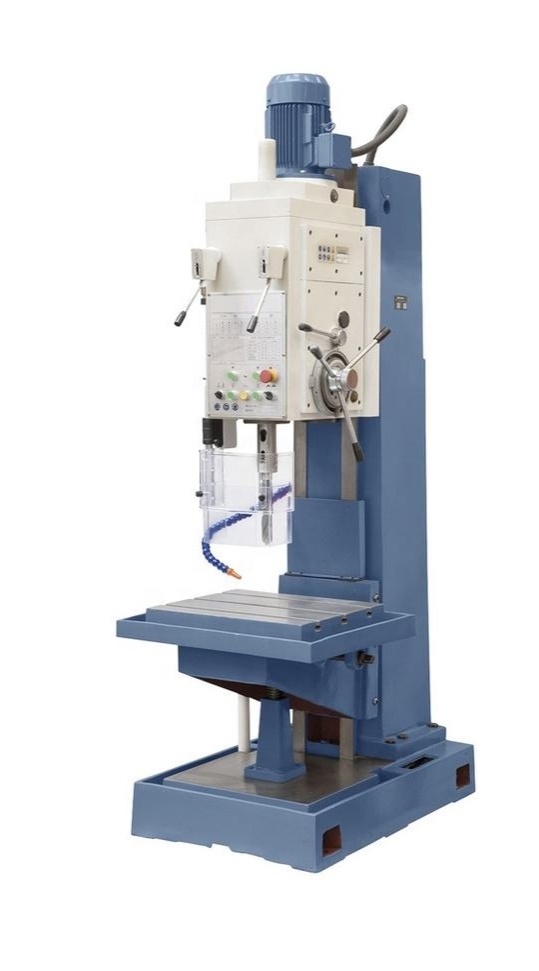 |
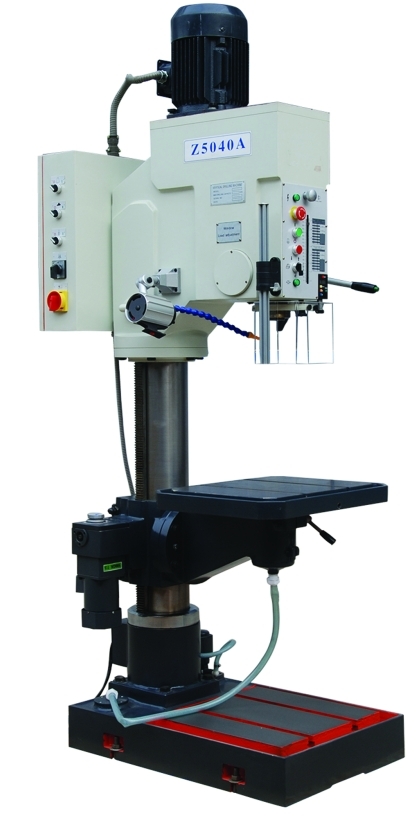 |
| Rigidity | Exceptional (Heavy-duty) | Moderate (Light-medium) |
| Adjustment | Rigid vertical sliding | 360° rotation/tilting |
| Ideal Materials | Stainless steel, thick iron, cast iron | Aluminum, plastic, light steel |
| Applications | Mass production, molds, flanges | Repair shops, small parts, angled holes |
| Price | Premium | Cost-effective |
3. Step-by-Step Selection Process
Follow these steps to match a machine to your specific needs:
Step 1: Define Maximum Processing Specs
Drilling Diameter: Ensure the machine can handle your largest hole size.
Spindle Stroke: Need deep holes? Ensure your required depth matches the machine’s stroke (usually 200–250mm).
Throat Depth: Check the distance from the spindle center to the column to ensure your workpiece fits.
Step 2: Match Rigidity to Material
For heavy-duty industrial work (steel, thick plates, large diameter tapping), choose a Square Column to prevent vibration and tap breakage.
For versatility and maintenance, choose a Round Column.
Step 3: Choose the Right Worktable
Fixed (B-Type): Best for maximum rigidity and high-precision, large-diameter drilling.
Cross-Sliding (A-Type): Best for multi-hole box parts and coordinate positioning.
Rotating/Tilting: Best for complex shapes and angled drilling.
Step 4: Define Automation Needs
Standard: Best for repair shops and small batches.
Multi-Spindle: Drills multiple holes simultaneously; ideal for high-volume standard parts (e.g., flanges).
CNC Vertical Drill: Best for full automation, high repeatability, and complex production lines.
4. Quick Selection Cheat Sheet
| Use Case | Recommended Machine |
| Repair shops, small parts, angled holes | Z5035 Round Column |
| General batch drilling (up to 40mm) | Z5140 Square Column |
| Heavy-duty, high-precision (50mm+) | Z5150/Z5163 Square Column |
| Large-scale mass production | Multi-Spindle Drill Press |
| Automated, high-precision lines | CNC Vertical Drill |
| Large/Heavy non-movable parts | Consider a Radial Drill instead |
At MFG Machinery, we specialize in helping operators optimize their production needs. Contact our team today: info@mfg-machinery.com ,for professional advice on equipment selection tailored to your output goals.