
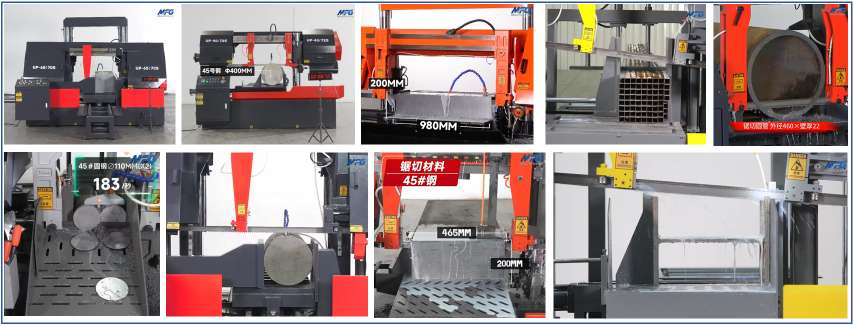
To get a clean cut and stop breaking your saw blades, follow the "3-Tooth Rule." This means at least 3 teeth of the blade must touch your metal piece at the same time. Thin-walled pipes and H-beams need more teeth per inch (high TPI) so they do not snag. Thick solid bars need fewer, larger teeth (low TPI) so the metal chips can escape.
If you work in a steel warehouse or a machine shop, you know that buying a good machine is only half the battle. The other half is setting it up correctly for the specific job on your floor.
One of the most common questions our team gets is about TPI (Teeth Per Inch). Choosing the wrong TPI does not just ruin your cut—it will strip the teeth right off a brand-new blade in less than a minute. Let’s look at how to match your blade to the shape of your metal without using complicated math.
The Golden Rule: The 3-Tooth Rule
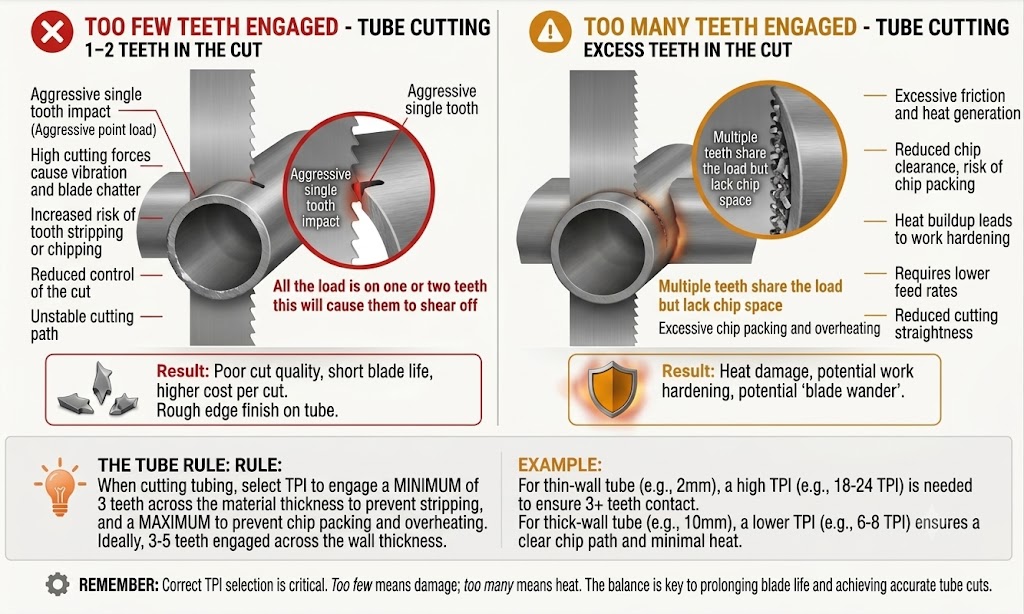
Before looking at your material shape, remember this basic rule: You always want between 3 and 24 teeth inside the cut at any given moment.
- If fewer than 3 teeth touch the metal, the teeth will catch on the edge and snap off.
- If more than 24 teeth touch the metal, the tiny spaces between the teeth will fill up with metal shavings (chips). The blade will get clogged, overheat, and wander off-line.
TPI Selection Guide for Common Metal Shapes
To make things easy for your daily production, use this quick matching guide for different material profiles:
| Metal Shape & Thickness | Recommended TPI | Why This Works |
|---|---|---|
| Thin Pipes / Tubes (under 3mm wall) | 10/14 TPI or 8/12 TPI | Fine, small teeth prevent the thin wall from slipping into the gaps between teeth. |
| H-Beams / Channels / Angles | 4/6 TPI or 5/8 TPI | Variable TPI handles the change from thin vertical walls to thick horizontal flanges. |
| Medium Solid Bars (50mm–100mm) | 3/4 TPI | Gives a good balance of cutting speed and smooth surface finish. |
| Large Solid Blocks (Over 200mm) | 1.4/2 TPI or 2/3 TPI | Big, deep gaps between teeth are needed to carry heavy metal shavings out of the deep cut. |
Breaking Down the Shapes: Tubes, Solids, and Beams
1. Thin-Walled Tubes and Pipes
When cutting hollow tubes, the blade only cuts through two thin walls. If you use a blade with big teeth, a single tooth will try to grab the thin wall, get stuck, and break. You need a high TPI blade. For these jobs, a variable TPI blade (like 10/14, where the tooth size changes back and forth) is best because it reduces machine chatter and cuts much quieter.
2. H-Beams and Structural Steel
Structural steel is the hardest shape for a blade. As the blade moves down, it first cuts through a wide, flat flange, then through a thin vertical web, and then through another flange. The blade experiences sudden changes in pressure.
To handle these vibrations without cracking the blade, you need a heavy-duty setup. Using a rigid machine like our: https://www.mfg-machinery.com/type/horizontal-straight-cutting-bandsaw
helps maintain steady downward force during these shape changes, while a 4/6 TPI blade ensures the teeth do not strip when hitting the flat parts.
3. Solid Round Steel Bars
With solid steel, the blade stays inside the metal for a long time during a single pass. A 100mm solid bar produces a lot of metal waste inside the cut. If you use fine teeth, the waste has nowhere to go. The blade will stop cutting and start rubbing, which hardens the steel and ruins the blade. You need big, aggressive teeth (like 2/3 TPI) that can scoop out the metal and throw it out of the cut easily.
Real-World Insight: The Cost of the "One Blade for Everything" Habit
Many small and medium workshops try to save time by using the exact same blade to cut thin pipes in the morning and thick steel blocks in the afternoon.
While it saves 10 minutes of blade-change time, our field data shows that this habit actually doubles your monthly blade budget. A single stripped blade costs far more than the few minutes it takes to swap to the right TPI. By keeping a small stock of different blades and matching them to your material shapes, you keep your machines running smoothly and your cut edges clean.
Still not sure which TPI to use for your specific material grade? Our tech team can look at your material list and give you an exact matching chart. Send your cutting sizes and metal types to us at: info@mfg-machinery.com