
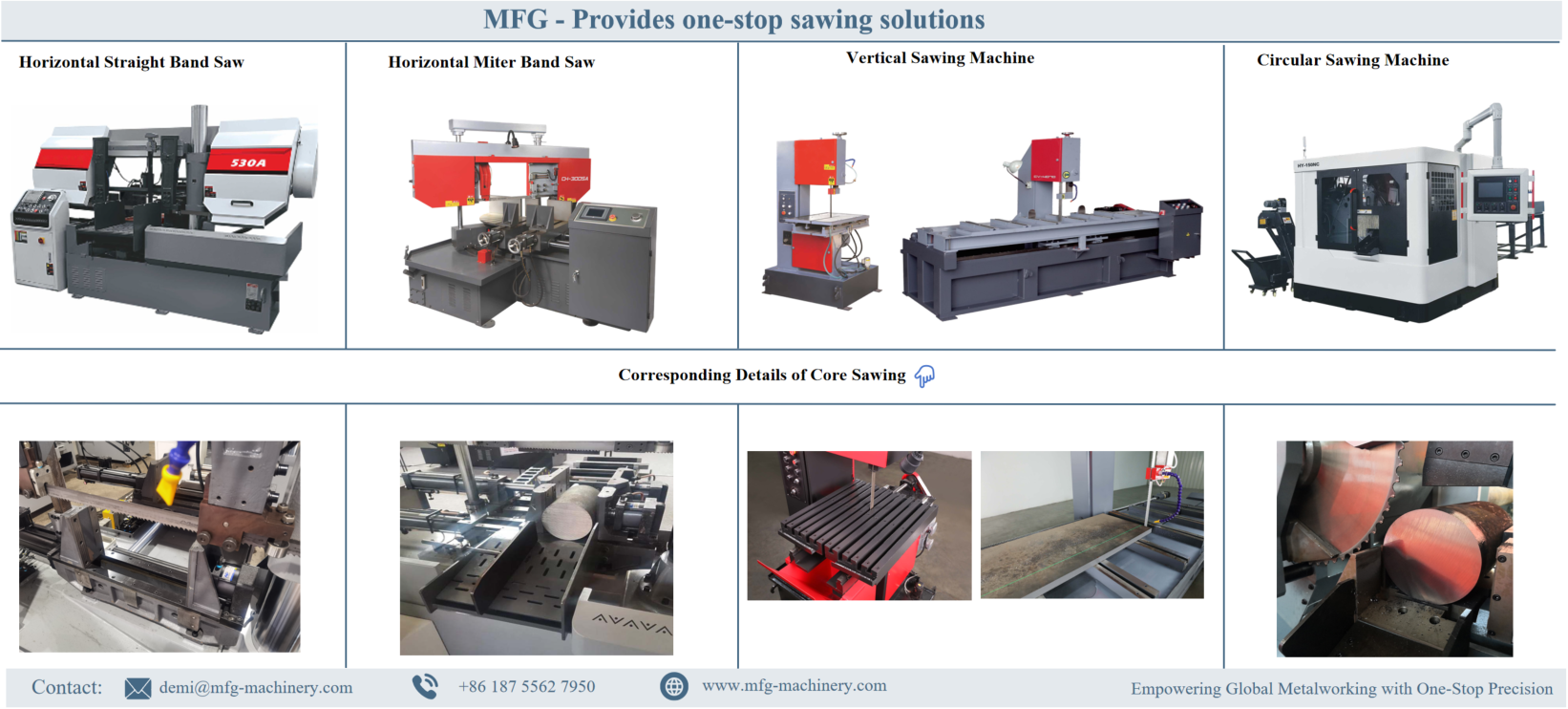
Are you wondering how to choose the right metal band saw for your shop? Whether you need a horizontal band saw for heavy-duty bundle cutting or a vertical band saw for intricate profiles, the right choice depends on your material shape, maximum cutting dimensions, and required daily production volume. This comprehensive buyer's guide breaks down the exact technical checklist you need to evaluate before making a purchase, ensuring maximum ROI and cutting efficiency.
Investing in a new metal band saw is a major decision for any metalworking facility. Buying a machine that is too small will create massive production bottlenecks, while overspending on unnecessary automation destroys your budget.
To help you get the most accurate quote and the perfect machine for your workflow, you must evaluate your specific cutting requirements. Here is the ultimate technical checklist to guide your decision.
1. The Horizontal Band Saw Checklist
Horizontal metal band saws are the heavy-duty workhorses of the industry, ideal for cutting down long lengths of raw material. If you are leaning toward a horizontal model, you need to answer these critical questions:
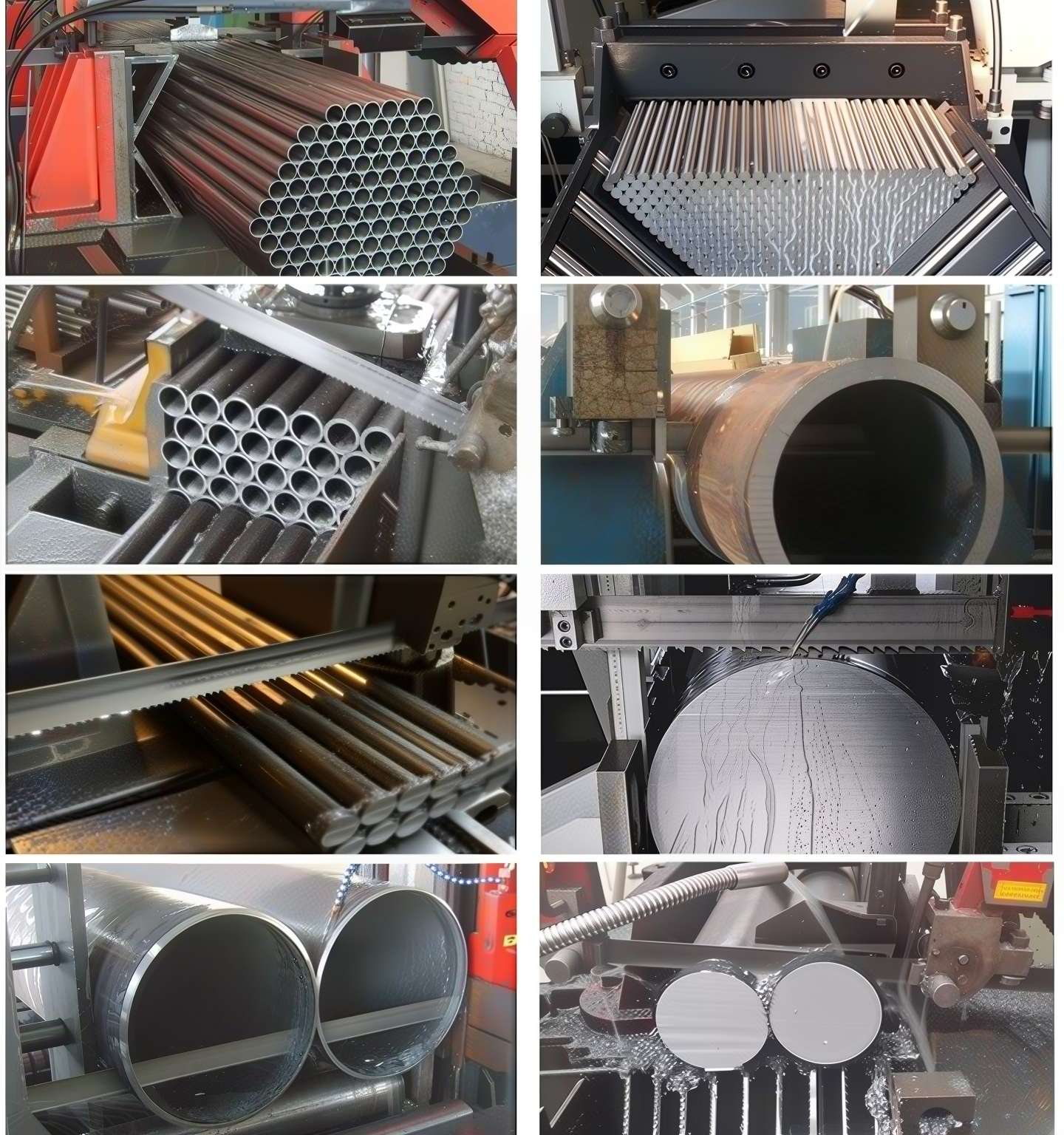
- Material Profile & Type: What exactly are you cutting? Identify if it is solid round bar, square steel, thick-walled tubes, or complex profiles.
- Maximum Cutting Dimensions: You must determine the absolute maximum diameter (for rounds) or Width x Height (for rectangles) you will need to process.
- Production Volume: Calculate your required cuts per day. This determines whether a cost-effective semi-automatic saw is sufficient, or if a fully automatic CNC band saw is required to keep up with high-volume demands.
- Cut Length Requirements: What is the maximum cut-off length you need, and what is the total length of your raw material before cutting?
- Angle Cutting (Miter Saws): Do you only perform straight 0° cuts, or do you need to cut angles? If angle cutting is required, specify if it's 45° or 60°, and what your maximum material dimensions are at those specific angles.
- Bundle Cutting: Will you be cutting multiple pieces at once? If so, you need to define the shape of the bundle and its overall cross-section size so the machine can be equipped with the proper hydraulic top clamps.
2. The Vertical Band Saw Checklist
Vertical metal band saws offer incredible flexibility, allowing operators to manually feed complex shapes or perform internal contour cuts. When evaluating a vertical saw, consider the following:
- Raw Material Dimensions: Clearly define the size, shape, and type of material you are processing.
- Cutting Direction: Will you be performing transverse (cross) cuts or longitudinal (lengthwise) cuts?
- Machine Capacity Limits: You must confirm three critical dimensions: the maximum cutting height, the throat depth (distance from the blade to the column), and the maximum stroke length required for your parts.
l Daily Output: Estimate your required cuts per day to ensure the machine's motor and drive system can handle the continuous workload.
3. Material Handling: Don't Forget the Roller Tables
A high-performance band saw is useless if you cannot safely load heavy steel onto it.
When requesting a quote, always discuss your material handling needs.
Do you simply need standard idle roller tables for basic material support, or do you require motorized feeding racks with integrated measuring systems for heavy, automated production?
4. Quick Reference: Pre-Purchase Evaluation Table
Use this matrix to organize your technical requirements before contacting a supplier:
| Evaluation Criteria | Horizontal Band Saw | Vertical Band Saw |
|---|---|---|
| Primary Application | Straight cut-offs, bundle cutting, miter cuts. | Contour cutting, notching, longitudinal cuts. |
| Key Dimensions Needed | Max Diameter, Max WxH at 0°/45°/60°. | Max Height, Throat Depth, Stroke Length. |
| Automation Options | Manual, Semi-Auto, Fully Automatic (CNC). | Typically Manual feed or Gravity feed. |
| Material Handling | Requires heavy-duty infeed/outfeed roller tables. | Hand-fed or basic support stands. |
5. Maximizing ROI with the Right Automation Level
For shop owners in rapidly expanding industrial markets, choosing between semi-automatic and fully automatic band saws comes down to labor costs and order volume. If your operators spend hours waiting for a manual saw to finish a cut, you are losing money.
Upgrading to a fully automatic horizontal band saw allows a single operator to load a 20-foot steel bar, program the required cut lengths, and walk away to perform other profitable tasks, instantly boosting your shop's overall efficiency.
6. Get the Perfect Band Saw for Your Shop Floor
At MFG Machinery, we specialize in matching metal fabrication shops with the exact sawing technology they need. Whether you require a heavy-duty automatic horizontal saw for bundle cutting or a precision vertical band saw, our engineers will analyze your specific material and production goals to recommend the most cost-effective solution.
Stop guessing and start optimizing your production.
Please send your material specs and cutting requirements to info@mfg-machinery.com for expert advice and a customized quote!