
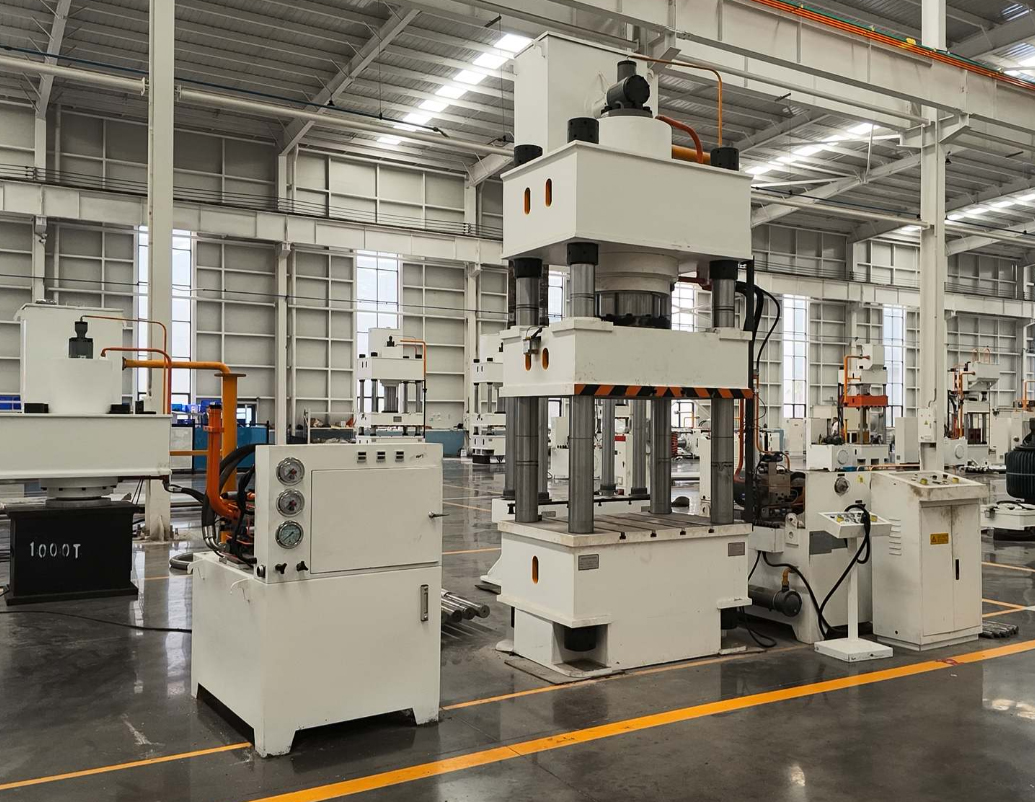
When it comes to manufacturing high-performance automotive brake pads, hot pressing and molding is the single most critical step in the entire production line. For decades, manufacturers in the friction material industry have relied on advanced four-column hydraulic presses for their exceptional structural rigidity, precise pressure stability, long-duration pressure holding, and integrated heating plate compatibility.
Recently, we received an inquiry from a Canadian customer looking for a hydraulic press for manufacturing automotive brake pads. I have recommended our 315-ton three-beam four-column hydraulic press, which can fully meet their production requirements. Technical specifications are as follows:
| Project | 315T |
|---|---|
| Maximum liquid pressure (Mpa) | 25 |
| Slider stroke (mm) | 500 |
| Maximum opening height (mm) | 800 |
| Table size (mm) | 800X800 |
| Heating plate size(mm) | 800*800*67 |
| Insulation pad can withstand temperature (℃) | 500 |
| Down speed of empty range (mm / S) | 90 |
| Working speed (mm / S) | 6-12 |
| Return speed (mm / S) | 120 |
| Motor power( kw) | 11 |
| Oil pump displacement (ml / R) | 63 |
| Jacking force (t) | 63 |
| Ejection stroke (mm) | 250 |
 |
|
|---|
Whether you are producing passenger car disc pads, commercial vehicle drum brake linings, or specialized ceramic and semi-metallic friction materials, choosing the right machinery determines your product quality. At Shanghai MFG Machinery Equipment Co., Ltd, we design and manufacture high-efficiency hydraulic press solutions tailored to global automotive standards.
1. Core Technological Principles
The brake pad production process brings together raw friction powder (a precise blend of resins, fibers, graphite, and metal powders) and pre-treated steel backing plates inside a heated mold.
A four-column hydraulic press applies high pressure, constant temperature, multiple exhaust venting cycles, and sustained pressure holding. Under these conditions, the phenolic resin cross-links and cures, bonding the loose powder into a dense friction block while firmly fusing it to the steel back.
Key Technical Specifications Table
| Process Parameter | Specification Range | Description |
|---|---|---|
| Recommended Tonnage | 200T, 315T, 400T, 500T, 630T | 200T–315T for passenger cars; 400T–630T for heavy trucks/buses |
| Heating Plate Temp | 150°~180° | Ensures proper resin curing and cross-linking |
| Working Pressure | 16-25MPa | Delivers optimal structural density |
| Curing Cycle Time | 60 - 180s | Supports automated multi-exhaust air-release actions |
2. Four Main Applications in a Brake Pad Production Line
Hot Pressing and Molding (Main Process): The four-column structure provides superior rigidity, minimizing table deflection under heavy loads. It enables multi-cavity simultaneous pressing for high production efficiency and uniform density. Servo-driven options support multi-stage pressure curves, eliminating cracking, edge chipping, and delamination. PLC systems store recipe parameters for fast product changeovers.
Cold Pre-Pressing (Optional Pre-Process): Using a press to pre-form friction powder into solid pre-pressed cakes exhausts trapped air, minimizing blistering and boosting thermal pressing stability.
Steel Back Bonding & Riveting: Smaller tonnage four-column presses handle secondary pressing of steel backs to friction blocks, shims, noise-reduction pads, and rivet pressing.
Reshaping, Leveling, and Sample Testing: Used for post-molding trimming/leveling of brake pad blanks, as well as producing friction material test blocks to evaluate wear and friction coefficients.
3. Why Choose a Four-Column Press Over a C-Frame Press?
Exceptional Anti-Off-Center Load Capacity: The three-beam, four-pillar design distributes force evenly across multi-cavity molds. It prevents table distortion under prolonged high pressure, guaranteeing thickness consistency. (C-frame presses tend to flex open, failing multi-cavity hot pressing requirements).
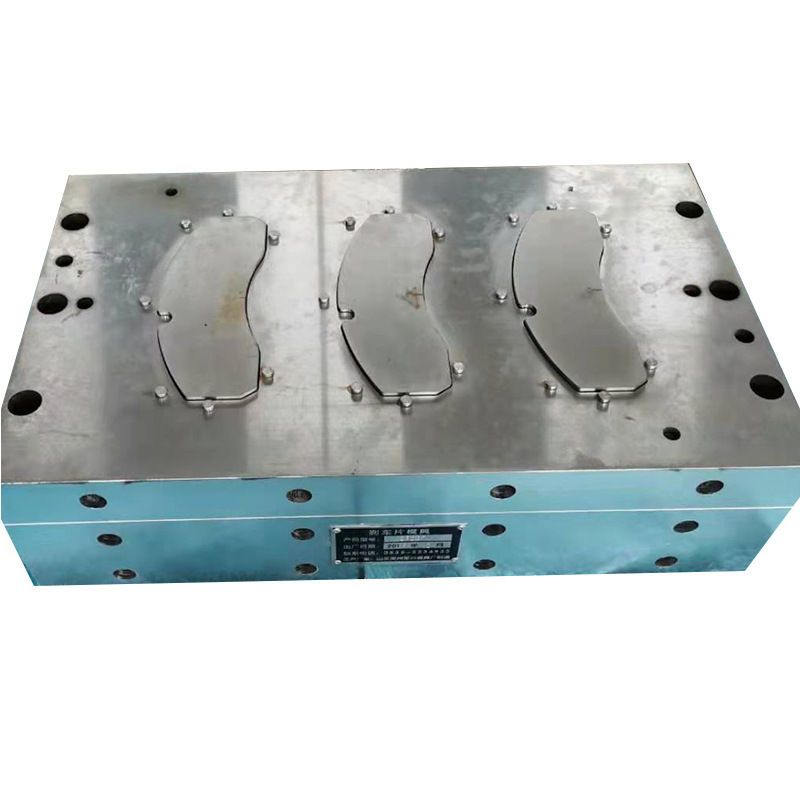
Large Worktable & T-Slots: Easily accommodates large multi-cavity heating molds with quick-change tooling for various car and truck models.
Sustained Pressure Holding: Brake pad curing demands continuous, steady pressure. Our robust hydraulic systems hold pressure effortlessly without pressure drops.
High Automation Integration: Seamlessly integrates heating plates, precise digital temperature controllers, automatic mold release mechanisms, and ejection cylinders for semi-automated or fully automated lines.
4. Common Quality Defects & Equipment Solutions
Global automotive buyers and tier-1 suppliers look closely at defect prevention. Here is how modern hydraulic presses solve common issues:
Blistering & Delamination: Caused by insufficient exhaust cycles, unstable pressure, or uneven heating plate temperatures.
Uneven Density & Thickness Variance: Caused by inadequate machine rigidity or off-center load deflection.
Steel Back Separation: Caused by short dwell times, inadequate pressure, or incorrect thermal control.
Industry Note: High-end models from Shanghai MFG Machinery Equipment Co., Ltd feature servo-driven closed-loop pressure control and multi-point mold temperature sensors. This maintains temperature variations within $\pm 3^\circ\text{C}$, fully meeting IATF16949 automotive quality management standards.
5. Applicable Product Range
Our four-column hydraulic presses are widely deployed for manufacturing:
Passenger car ceramic and semi-metallic brake pads
Heavy-duty truck and bus drum brake linings
Industrial machinery brake blocks
Clutch facings and specialized friction components
Ready to upgrade your brake pad manufacturing line? Contact Shanghai MFG Machinery Equipment Co., Ltd today for customized hydraulic press solutions, machine sizing guidance, and competitive factory pricing.
Website:https://www.mfg-machinery.com/type/four-column-universal-hydraulic-press
Email: info@mfg-machinery.com
Phone: 008615803802793
Contact our engineering team today to review your cutting specifications and find the ideal gantry band saw for your manufacturing needs!