
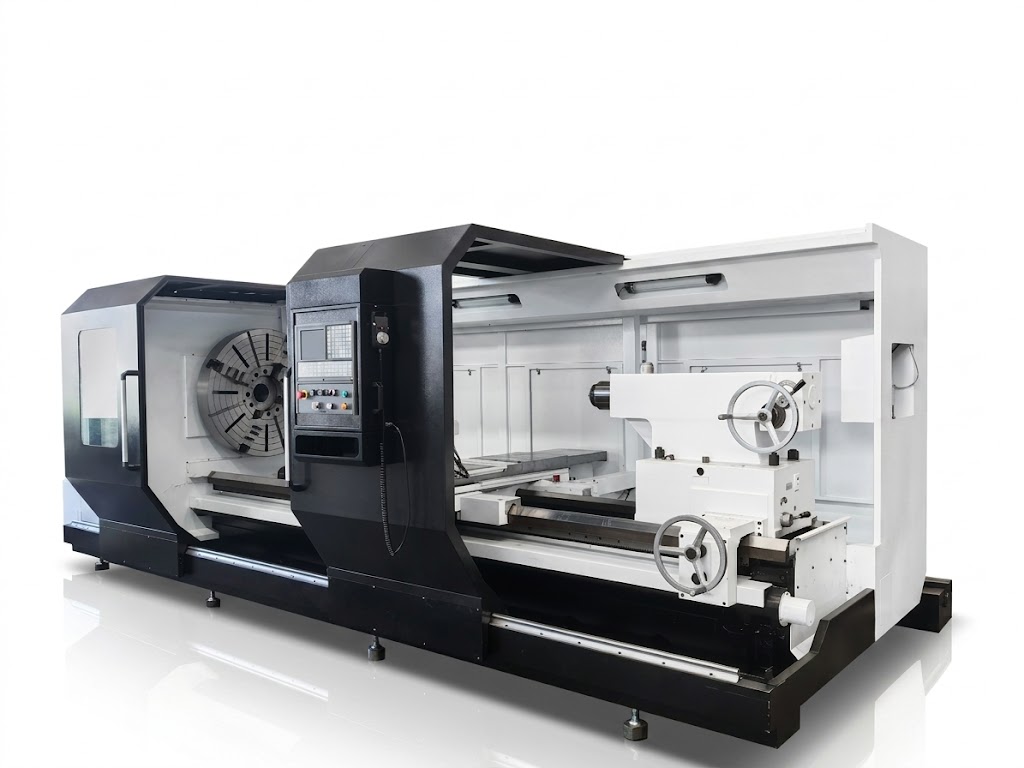
Heavy-Duty Lathe Rigidity: Why Bed Structure Matters? | MFG Machinery
Most industrial buyers prioritize obvious specs when shopping for a heavy-duty lathe — spindle power, maximum swing diameter, and CNC system functions. These features are undeniably important for large-scale machining projects. However, they are not the core factor that decides long-term machining precision, stability, and equipment service life.
The real backbone of a high-performance heavy-duty turning machine is its lathe bed structure. For heavy industrial machining involving multi-ton workpieces and extreme cutting forces, lathe bed rigidity directly separates consistent, high-precision production from frequent vibration errors, poor surface finishes, and costly machine downtime.
In this guide, we break down why the lathe bed’s design, geometry, and material are far more critical than most buyers realize for heavy-duty lathe performance.
1. How Lathe Bed Rigidity Impacts Machining Accuracy
Heavy-duty turning operations expose the lathe to constant multi-directional stress: the massive dead weight of large workpieces, high-speed rotational torque, and strong cutting pressure from turning tools.
If the lathe bed lacks sufficient rigidity, tiny microscopic deflections will occur during machining. These minor structural shifts trigger two major production problems:
Visible Chatter Marks & Poor Surface Finish
Insufficient rigidity causes machine vibration (chatter). This common issue ruins the surface smoothness of high-precision parts, including marine shafts, wind turbine rotors, and heavy mechanical components. It also sharply shortens cutting tool lifespan, increasing your long-term production costs and tool replacement frequency.
Unavoidable Geometric Tolerance Errors
Industrial heavy-duty lathes usually feature long beds of 6–12 meters or longer. Even a 0.1mm bed deflection will cause obvious taper errors and dimension deviations. This makes it impossible to meet the strict tolerance standards of industrial batch production, leading to defective products and order losses.
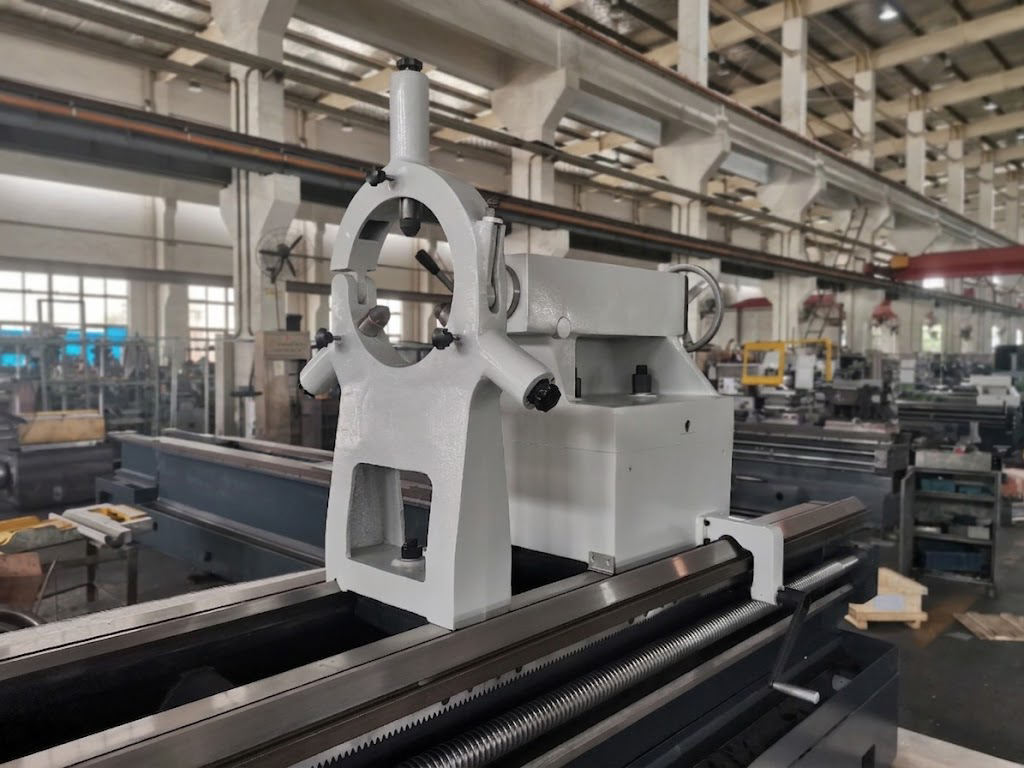
2. Flat Bed vs Slant Bed Heavy-Duty Lathes: Which Is Better?
Heavy-duty CNC lathes mainly adopt two bed geometries, each designed for distinct industrial machining needs. Choosing the right bed structure ensures optimal stability and production efficiency for your workflow.
Flat Bed vs Slant Bed Heavy-Duty Lathes (Full Comparison)
The table below clearly compares the structural features, core strengths, and applicable scenarios of flat bed and slant bed heavy-duty lathes, helping you pick the right model for your machining needs:
| Comparison Item | Flat Bed Heavy-Duty Lathe | Slant Bed Heavy-Duty Lathe |
| Structure Design | Horizontal flat bed structure with wide bearing surface | 30°/45° inclined integrated bed structure |
| Core Performance | Ultra-strong load-bearing capacity, uniform pressure distribution | Excellent torsional resistance and vibration reduction |
| Machining Advantages | No deformation under super-heavy loads, stable for long-cycle machining | Smooth automatic chip removal, low machining resistance |
| Best Application Scenarios | Super-long, super-heavy single workpieces, heavy industry rough & finish turning | High-volume, continuous automated production, high-precision batch machining |
3. Why High-Tensile Cast Iron Is the Top Bed Material
A perfect bed design relies on premium materials. Reliable heavy-duty lathe manufacturers never use welded steel plates for bed production. Instead, they adopt high-grade Meehanite cast iron and HT300 grey cast iron for all heavy lathe beds, for two core reasons:
Cast Iron vs Steel Lathe Bed Material Comparison
Material quality determines the long-term rigidity and stability of the lathe bed. The following table shows why high-grade cast iron is far superior to welded steel for heavy-duty lathe bed manufacturing:
| Performance Dimension | High-Grade Cast Iron (Meehanite/HT300) | Welded Steel Plate |
| Vibration Dampening | Excellent internal graphite structure, 10x better vibration absorption than steel, effectively eliminates chatter marks | Poor vibration damping, prone to machining vibration and surface finish defects |
| Thermal Stability | Comes with professional stress relief aging treatment, anti-warping, anti-deformation under temperature fluctuation | Easy to generate internal welding stress, prone to thermal deformation after long-term operation |
| Durability | Long-term stable precision, no structural failure after years of heavy-load operation | Easy to fatigue and deform, leading to declining machining accuracy over time |
| Applicability | Exclusive for professional heavy-duty CNC lathes | Only suitable for light-duty, low-precision ordinary machine tools |
4. Hardened Box Ways: The Best Guideway Design for Heavy Loads
The bed guideway supports the entire weight of the lathe carriage and tailstock, directly determining load capacity and wear resistance. Unlike light-duty lathes that use linear guide rails, professional heavy-duty lathes exclusively adopt hardened box ways (solid guideways).
These integrated box ways are processed by high-frequency induction hardening and precision grinding. Their biggest advantage is a super-large contact surface area with moving parts.
Core benefits: Fully withstands heavy cutting forces and sudden shock loads during intermittent cutting, avoids rapid wear, and maintains long-term guideway precision without deviation.
Final Thoughts: Lathe Bed Structure = Long-Term Production Precision
When you compare heavy-duty lathe quotes from global suppliers, do not only focus on superficial parameters. A heavy, robust, well-engineered lathe bed is the most valuable investment for your production line.
A high-rigidity lathe bed stabilizes machining accuracy, extends tool and machine service life, cuts maintenance costs, and eliminates unplanned downtime. It is the fundamental guarantee for long-term, stable, high-quality heavy machining.
At Shanghai MFG Machinery, we customize heavy-duty lathes with optimized bed structures, premium cast iron materials, and hardened box ways to handle the toughest industrial machining challenges. Contact our professional technical team: info@mfg-machinery.com today to get tailored rigidity solutions for your large-scale projects.