
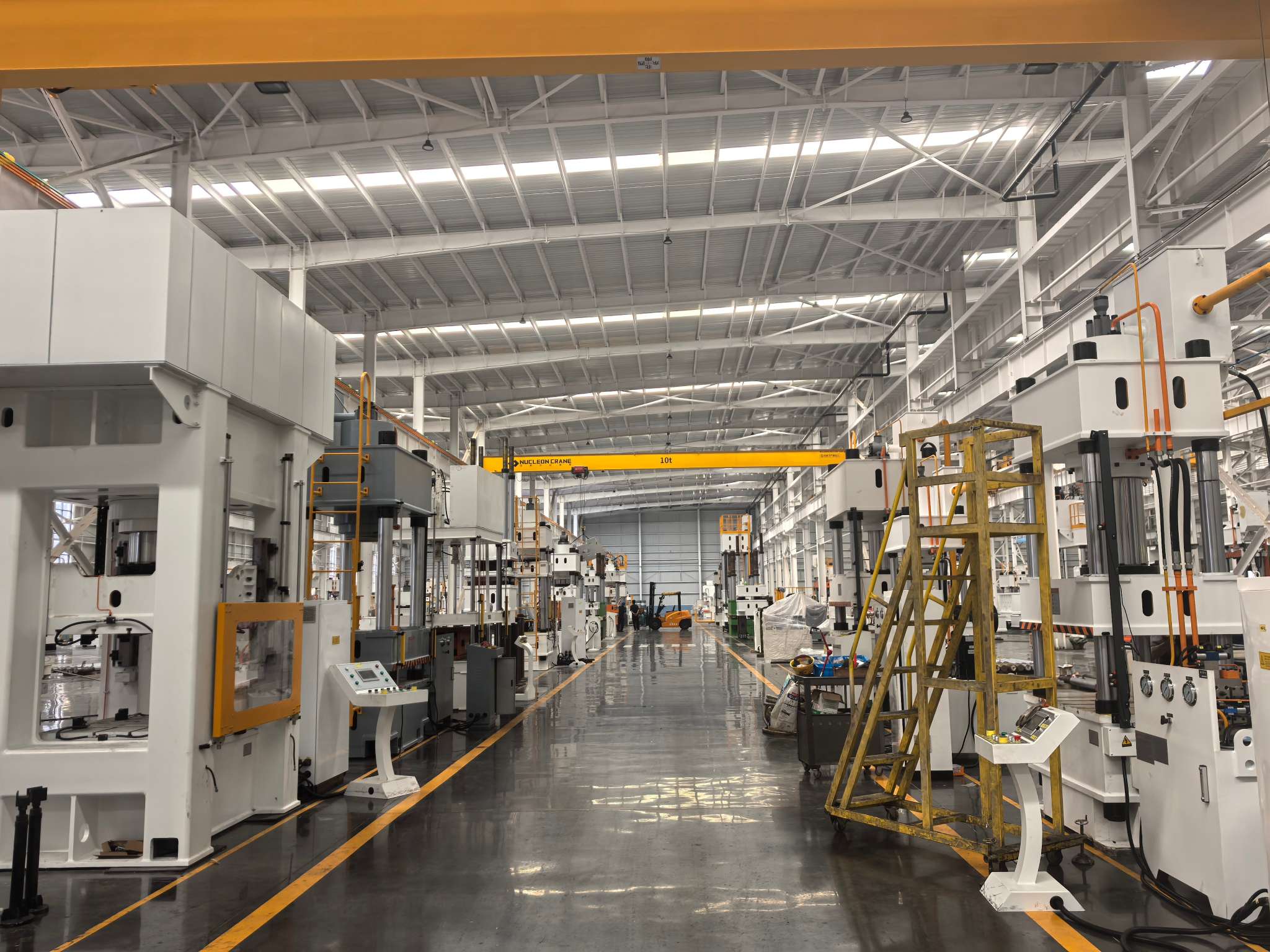
Choosing the right hydraulic press is essential for optimizing your metal forming, stamping, or assembly production line. Two of the most popular types on the market are the Four-Column Hydraulic Press and the Frame (Gantry) Hydraulic Press (which includes monolithic and welded steel frames).
Selecting the wrong machine can lead to poor product precision, frequent maintenance issues, or unnecessary equipment costs. As a leading manufacturer in industrial machine tools, Shanghai MFG Machinery Equipment Co., Ltd helps global manufacturers evaluate the core differences between these two presses to make the best purchasing decision for their specific applications.
1. Core Structural Differences
Four-Column Hydraulic Press
A four-column hydraulic press features an upper beam, a moving slide, a working table, and a lower beam, with four heavy-duty steel columns running through and locking the structure. The sliding block is guided by these four vertical columns.
Advantages:
Large Openings and Strokes: Easily built with large daylights (vertical openings) and long strokes at a high cost-performance ratio.
Three-Side Open Access: The front, left, and right sides are open, making it very convenient to load and unload long workpieces, irregular parts, or large molds.
High Tonnage Value: Excellent for deep drawing and deep pressing operations where taller vertical clearance is needed.
Easy Maintenance: Standardized replacement parts are widely available on the market, keeping maintenance quick and affordable.
Disadvantages:
Lower Off-Center Load Resistance: Due to small gaps in the column guides, long-term heavy eccentric loads can increase guide clearance over time.
Precision Wear: Slider precision may decrease gradually with heavy wear, making it less ideal for ultra-precise press-fitting.
Limited Effective Table Area: The four corner pillars take up working space, meaning workpieces cannot be placed right at the edges.
Frame (Gantry) Hydraulic Press
A frame-type hydraulic press consists of left and right welded or cast rigid frames where the sliding block is guided by precision rails inside the frame structure.
Advantages:
Superior Rigidity & Eccentric Load Resistance: High structural rigidity and precision guide rails ensure excellent repeatable positioning accuracy even under side loads.
100% Usable Table Area: The working table is completely unobstructed by pillars, offering maximum freedom for mold layout.
Long-Term Precision Stability: Minimal frame deformation makes it ideal for precision press-fitting, straightening, and stamping with long accuracy retention.
Automation Friendly: Easily integrates with optical gratings, servo systems, and displacement sensors for closed-loop precision control.
Disadvantages:
Size & Window Restrictions: Limited by the internal window frame size; building extra-large openings or strokes significantly increases manufacturing costs.
Restricted Side Access: Side frames block horizontal entry, meaning oversized long materials must be fed strictly from the front or back.
Higher Investment: Due to large welded structures, prices are generally higher than four-column presses of the same tonnage.
2. Quick Selection Guide by Manufacturing Process
✅ Choose a Four-Column Hydraulic Press If:
Deep Drawing & Sheet Metal Forming: You produce sheet metal deep-drawn parts, cooking utensils, stainless steel sinks, gas cylinders, or hardware shells requiring large openings and long strokes.
Long Workpieces: Your parts are long and need convenient side-crane loading into molds.
General Pressing & Molding: You perform standard pressing, powder metallurgy, or plastic molding with moderate precision requirements and a controlled budget.
Large Molds: Your tooling is bulky and requires 3-side open access for quick setup and removal.
High Tonnage Needs: You require heavy tonnage equipment (500T to 2000T+), where four-column designs offer a massive cost advantage.
✅ Choose a Frame (Gantry) Hydraulic Press If:
Precision Press-Fitting: You assemble automotive bearings, bushings, and motor stators where pressure-displacement monitoring and closed-loop curves are mandatory.
Shaft & Profile Straightening: Your workpieces frequently experience single-sided or eccentric loads (such as shaft straightening).
High-Precision Stamping: Your application demands strict parallel accuracy and tight repetitive tolerances.
Compact Workpiece Footprint: Your components fit comfortably inside the inner window dimensions without needing oversized vertical daylights.
Smart Manufacturing: You want to install servo control systems, linear encoders, and digital pressure sensors for advanced automated quality control.
3. Key Parameters Comparison Table
| Comparison Feature | Four-Column Hydraulic Press | Frame (Gantry) Hydraulic Press |
|---|---|---|
| Pictures | 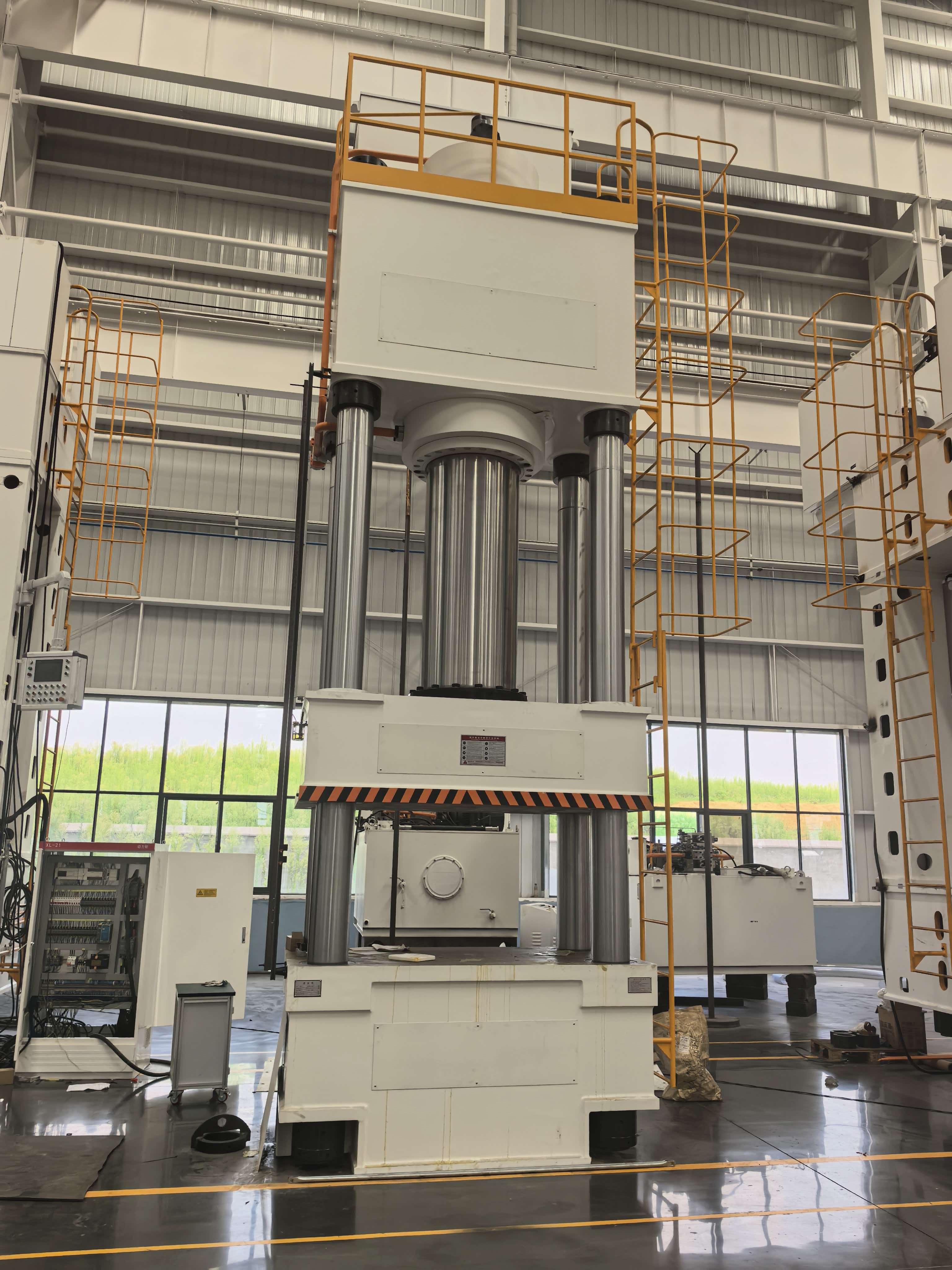 |
HydraulicPres.jpg) |
| Body Rigidity | Moderate; sensitive to heavy off-center loads | High; excellent eccentric load resistance |
| Guidance System | Vertical column clearance guide | Rectangle precision guide rails |
| Precision Retention | Clearances may increase with long-term use | Slower precision degradation over time |
| Table Utilization | Corners restricted by four pillars (dead zones) | 100% full table usable area |
| Opening & Stroke | Easily configured large size at low cost | Large windows are expensive to build |
| Workpiece Loading | 3-side open access, friendly for long parts | Blocked on left and right by frame walls |
| Price (Same Tonnage) | More economical and cost-effective | Higher investment due to rigid framework |
| Maintenance & Parts | Standardized parts, easy and low-cost | Custom framework components, higher upkeep |
4. Common Pitfalls to Avoid When Buying
Beware of Eccentric Load Demands: If your process involves frequent single-side loading (like straightening or eccentric stamping), always choose a frame press. If the load is strictly centered, a four-column press is more than sufficient.
Don’t Overpay for Unnecessary Specs: If your application only requires standard pressing or shallow drawing without closed-loop feedback, a four-column machine delivers better ROI. Buying a frame press when high rigidity isn't needed wastes budget.
Check the Inner Window Dimensions: For frame presses, verify the inner height and inner width of the window. Your workpiece and mold together must fit comfortably inside. Many buyers look only at tonnage and overlook window clearance constraints.
Hot Pressing Applications: For composite materials or diamond sintering, large-table hot pressing suits four-column models, while small-table, high-precision hot pressing requiring strict parallelism suits frame models.
Looking for the Right Hydraulic Press?
At Shanghai MFG Machinery Equipment Co., Ltd, we manufacture robust, reliable industrial machine tools tailored to your exact production requirements. Whether you need a heavy-duty four-column press for deep drawing or a high-precision gantry press for assembly and straightening, our engineering team is here to help.
Contact us today at info@mfg-machinery.com or visit our official website at https://www.mfg-machinery.com/ to discuss your technical specifications and get a custom quote.