
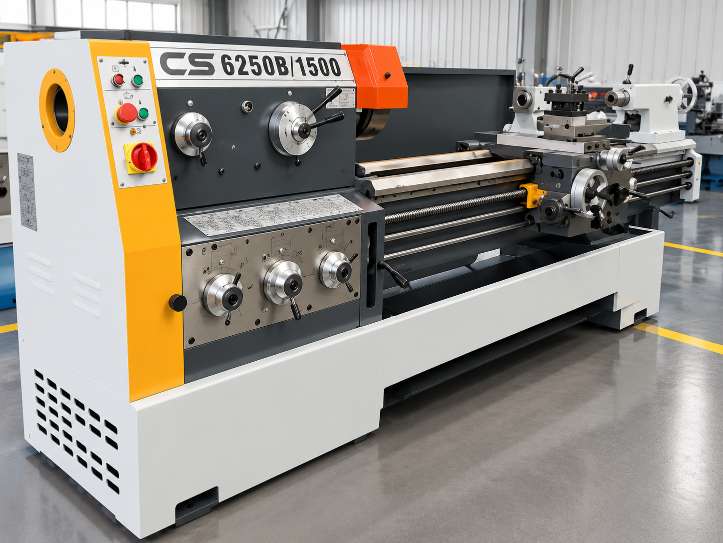
CNC machines have changed modern manufacturing, but manual lathes have not disappeared from serious workshops. For repair work, technical training, toolroom jobs and low-volume parts, a conventional lathe can still offer lower setup cost, faster response and strong machining flexibility. This article explains where manual lathes remain useful, when CNC is the better choice, and what buyers should check before purchasing.
Why Buyers Still Ask for Manual Lathes
In many factories, the question is not “manual lathe or CNC lathe?” The real question is: which machine gives the lowest cost per useful part for this specific job?
A CNC lathe is ideal for repeated production, complex profiles and strict batch consistency. However, many buyers still need a machine for:
· Repairing shafts, bushings, rollers and sleeves
· Producing one-off or low-volume components
· Training operators on basic turning principles
· Supporting maintenance departments
· Machining oversized or non-standard workpieces
· Quick modification jobs where CNC programming is unnecessary
For these tasks, a Manual Lathe can reduce preparation time and keep production moving when the job does not justify full CNC setup.
Pain Points in Real Workshops
Buyers who operate mixed production lines often face several practical problems:
· Small orders are too slow to schedule on CNC machines
· Emergency repair parts interrupt production planning
· Skilled CNC operators are not always available
· Programming time increases cost for simple one-off parts
· Older machines lose accuracy because of worn guideways or poor spindle condition
· Maintenance teams need a reliable machine for daily repair tasks
A well-built conventional lathe helps solve these problems by giving the workshop a flexible, direct-control machine for turning, facing, drilling, boring, taper turning and thread cutting.
Technical Value: What Makes a Manual Lathe Useful Today?
A manual lathe is not valuable simply because it is “traditional.” Its value depends on mechanical stability, machining range and long-term accuracy.
1. Rigid Bed Structure
The bed is the foundation of turning accuracy. For buyers, the key points are:
· Wide bed design for better support
· Hardened and ground guideways
· Stable casting structure to reduce vibration
· Proper alignment between spindle, carriage and tailstock
A rigid bed helps improve surface finish and dimensional consistency, especially when machining long shafts or heavy workpieces.
2. Spindle and Gearbox Reliability
The spindle system directly affects cutting stability. A buyer should check:
· Spindle bore diameter
· Spindle speed range
· Bearing configuration
· Gearbox shifting smoothness
· Low-speed torque for larger workpieces
For repair shops and maintenance departments, a larger spindle bore can be especially useful because it allows longer bars or shafts to pass through the headstock.
3. Tailstock Alignment and Long-Part Support
When machining long shafts, poor tailstock alignment can create taper errors. A reliable manual lathe should provide:
· Stable tailstock locking
· Accurate center alignment
· Smooth quill movement
· Sufficient quill travel
· Easy adjustment for maintenance
This is important for industries such as agricultural machinery, hydraulic repair, pump maintenance and roller manufacturing.
4. Thread Cutting Flexibility
Manual lathes remain useful for threading because operators can directly control the process. For metric, inch, module or diametral pitch threads, buyers should review:
· Lead screw accuracy
· Feed and thread range
· Gear change system
· Half-nut engagement reliability
· Toolpost rigidity
For repair jobs, thread flexibility is often more important than high-volume cycle time.
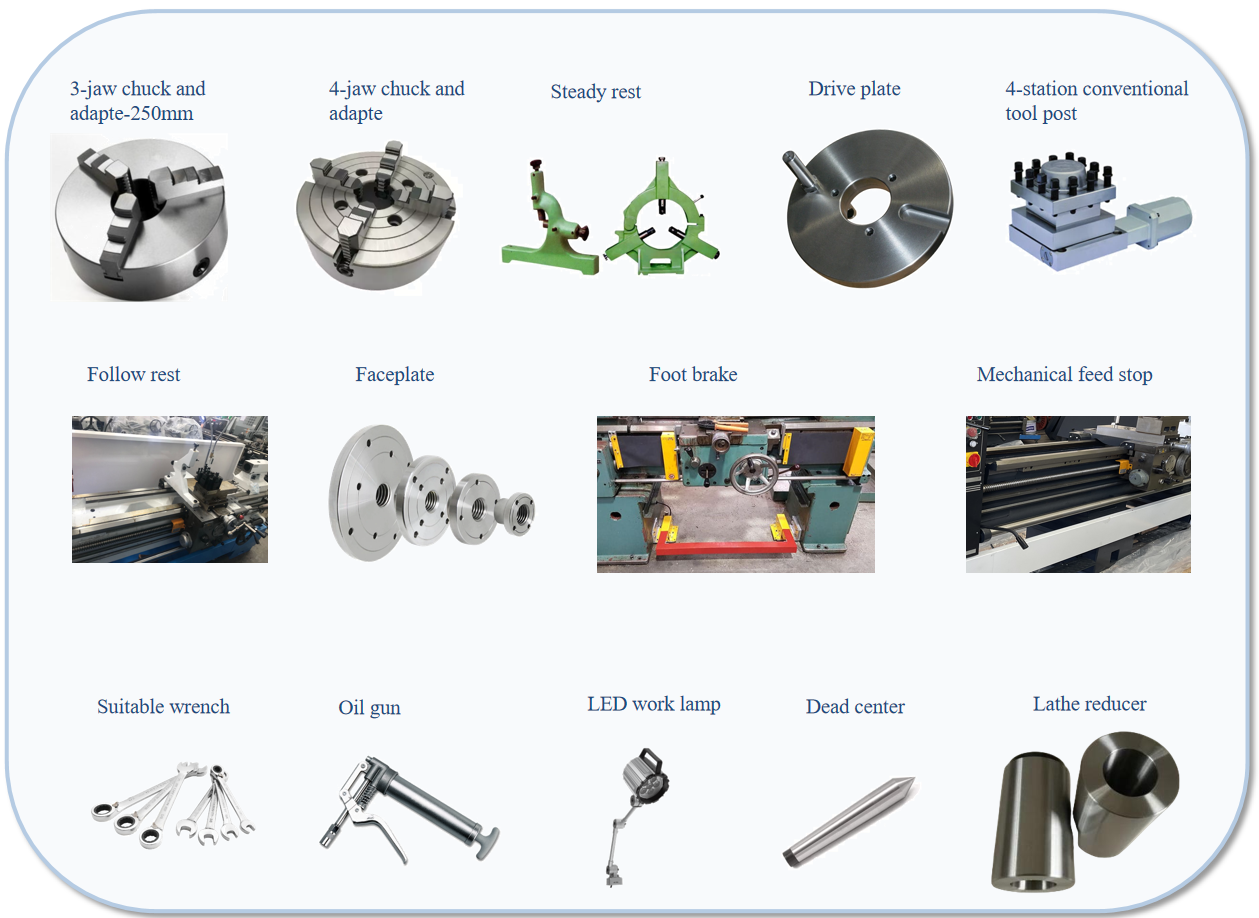
Manual Lathe vs CNC Lathe: Practical Comparison
A CNC Lathe Machine is ideal for repeated production, complex profiles and strict batch consistency.
| Factor | Manual Lathe | CNC Lathe |
|---|---|---|
| Best for | Repair, training, one-off parts, small batches | Repeated production, complex parts, high consistency |
| Setup time | Low for simple parts | Higher because programming and tooling setup are needed |
| Operator requirement | Skilled manual machinist | CNC programmer/operator |
| Batch consistency | Depends on operator skill | High |
| Initial investment | Lower | Higher |
| Maintenance complexity | Lower | Higher |
| Flexibility for emergency repair | High | Medium to high |
| Complex contour machining | Limited | Strong |
The conclusion is simple: CNC machines improve repeatability and production efficiency, while manual lathes remain valuable where flexibility, quick setup and mechanical control matter most.
Typical Applications for Conventional Lathes
Repair Workshops
Manual lathes are widely used to repair worn shafts, bearing seats, bushings, rollers and threaded components. In these cases, the operator often needs to measure, adjust and cut directly based on the actual damaged part.
For oversized shafts, rollers and repair components, a heavy duty conventional lathe can provide stronger support and better low-speed cutting stability.
Technical Schools and Training Centers
A manual lathe helps students understand spindle speed, feed rate, chip formation, tool geometry, workholding and tolerance control. These fundamentals make later CNC training more effective.
Toolrooms and Maintenance Departments
Toolrooms often need to produce jigs, fixtures, spacers, pins and custom sleeves. A manual lathe allows fast response without waiting for CNC programming capacity.
Small-Batch Manufacturing
For short runs and non-standard parts, manual turning can be cost-effective when part geometry is simple and setup time is more important than automation.
Buying Checklist for Manual Lathe Selection
Before purchasing a manual lathe, buyers should compare:
· Maximum swing over bed
· Distance between centers
· Spindle bore size
· Spindle speed range
· Bed width and guideway hardness
· Main motor power
· Thread cutting range
· Tailstock quill diameter and travel
· Machine weight and casting stability
· Safety guards, emergency stop and electrical compliance
For export markets, buyers should also confirm documentation, electrical configuration, spare parts availability and compliance requirements such as CE-related safety design where applicable.
Maintenance Factors That Protect Accuracy
A conventional lathe can serve for many years when maintained correctly. The most important checks include:
· Daily guideway cleaning and lubrication
· Regular inspection of chuck runout
· Lead screw and feed rod lubrication
· Tailstock alignment checks
· Belt or gearbox condition inspection
· Coolant and chip removal management
· Periodic spindle noise and temperature monitoring
These routines reduce downtime and help preserve turning accuracy over long-term use.
Conclusion: Manual Lathes Still Have a Clear Place
Manual lathes are not a replacement for CNC machines. They are a practical complement. For repair, training, toolroom work and small-batch turning, a conventional lathe can provide strong flexibility, lower setup cost and direct operator control.
For buyers building a balanced workshop, the best equipment plan often includes both CNC lathes for repeat production and manual lathes for flexible machining tasks.
Frequently Asked Questions About Manual Lathes
- Is a manual lathe still worth buying in 2026?
Yes. Manual lathes remain useful for repair, training, toolroom work and small-batch machining where fast setup and flexibility are important.
- When should I choose a CNC lathe instead of a manual lathe?
Choose a CNC lathe for repeated production, complex profiles, tight batch consistency and automated machining cycles.
- What is the most important specification when buying a manual lathe?
It depends on the workpiece, but spindle bore, swing over bed, distance between centers, bed rigidity and thread range are usually key factors.
View MFG Machinery’s full range of manual lathe machines and heavy duty conventional lathes, or contact our engineering team to request a technical specification sheet and online factory video inspection.
Email: info@mfg-machinery.com
Tell/WA: +86 175 2133 1995