
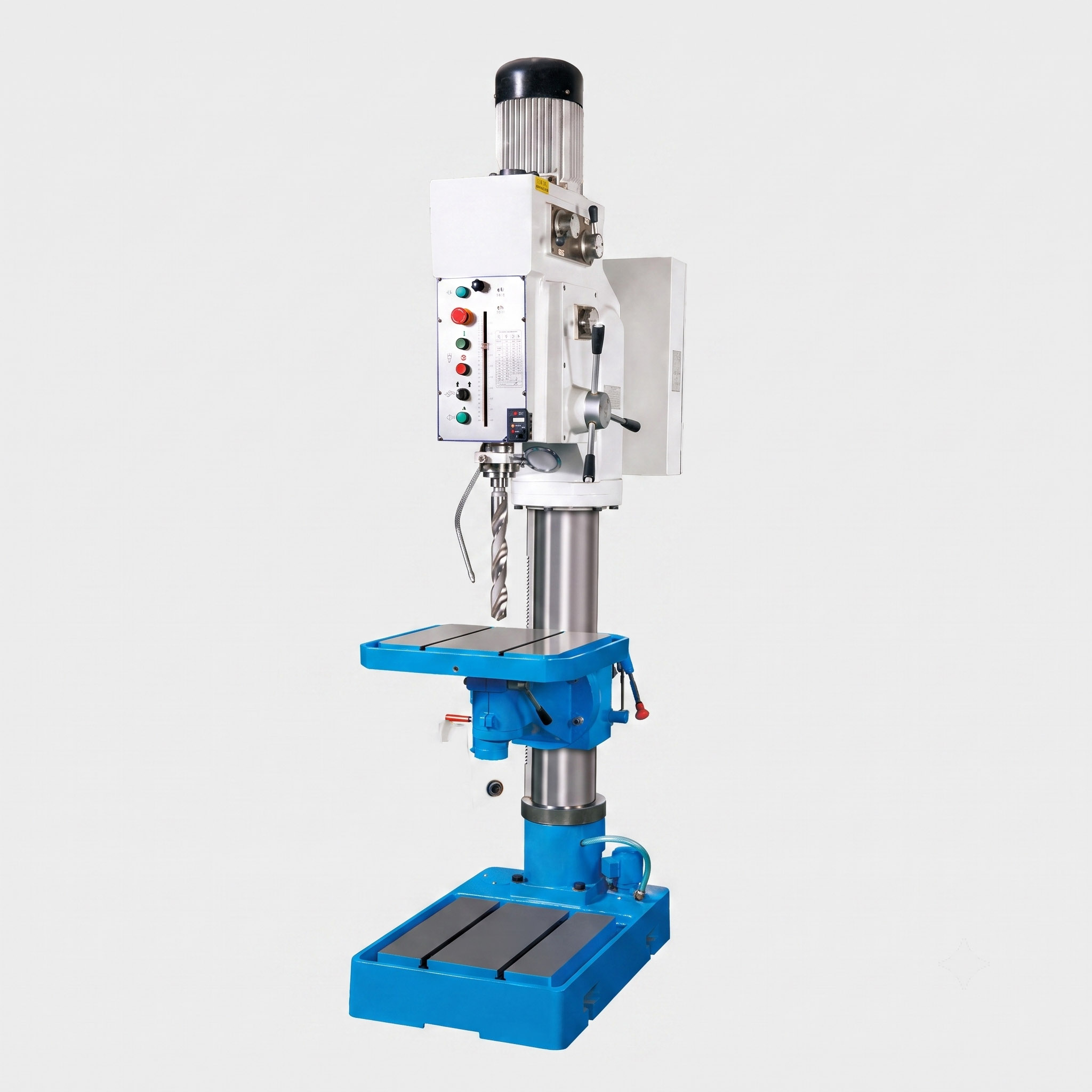
1. Can Vertical Drilling Machines Be Used for Tapping?
Yes, standard vertical drilling machines (such as Z5125, Z5140, and Z5032 models) can perform tapping operations, but tapping is fundamentally a secondary or auxiliary function rather than their primary design purpose.
Standard vertical drills equipped with standard tapping features offer the following characteristics:
Reversible Spindle: Equipped with tapping clutches or feed limiters that enable automatic spindle reversal.
Easy Setup: By installing a tap and a specialized tapping chuck (telescopic floating tapping chucks are essential), internal threads can be effectively cut.
Ideal Applications: Perfectly suited for small-to-medium batch sizes, multi-diameter holes, and occasional or intermittent tapping tasks.
Crucial Limitation: Standard vertical drilling machines are not engineered for high-depth, high-volume, or continuous heavy-duty industrial tapping production.
2. Vertical Drilling Machines vs. Dedicated Tapping Machines
Understanding the fundamental differences in mechanics and operation helps manufacturers select the right equipment for their production lines.
1. Transmission & Spindle Characteristics
Vertical Drilling Machines: Spindles are optimized primarily for drilling, featuring torque curves tailored for high-speed cutting rather than low-speed heavy torque. Axial rigidity is high with minimal cushioning, meaning if a tap encounters sudden resistance, it cannot self-adjust, leading to broken taps, stripped threads, or lifted workpieces
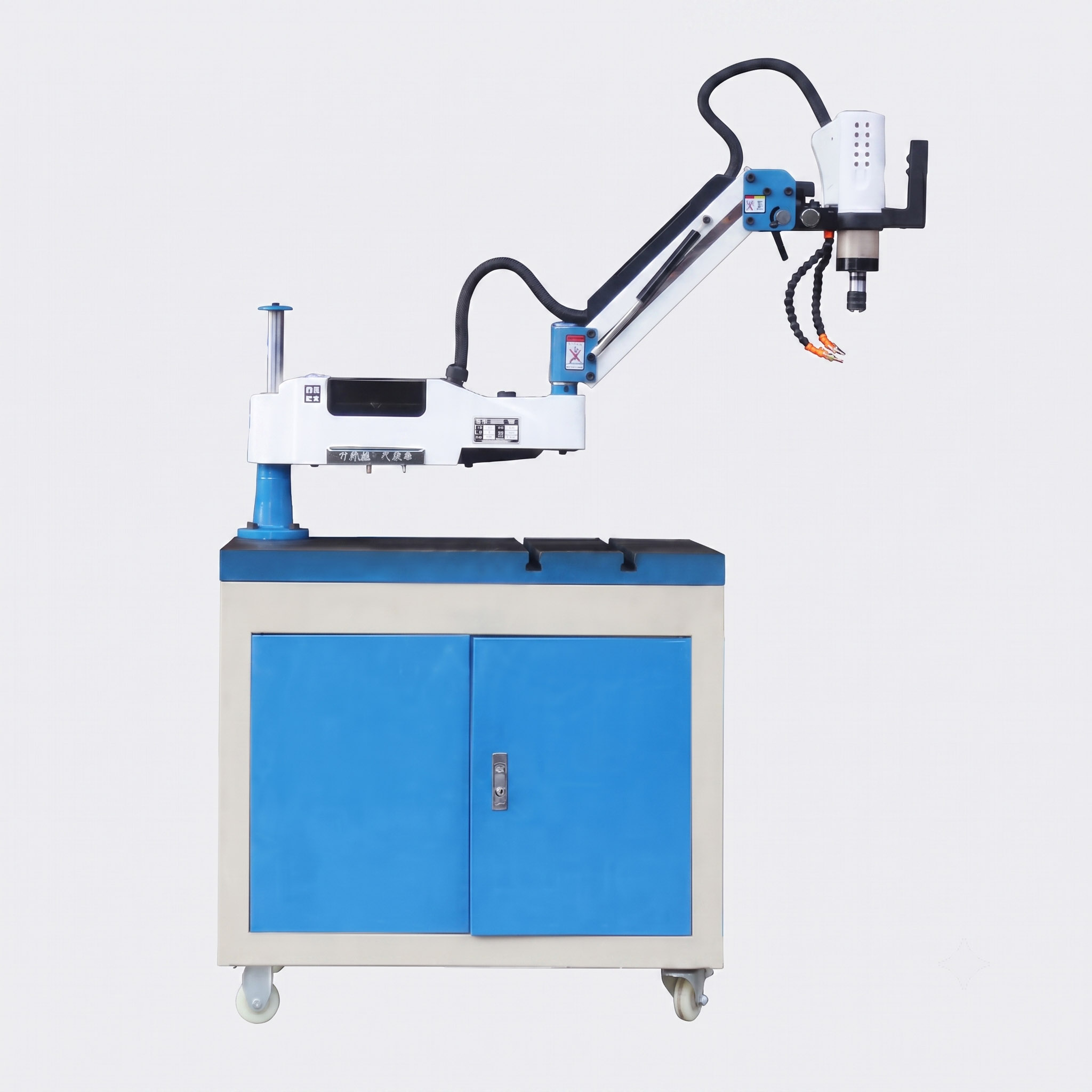
Dedicated Tapping Machines (Bench, Gear, or Servo Tappers): Engineered specifically for thread cutting with high low-end torque and standard synchronization mechanisms (torque protection and axial float). Servo models strictly synchronize spindle rotation speed with feed rate matching the thread lead, featuring automatic overload stop protection.
2. Operational Workflow
Vertical Drills: Operators must adjust speeds, manually feed the tap, rely on mechanical limit blocks for automatic spindle retraction, and reset depth stops for every single hole. This creates high inefficiency for deep holes or varying thread depths.
Dedicated Tapping Machines: Operated via foot switches or automated continuous cycles where pressing down initiates tapping and reaching depth triggers automatic retraction. Servo variants allow pre-set depths, speeds, and reversal delays for effortless batch repetition.
3. Workpiece Suitability
Vertical Drills Shine In: Combined processes where a hole must be drilled and immediately tapped in the same setup; irregular or large workpieces inconvenient to transfer; and medium threads ranging from M3 to M24 in materials like cast iron, aluminum, and low-carbon steel.
Dedicated Tappers Shine In: High-volume mass production of single-spec threads; blind holes and micro-holes (M2 to M6); tough materials like stainless steel or alloy steel; and dedicated thread-cutting lines requiring stable yield rates and minimal tool wear.
3. Comprehensive Comparison Matrix
The following detailed breakdown compares standard vertical drilling machines against dedicated tapping systems across key manufacturing metrics:
| Comparison Metric | Vertical Drilling Machine (Tapping Mode) | Dedicated Tapping Machine |
| Photos | |
 |
| Tap Wear & Breakage | Higher risk; lacks effective torque cushioning, making it prone to snapping under resistance. | Low risk; incorporates floating mechanisms and precise torque protection. |
| Thread Precision | Moderate; accuracy is heavily influenced by manual feed factors and mechanical play. | High; servo-driven models deliver exceptional dimensional accuracy and pitch consistency. |
| Production Efficiency | Low; requires extended setup times, manual adjustments, and depth block calibration. | High; designed for rapid automated cycles and continuous high-volume output. |
| Equipment Investment | Cost-effective if an existing vertical drill is already available in the workshop. | Requires dedicated capital expenditure for a specialized machine unit. |
| Versatility & Multi-Function | High versatility; capable of drilling, counterboring, countersinking, and tapping. | Single-purpose; optimized exclusively for threading with limited drilling capability. |
4. Best Practices for Tapping on Vertical Drills
If you must perform tapping operations on a standard vertical drilling machine, follow these essential operational guidelines:
Use Floating Chucks: Always utilize a floating telescopic tapping chuck; strictly avoid rigid direct clamping of taps.
Control Speed and Lubrication: Maintain low spindle speeds (especially for steel components) and apply ample professional tapping fluid.
Manage Blind Holes: For blind hole tapping, ensure adequate chip clearance space and strictly control machining depth to prevent bottoming out and breaking taps.
Evaluate Production Scale: For high-volume production, investing in a dedicated tapping machine reduces long-term tap replacement costs and drastically boosts throughput.
Consider CNC Vertical Drills: Advanced CNC vertical drilling machines equipped with servo-driven spindles support rigid synchronization/synchronous tapping, performing significantly better than mechanical vertical drills and approaching dedicated servo tappers.
Summary Recommendation: Occasional tapping on workpieces that already require drilling? A vertical drill is sufficient. Long-term, high-volume dedicated threading? Invest in a specialized tapping machine for maximum efficiency and tool longevity.
Need buy a tapping machine or Technical Support?
We are your trusted global partner for high-quality industrial machinery, precision drilling equipment, and custom manufacturing solutions. Contact our expert engineering team today to find the perfect machinery setup for your production requirements.
Website: https://www.mfg-machinery.com/
Email: info@mfg-machinery.com
Phone:+86 17321191875